
AMD Ryzen 9 9950X3D2 Dual Edition Desktop Processor Review
 Follow Us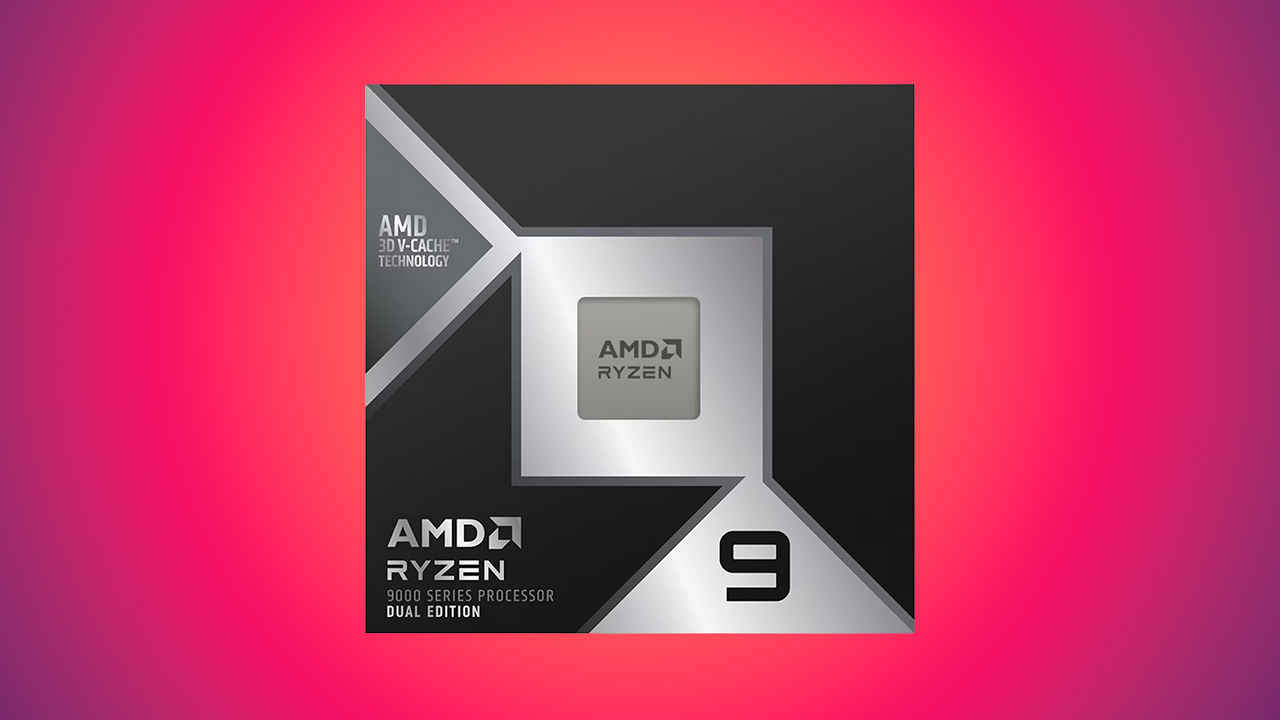

The AMD Ryzen 9 9950X3D2 is an unusual halo desktop CPU, not because it adds more cores, but because it doubles down on what has made AMD’s X3D chips so interesting in the first place: stacked cache. Thanks to CoWoS! This is the first desktop processor to place second-generation 3D V-Cache on both Zen 5 CCDs, giving it 16 cores, 32 threads, and 208 MB of total cache on the AM5 platform. With the previous X3D SKUs, the story was all about gaming, but this time around AMD is talking about the processor more as a top-end chip for developers, creators, and other latency-sensitive workloads that can benefit from a very large on-chip memory pool. Is there a tradeoff? Well, of course there is. Compared with the standard Ryzen 9 9950X3D, the 9950X3D2 carries more cache and a higher 200W TDP, but a slightly lower maximum boost clock of 5.6 GHz. That’s just 100 MHz lower. While AMD hasn’t disclosed the price, we’re seeing market prices of approximately Rs 98,499 which is quite ridiculous when you know that the AMD Ryzen 9 9950X3D goes for Rs 71,500. So, is it worth it? Does the extra cache make that much of a difference? Let’s find out.
AMD Ryzen 9 9950X3D2 Specifications
The Ryzen 9 9950X3D2 is built around AMD’s Zen 5 architecture and arrives with 16 cores and 32 threads, a 4.3 GHz base clock, and boost speeds of up to 5.6 GHz. Its hero feature is cache capacity: 16 MB of L2 cache and 192 MB of L3 cache, for a total of 208 MB. That is substantially higher than the standard Ryzen 9 9950X3D, which carries 144 MB total cache, which in itself is ridiculously higher than the Ryzen 9 9950 with 80 MB of L2 and L3 combined cache. AMD’s second-generation 3D V-Cache design now sits below the cores rather than above them, which the company says improves thermal resistance by allowing the cores more direct contact with the cooler.
Power limits are also pushed up. The chip carries a 200 W TDP, a 270 W default socket power limit (PPT), 250 A EDC, and 180 A TDC, with a maximum junction temperature of 95 degrees Celsius. AMD recommends a 360 mm liquid cooler, and that feels entirely appropriate for a processor operating in this class. The platform remains familiar otherwise: Socket AM5 support, DDR5 memory, EXPO readiness, and a claimed drop-in upgrade path for existing AM5 users with the right BIOS. One important nuance is that this part is not really chasing higher gaming clocks than the regular 9950X3D. Instead, it is using its dual stacked-cache layout to widen its appeal in rendering, simulation, compilation, and creator workloads where extra on-chip memory can reduce latency penalties and improve throughput in specific applications.
Test Rig
The test bench pairs the Ryzen 9 9950X3D2 with NVIDIA’s GeForce RTX 5090, ensuring the graphics card is not the limiting factor in most CPU-focused tests. Supporting hardware includes MSI’s MEG X870E ACE MAX motherboard, 32 GB of G.Skill Trident Z5 Neo DDR5-6000 memory in a 2x 16 GB configuration, and Samsung’s 9100 Pro NVMe SSD. Cooling is handled by the NZXT Kraken Elite 360 RGB, while a Seasonic Focus Gold 850W PSU powers the system.
This is a suitably high-end platform for a processor of this class, and it also aligns closely with AMD’s own recommendation of DDR5-6000 memory and a 360 mm liquid cooler for best results and stable behaviour.
AMD Ryzen 9 9950X3D Performance
Cinebench 2024
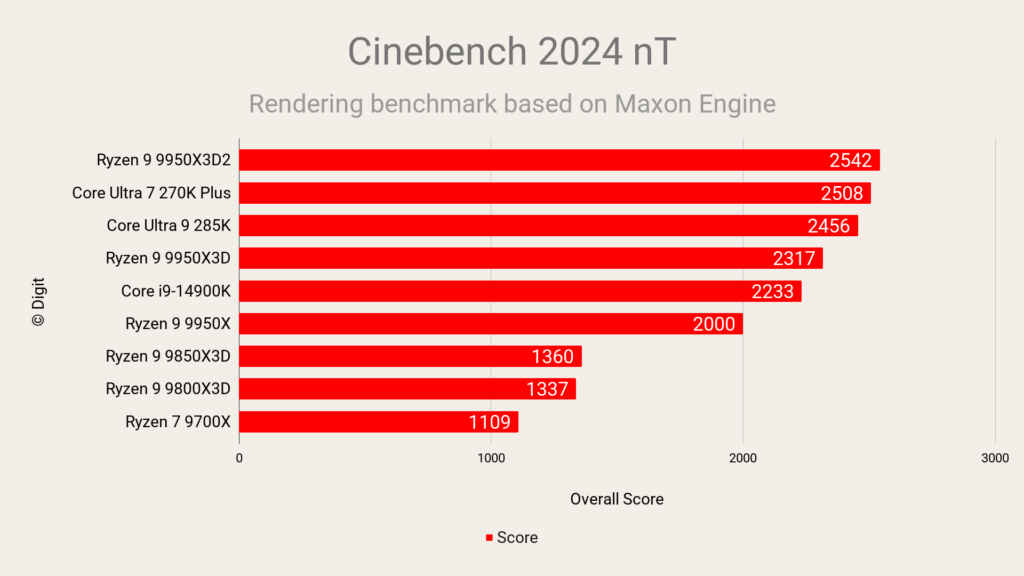
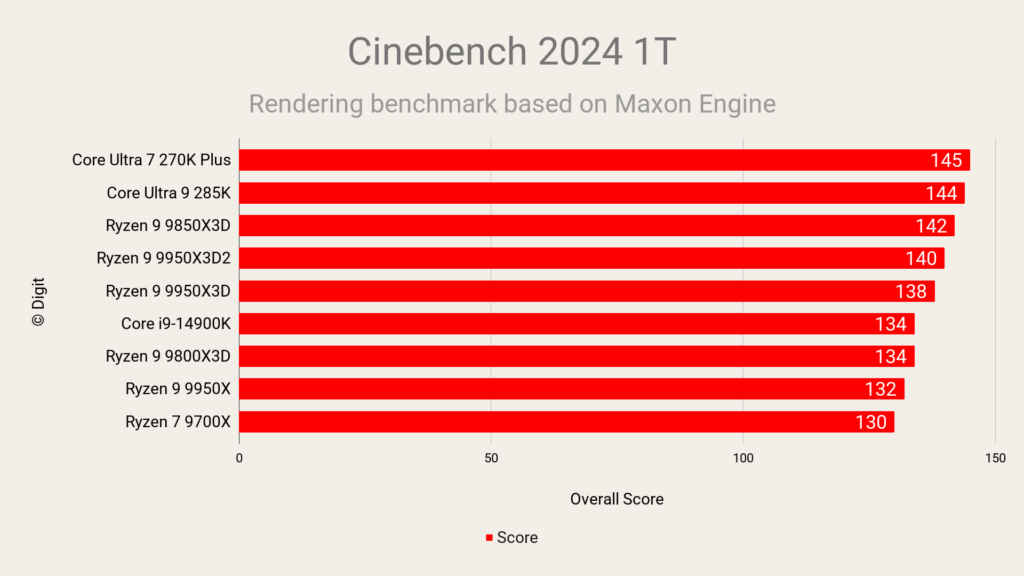
Cinebench 2024 is based on Maxon’s Cinema 4D software, designed to evaluate a processor’s performance in rendering complex 3D scenes. It tests both single-core and multi-core capabilities, highlighting how efficiently a CPU handles multi-threaded tasks common in professional rendering workflows. The benchmark utilizes modern instruction sets and large datasets, providing an up-to-date assessment of CPU performance in contemporary applications.
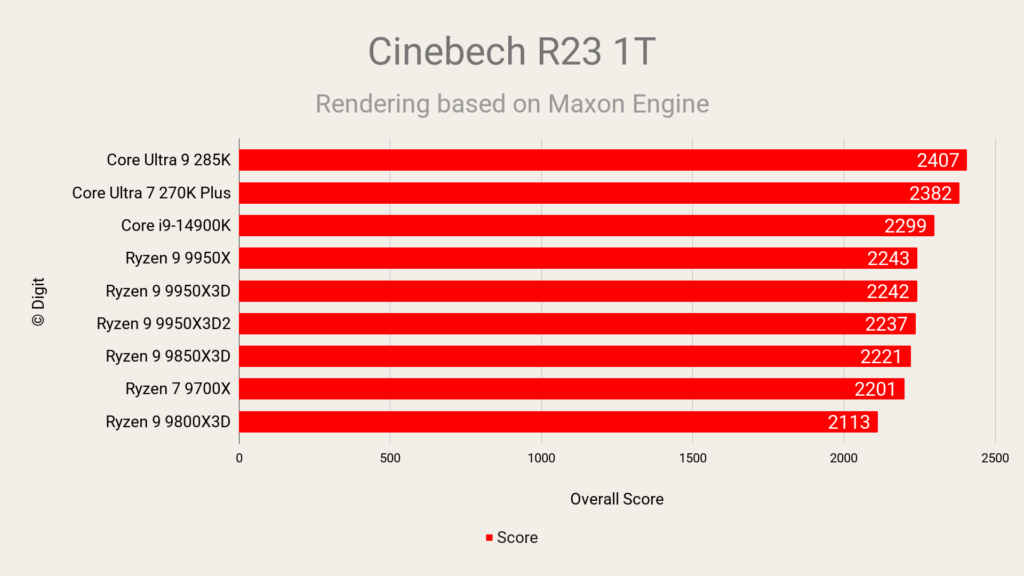
Cinebench R23
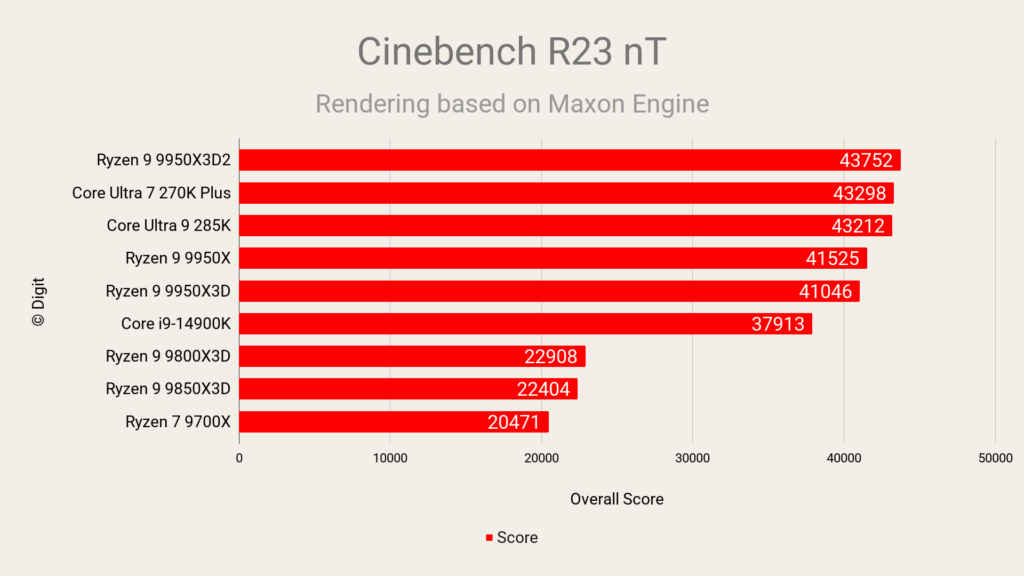
Cinebench R23 is the older version based on the same Cinema 4D engine and it too measures a processor’s ability to render photorealistic 3D scenes. Though replaced by Cinebench 2024, we retain it to compare against processors launched a few years prior. It also focuses on both single-threaded and multi-threaded performance, simulating real-world tasks relevant to content creators and professionals in 3D rendering.
Blender
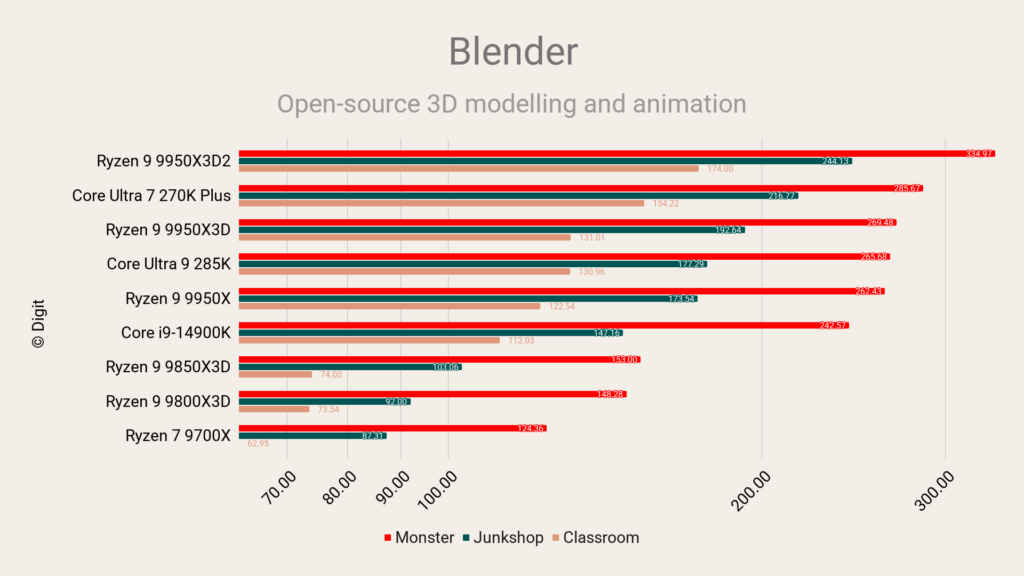
The Blender Benchmark assesses a processor’s performance by rendering scenes using Blender, a popular open-source 3D creation suite. It evaluates both CPU and GPU capabilities in handling complex rendering tasks. This benchmark provides insights into how well a processor performs in real-world 3D modeling, animation, and rendering scenarios. An interesting aspect is that it highlights the efficiency of different CPU architectures in multi-threaded workloads, as Blender can effectively utilize multiple cores. It’s particularly useful for professionals and enthusiasts relying on Blender, indicating how hardware upgrades might impact workflow efficiency and rendering times.
V-Ray
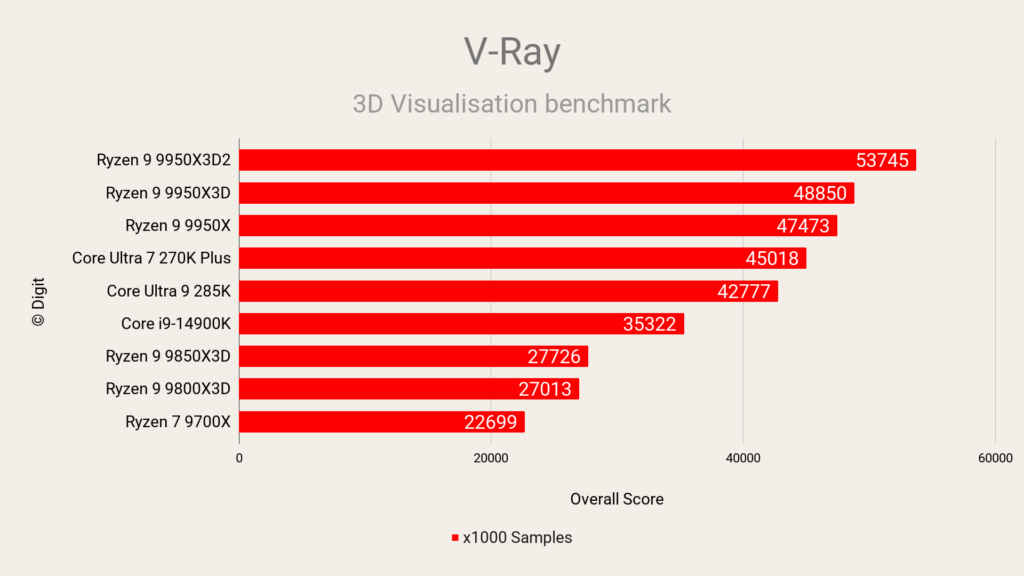
V-Ray is another benchmark that measures a processor’s performance in rendering but it uses the V-Ray engine, widely used in visual effects, architecture, and design industries. It tests both CPU and GPU rendering capabilities, focusing on multi-threaded performance and handling complex calculations involved in ray tracing. CPUs with higher core counts and multi-threading technology tend to excel here as V-Ray efficiently utilises available threads.
WinRAR
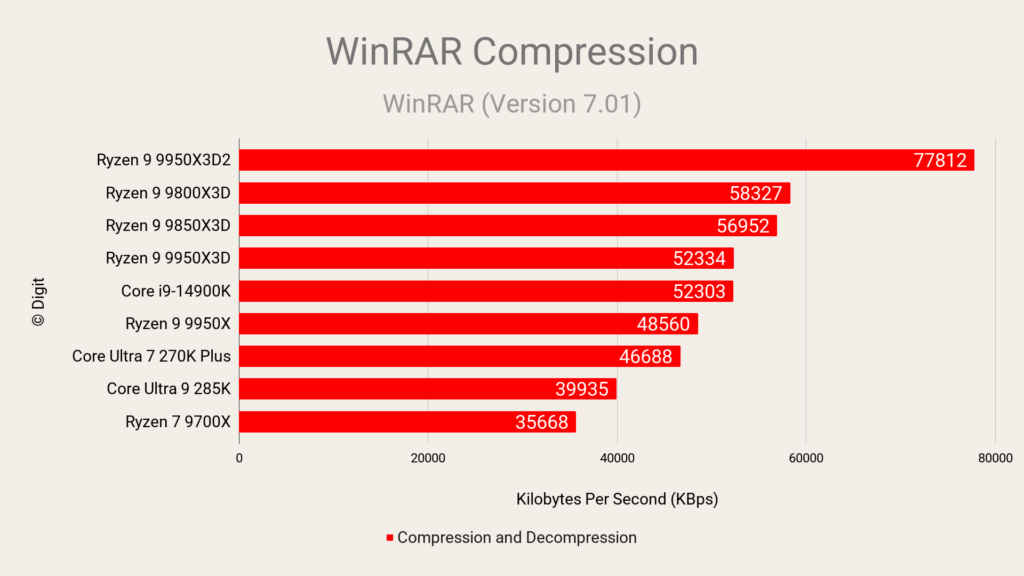
WinRAR Benchmark evaluates a processor’s performance in data compression and decompression tasks, common in file archiving and management. It tests single-threaded performance, memory bandwidth, and latency, as these factors influence compression speed. While WinRAR isn’t fully optimized for multi-core CPUs, processors with higher Instructions Per Cycle (IPC) and clock speeds perform better. For more modern algorithms, we use 7-Zip.
AIDA64
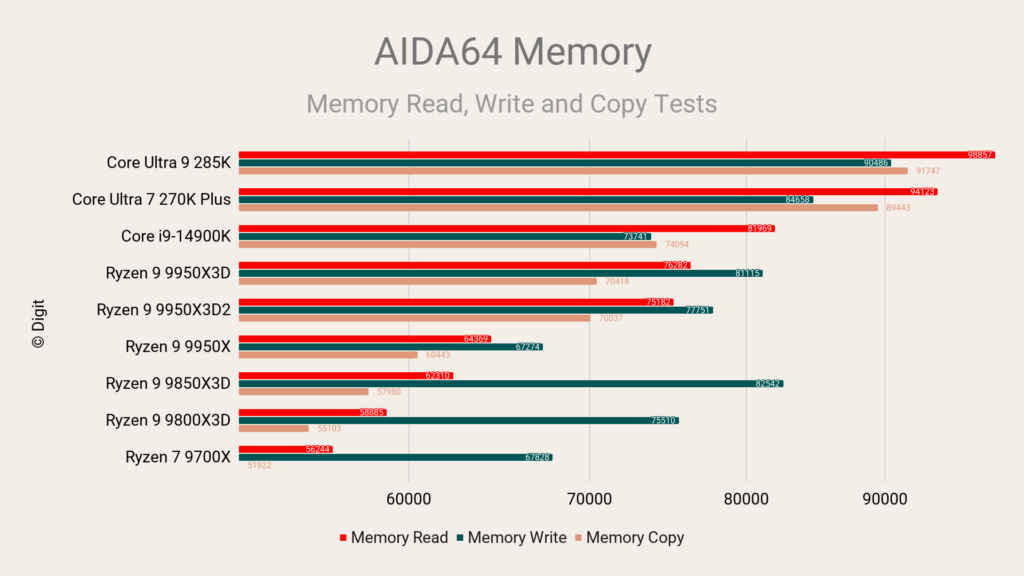
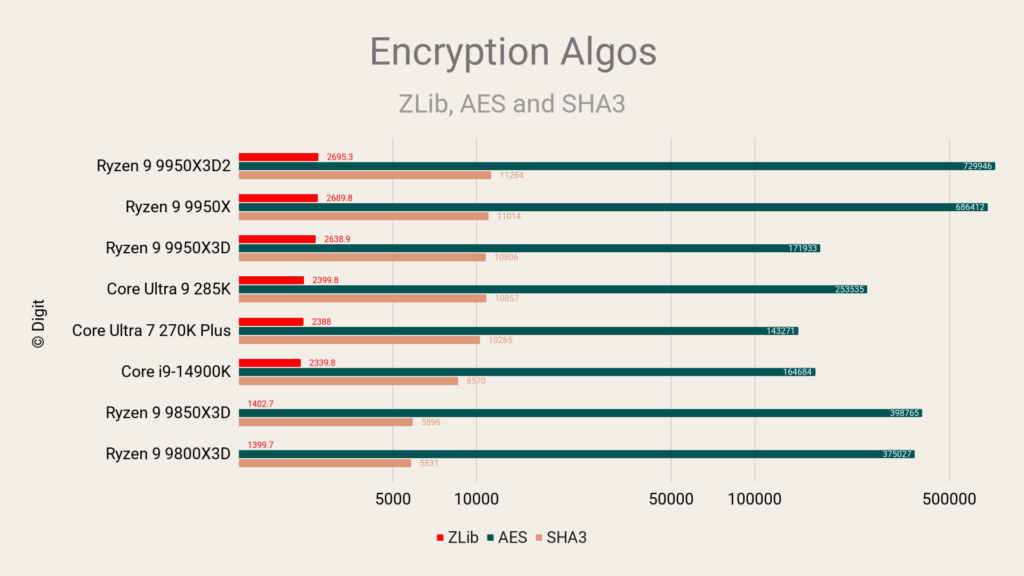
AIDA64 Memory Benchmark measures the memory bandwidth and latency of a system, highlighting how quickly data transfers between the CPU and RAM. It tests read, write, and copy speeds, providing insights into the efficiency of the memory subsystem, including RAM speed, timings, and memory controller performance. AIDA64 also has benchmarks to evaluate how well a processor can handle AES, ZLib and SHA3 encryption and decryption tasks.
y-cruncher
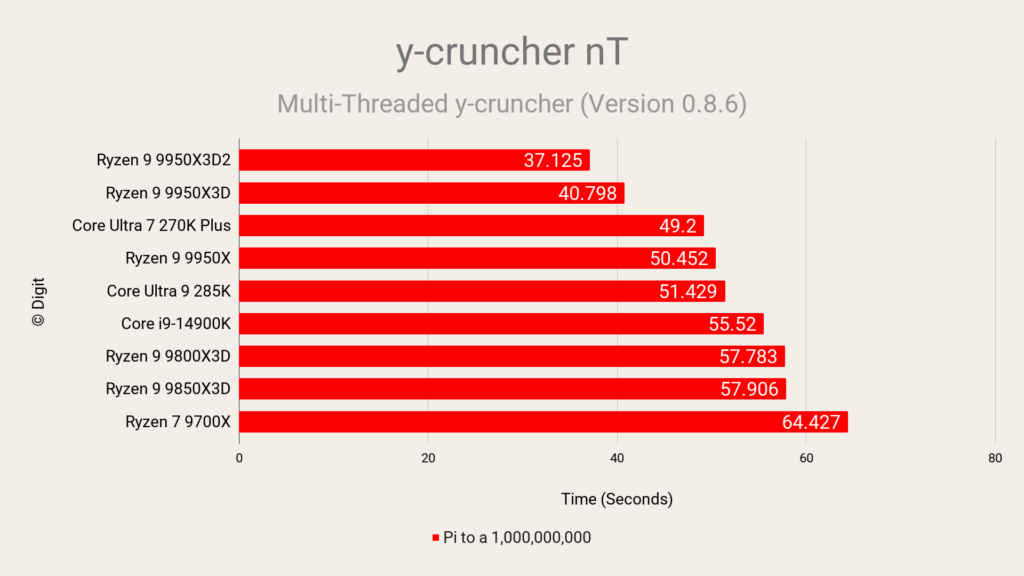
The y-cruncher benchmark computes mathematical constants like Pi to a high number of digits—in this case, 2.5 billion—testing a processor’s multi-threaded performance and memory subsystem under heavy computational load. It stresses the CPU’s integer and floating-point units, cache hierarchy, and memory bandwidth. It’s particularly useful for evaluating system stability under sustained heavy workloads, making it valuable for users who are overclocking their systems.
Procyon Office
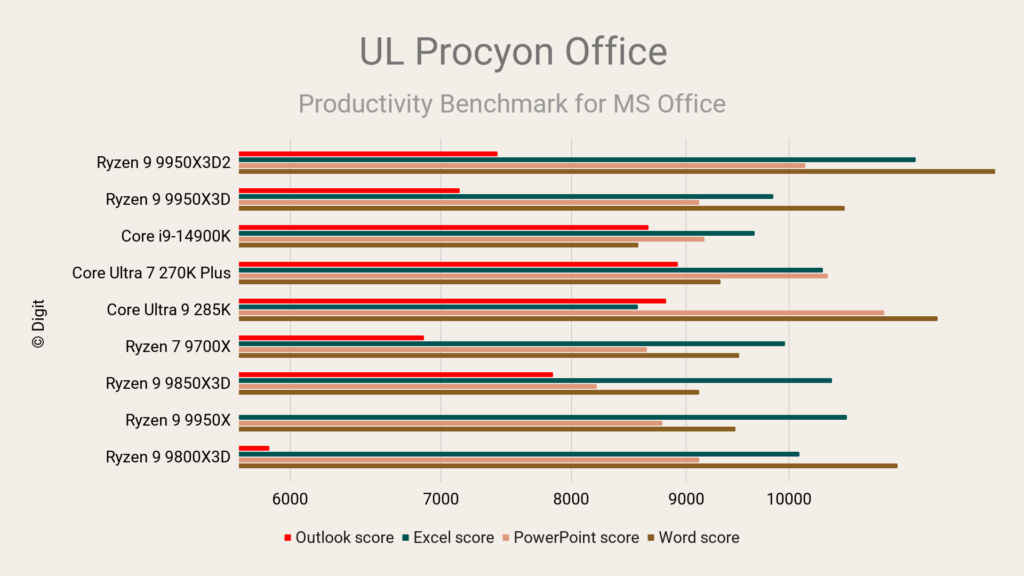
The Procyon Office Benchmark measures a processor’s performance in real-world office applications like the Microsoft Office suite, testing tasks such as document editing, spreadsheet calculations, and presentation creation. It focuses on both single-threaded and multi-threaded performance, providing insights into how a CPU handles everyday productivity tasks.
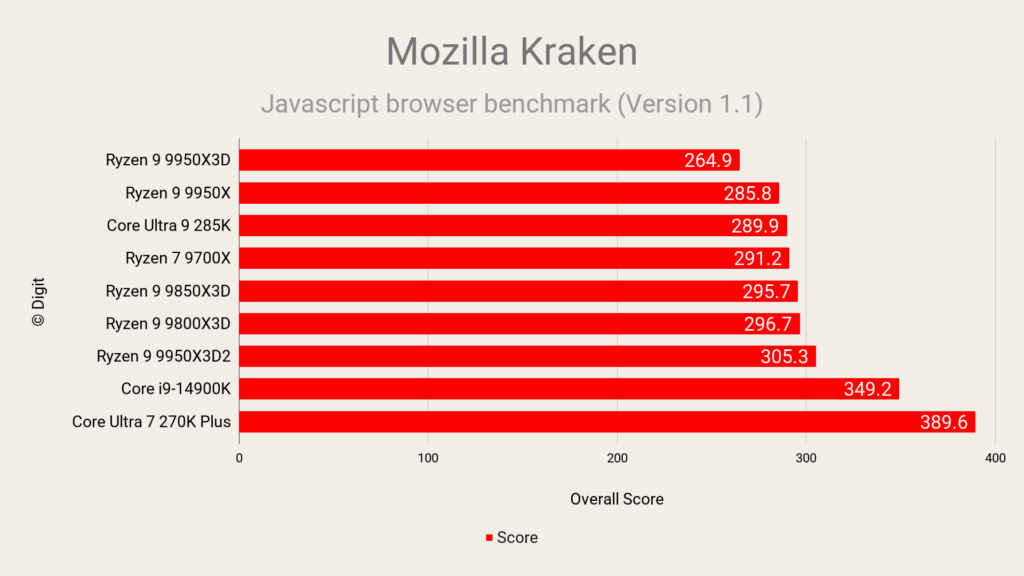
Mozilla Kraken
Mozilla Kraken is a JavaScript benchmarks evaluating a processor’s performance in executing complex web-based scripts, reflecting real-world web application usage. It tests single-threaded performance and the efficiency of a CPU’s instruction pipelines in handling dynamic scripting languages.
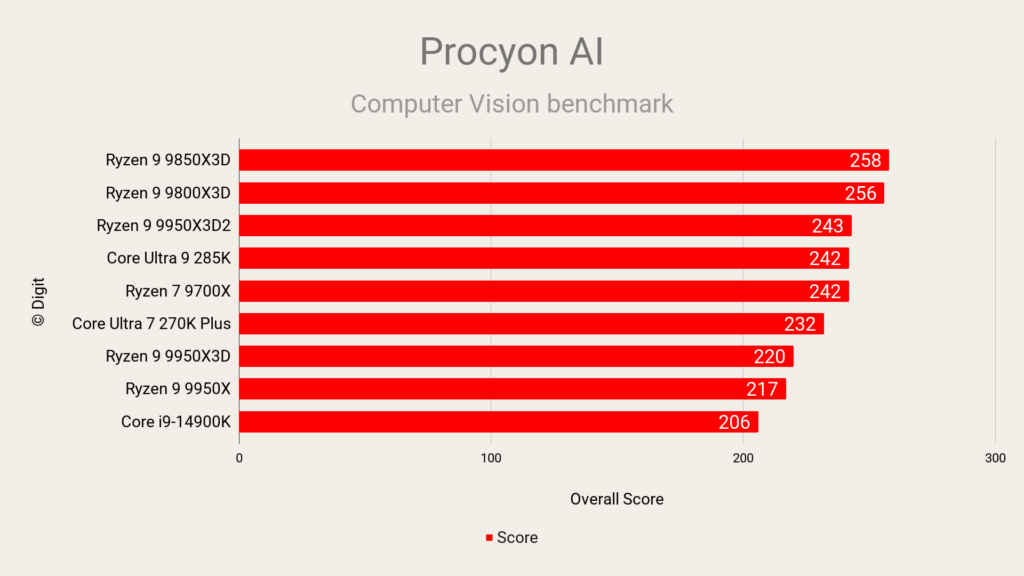
Procyon AI Computer Vision
The UL Procyon AI Computer Vision benchmark measures the performance of AI inference engines to understand how well processors can handle machine-vision tasks using popular neural networks.
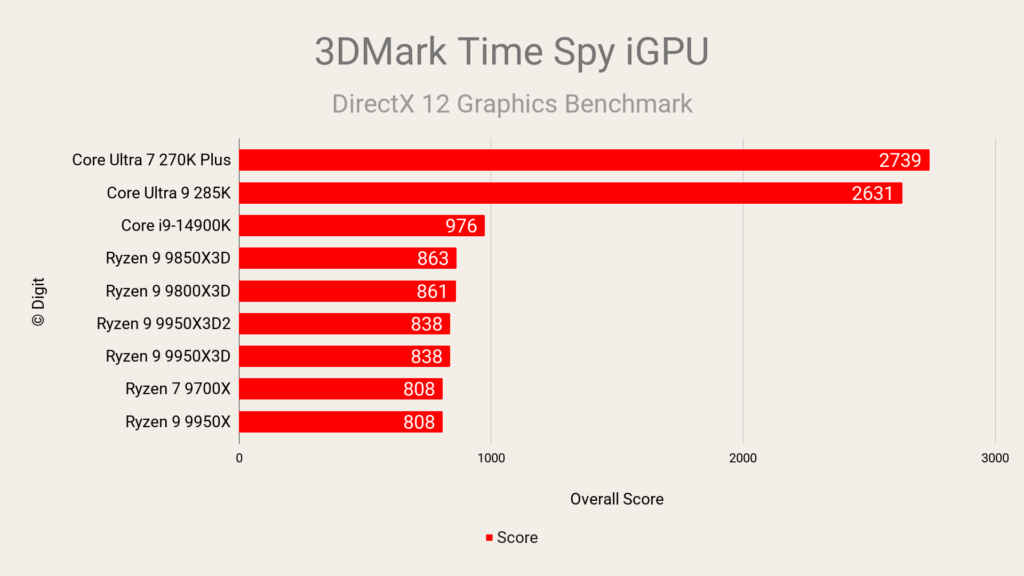
3DMark Time Spy (iGPU)
3DMark Time Spy is a DirectX 12 benchmark evaluating graphics performance. We use it primarily to test the relative performance of the iGPU to discrete GPUs and where iGPUs stand amongst their peers. With both companies improving their integrated graphics stack, it allows us to measure how well the iGPU performs and if it can handle popular eSports titles.
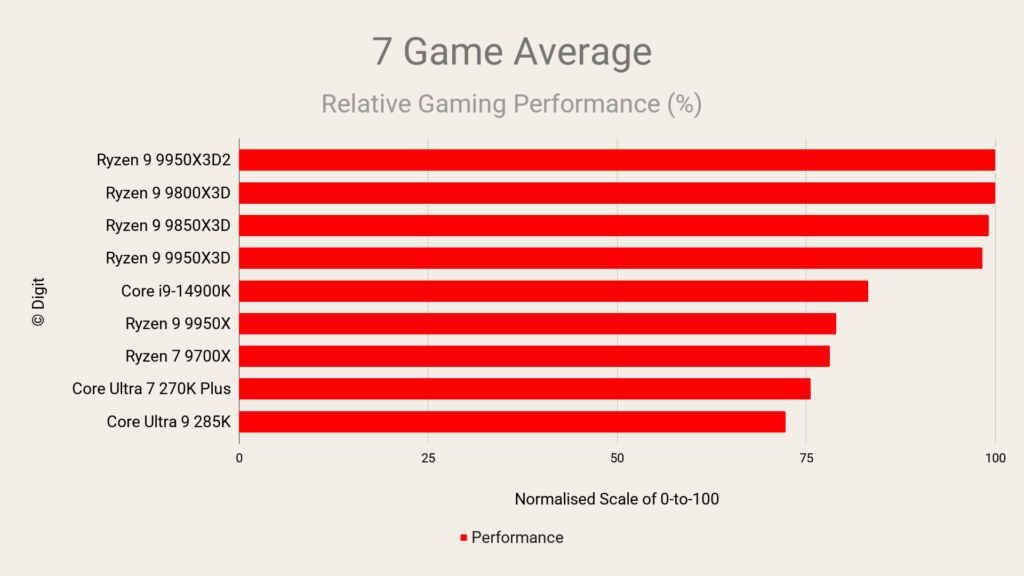
7 Game Average
While 3DMark is an excellent synthetic benchmark, it’s not really indicative of real-world gaming performance and that’s why we have to rely on popular AAA video games to assess how well the processor deals with contemporary video game engines. We revise the video games once every two years based on what’s most popular as per Steam and we also maintain a mix between different game engines.
Core to Core Latency – AMD Ryzen 9 9950X3D
Core-to-Core Latency measures the time it takes for data to transfer between different cores within a CPU. It highlights the efficiency of the processor’s inter-core communication pathways and cache coherency mechanisms. An interesting insight is that lower core-to-core latency can improve performance in multi-threaded applications where threads need to synchronize or share data frequently. It can reveal architectural differences between CPUs, such as the impact of chiplet designs versus monolithic die layouts, affecting inter-core communication efficiency.
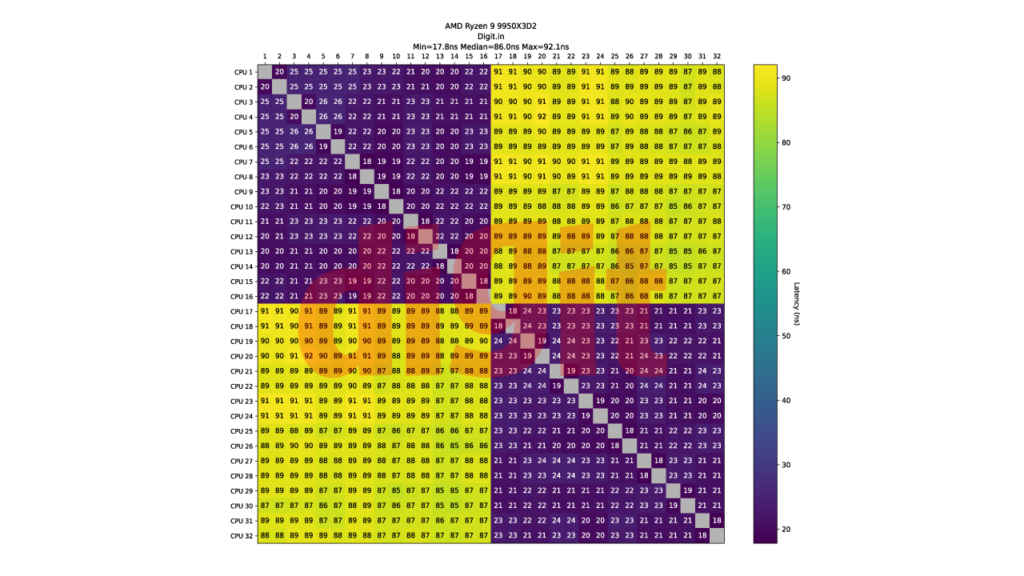
The AMD Ryzen 9 9950X3D2 has the same 16 Cores with two CCDs as the older 9950X3D and we can see that within the CCD, the latency for core-to-core communication is around 18-25 nanoseconds. And when switching to cores on the other CCD, the latency climbs into the range of 85-91 nanoseconds. This is slight drop compared to the 9950X3D. The Median latency was 81 nanoseconds with the 9950X3D and that’s increased to 86 nanoseconds. It’s still an improvement over the older gen processors wherein the communication between CCDs would incur a larger penalty.
Thermals and power
For such a cache-heavy, high-power desktop CPU, the Ryzen 9 9950X3D2 appears surprisingly well-behaved in this configuration. The recorded average CPU package temperature of 36 degrees Celsius suggests that the NZXT 360 mm cooler is doing its job comfortably under sustained mixed load conditions. Even the peak temperature of 90 degrees Celsius remains well within AMD’s specified thermal ceiling of 95 degrees Celsius, leaving some headroom rather than pushing the silicon to the brink.
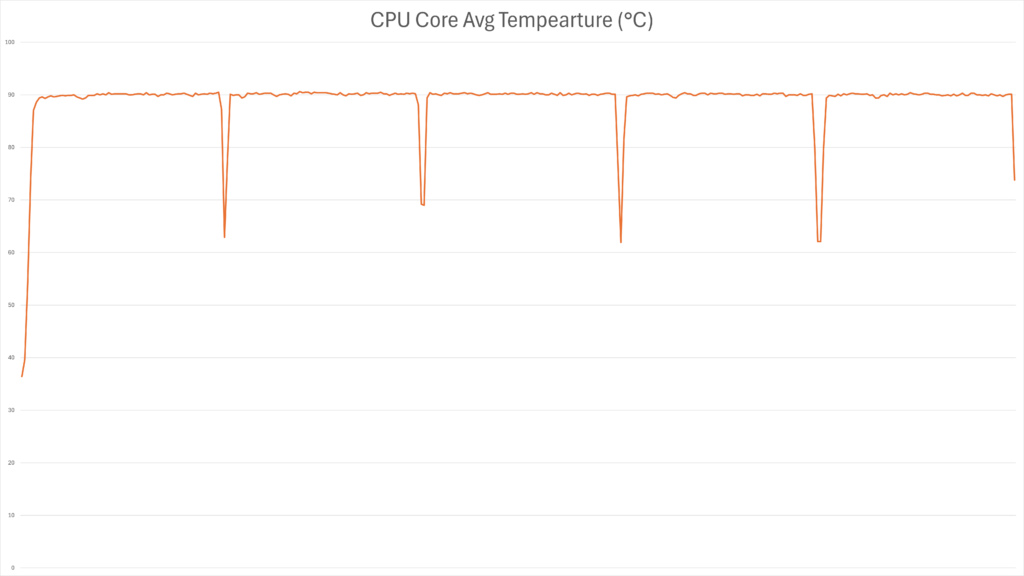
That matters, because this is a 200 W-class processor designed for serious all-core work, not just short gaming bursts. Power draw tells the more revealing story. An average package power of 230 W and a peak of 250 W make it clear that this chip is happy to consume substantial power when fully unleashed, which tracks with AMD’s 270 W PPT figure. In practical terms, the 9950X3D2 is not pretending to be an efficiency-first flagship.
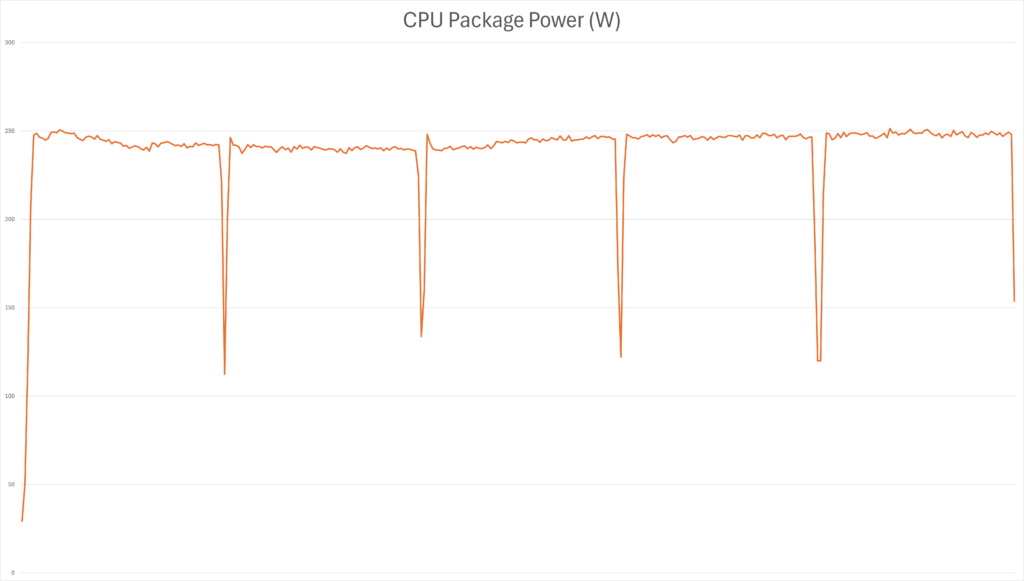
It is a performance-first desktop processor that asks for strong cooling, a solid motherboard VRM, and a properly specced PSU. The good news is that, in return, thermal behaviour appears controlled rather than unruly, which is exactly what one would hope for from a top-end AM5 part.
Verdict
The Ryzen 9 9950X3D2 looks like AMD taking the X3D idea to its logical extreme on AM5. By putting second-generation 3D V-Cache on both CCDs, AMD has created a part that is clearly aimed at buyers who want more than just top-tier gaming. This processor is meant for serious desktop users working across rendering, compiling, simulation, AI-adjacent workloads, and content creation, while still retaining the strong gaming DNA associated with the X3D family. On paper, the gains over the existing 9950X3D are not universal, but the expanded cache and more aggressive power envelope do give it a more specialised and more ambitious identity.
That said, this is also a CPU that needs the right context. Its 200 W TDP and high package power figures mean it belongs in an uncompromising desktop build, not in a value-focused or modestly cooled setup. The slight dip in maximum boost clock versus the regular 9950X3D also makes it clear that AMD is prioritising cache-rich workload behaviour over headline frequency. Taken as a whole, the Ryzen 9 9950X3D2 feels less like a mainstream recommendation and more like a statement product. For the right workload mix, it could be one of AM5’s most interesting processors yet.
AMD Ryzen 9 9950X3D2 Dual Edition Desktop Processor Key Specs, Price and Launch Date
| Release Date: | |
| Market Status: | Launched |


