
How to increase lifespan of your AC
 Follow Us
The lifespan of an AC depends on how well you maintain it and how carefully you use it.
Schedule professional servicing at least once or twice a year.
Cleaning the filters every few weeks improves airflow and reduces strain on the unit.

An AC is not just another home appliance. It becomes your comfort during hot days and helps you relax after a tiring schedule. Whether it’s cooling your room in the afternoon or helping you sleep at night, your AC works constantly to keep you comfortable. Because AC plays such an important role, it makes sense to take proper care of it. The lifespan of an AC depends on how well you maintain it and how carefully you use it. With the right habits, you can make your AC last longer. Read on to know how you can increase the lifespan of your AC.
 Survey
Also read: AC not cooling like before? Here are the most common reasons and quick fixes
Tips to increase the lifespan of your AC
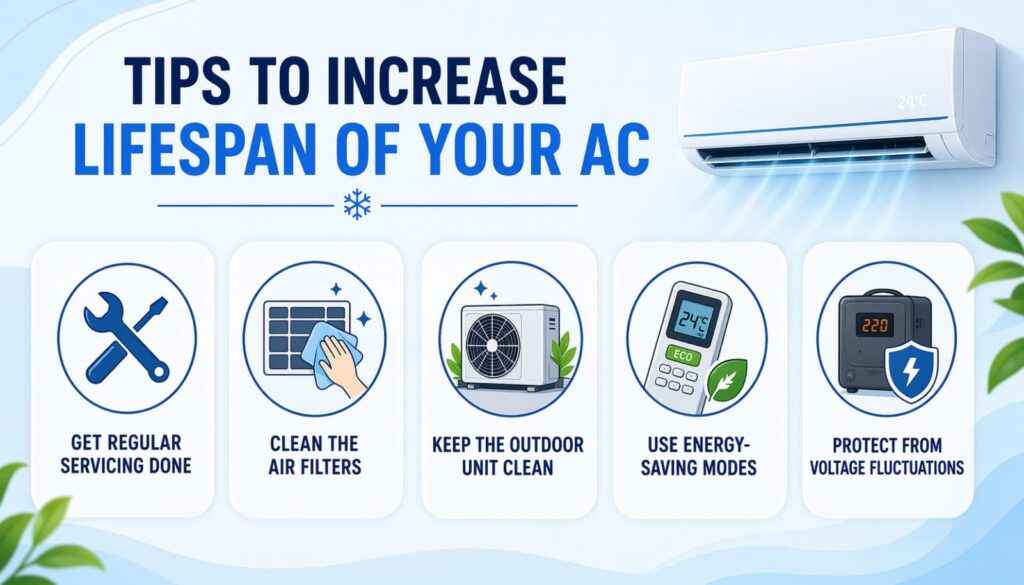
- Get regular servicing done: Schedule professional servicing at least once or twice a year. This helps identify small issues before they turn into major problems.
- Clean the air filters: Dust and dirt can block filters, forcing the AC to work harder. Cleaning the filters every few weeks improves airflow and reduces strain on the unit.
- Keep the outdoor unit clean: The external unit should be free from dust, leaves and debris. A clean outdoor unit prevents overheating and helps maintain efficiency.
- Use energy-saving modes: Features like sleep mode or eco mode reduce power consumption and lessen the load on internal components, which helps them last longer.
- Protect from voltage fluctuations: Using a stabiliser can protect your AC from sudden power surges, which can damage sensitive parts.
Also read: Spilt AC vs window AC: Which one should you buy and why
Signs that your AC may be nearing the end of lifespan
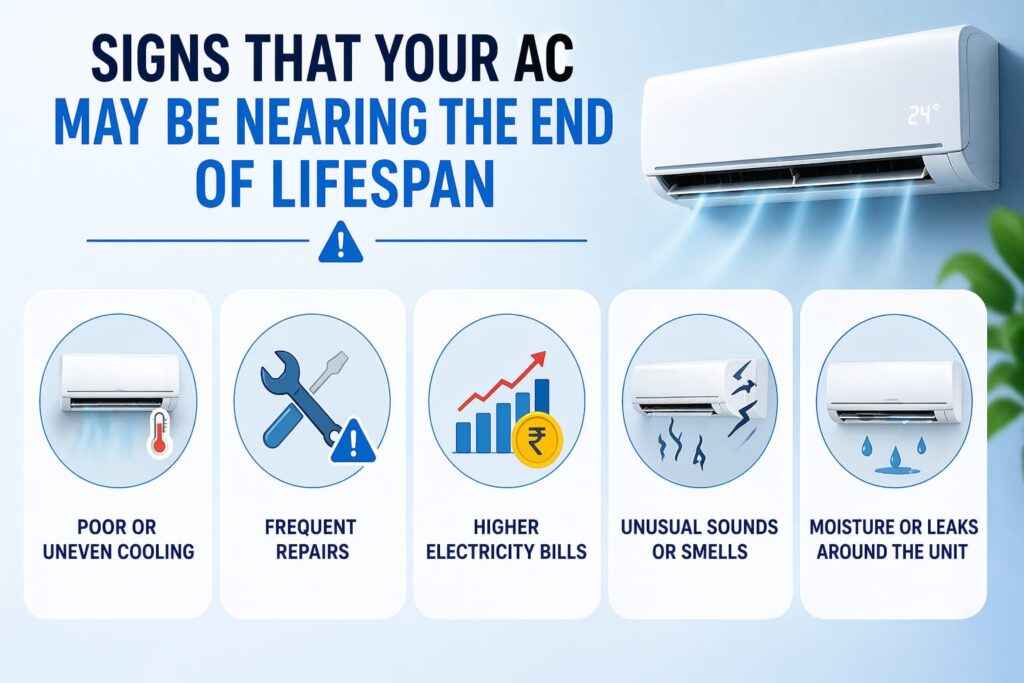
- Poor or uneven cooling: If your AC is no longer cooling properly or some areas feel warmer, it may be losing efficiency.
- Frequent repairs: If you find yourself calling for repairs often, it could mean the system is reaching the end of its life.
- Higher electricity bills: Older AC units tend to use more power, which leads to rising energy costs.
- Unusual sounds or smells: Strange noises or smells may indicate internal damage.
- Moisture or leaks around the unit: Continuous water leaks or refrigerant issues can signal serious problems within the unit.
Also read: 5 tips to make AC cool your room faster this summer


