
Gabit smart ring review: Good habits take time, not a timepiece
 Follow Us

I own a smartwatch, and although it comes with all the usual health and activity tracking features, I wear it only when I am out and about. That means for a large part of the time when I am at home, I do not wear it and therefore do not benefit from those features. Moreover, the watch lasts only about a day on a charge, so I have to remember to charge it before leaving the house. That is one stress the watch’s stress tracker does not account for, especially since I am not always wearing it.
So yes, a smartwatch is technically ‘wearable,’ but I do not always wear it.
Enter the smart ring from a domestic brand called Gabit. Although it has been available in the market for some time now, priced around Rs 13,775, I guess it’s never too late to start healthy habits. And I wanted to see whether a smart ring can be a better wearable for me than a smartwatch. The company sent me a review unit and here’s my experience after dailying it for several weeks.
Quick verdict
The Gabit ring is a reliable everyday health tracker, with consistent heart rate readings, useful sleep tracking and a comfortable titanium build. Its battery can last most of the week, making it more convenient than devices that need daily charging. However, the lack of dedicated workout modes and occasional heart rate inconsistencies during intense activity limit its appeal for serious fitness tracking. For regular users seeking simple, continuous health tracking under Rs 15000, it is a practical option.
Dandy durable design in daily use
The Gabit ring follows the typical design language of most smart rings today. It uses a titanium outer shell with a resin interior that sits against the skin. Titanium keeps the ring light and durable, while the resin layer prevents skin irritation during long wear.
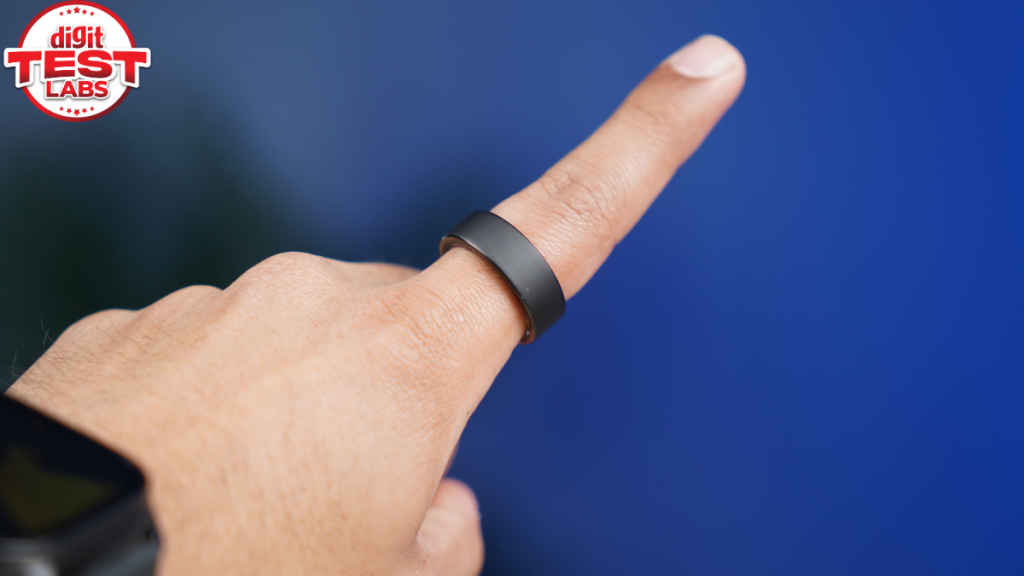
The black ring looks bold and noticeable on my right index finger. You can customise the colour and size while ordering the ring online through the Gabit website.
You don’t have to worry whether the ring fits you well, as the company sends a sizing kit with plastic rings first. If you wear the sample ring for a day at least, you will know how that size suits the changing finger size throughout the day based on temperature, hydration, activity, etc.
- It is better to wear the ring on the non-dominant hand, as it is likely to be moved less and be less prone to activity-induced noise in health measurement data.
- As for the ideal finger, the Gabit agent suggested that I wear the ring on the left index finger for more accurate reading, while also saying that I was free to wear it on the finger of my choice.
- There are studies suggesting the ring finger or the middle finger is the most reliable for perfusion reading.
I got a size 9 ring. The standard ring dimensions on the Gabit website are around 8mm wide, about 2.7mm thick and approx 4g in weight. It is light, and those dimensions are normal for a smart ring, but it is still wider than a traditional ring. It doesn’t bother me mostly, but I do notice its presence while washing my face. Bystanders and my dog also notice the new accessory on my hand. Sometimes the sensors inside glow up, which also gives away its smart ring identity.
- Water resistance is rated at 5ATM. This means the ring can handle showering, washing hands, and swimming. It should not be used for diving or high-pressure water activities.
- To clean it, you need to wipe it with a soft cloth or rinse it with mild soap and water.
Inside the ring are three small sensor nodes. These bumps press the sensors against the skin. The idea is to keep the optical sensors flush with the finger to reduce light leakage and improve data accuracy.
Even with those minor sensor protrusions, the ring is comfortable to wear. I wore the ring during sleep, workouts, and daily tasks without discomfort.
In daily wear, it is obvious that the ring will hit or rub against different surfaces. In my case, having a dog also meant it occasionally playfully bit the ring. Titanium is strong, and the matte black coating did not get scratched or damaged, but after a few weeks of use, I noticed that in one area, the coating had lost some of its sheen. Lighter colours may not have this problem, and you could buy the silicone protective case from the brand, which is sold separately.
Also Read: I used the GoBoult Mustang Stallion smartwatch for a week and here’s my experience
Consistent tracking and crowded app UI
The proximal phalanx region, the base portion of the finger where a ring typically sits, is known to have good blood perfusion. Dense capillary networks run close to the skin here. Sensors placed on the inner side of the ring, facing the palm side of the finger, can therefore detect changes in blood volume more effectively. Compared with the wrist, the skin in this area is thinner, and the vessels are closer to the surface, which can help improve the accuracy of optical readings. I compared the health measurements from this ring with a smart watch tied to my wrist.
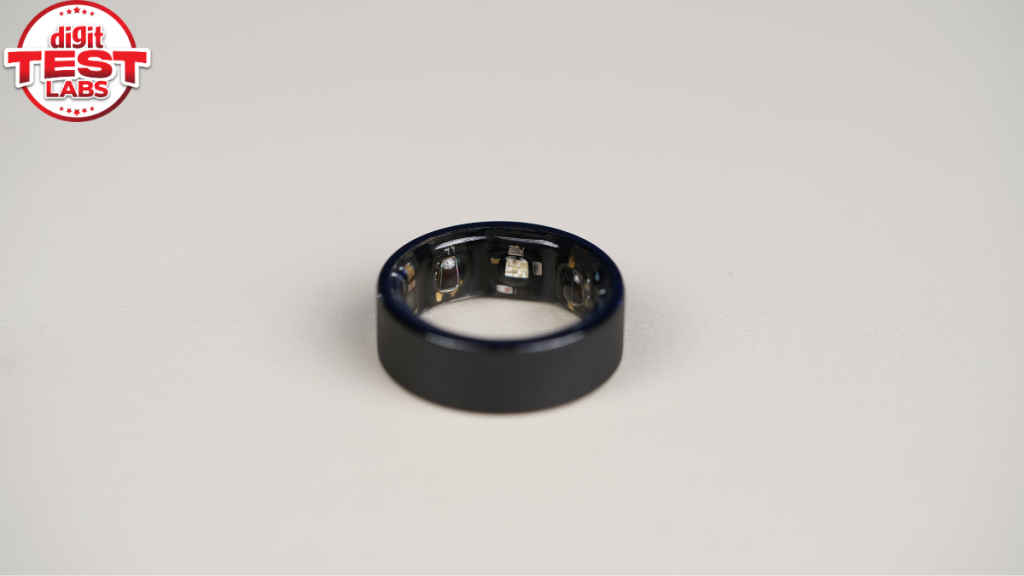
The Gabit ring uses three main sensors:
- Optical PPG sensor for heart rate and blood oxygen
- 3-axis accelerometer for movement tracking
- Skin temperature sensor
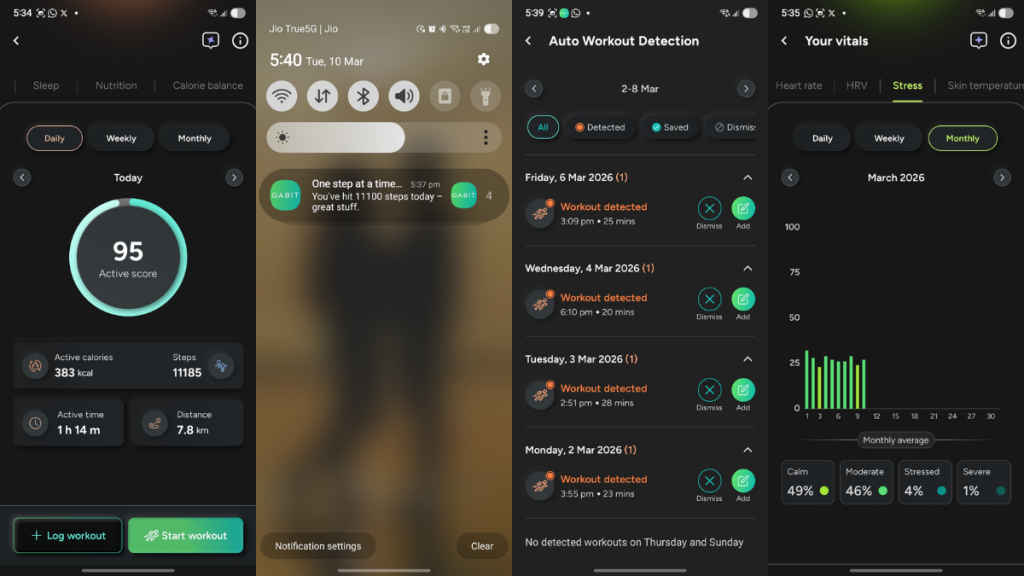
Starting with step counting, it measures precisely or close to what my Samsung Galaxy Watch 4 was showing. The calorie count varied by a few kcals. Not bad.
In daily use, heart rate readings were consistent and sometimes deviated by a few beats per minute (BPM) compared to my Galaxy watch.
Stress monitoring also provided comparable results to my watch.
The ring also records skin temperature data, and I have largely consistent data. The built-in PEP assistant tells me this means my body is effectively managing its temperature. In case there are random or irregular fluctuations, that could mean illness, the body is under stress, or hormonal cycles. But the app doesn’t automatically predict or give insights. You have to manually use the PEP assistant, and like most AI tools, this can make mistakes. So, use your due diligence.
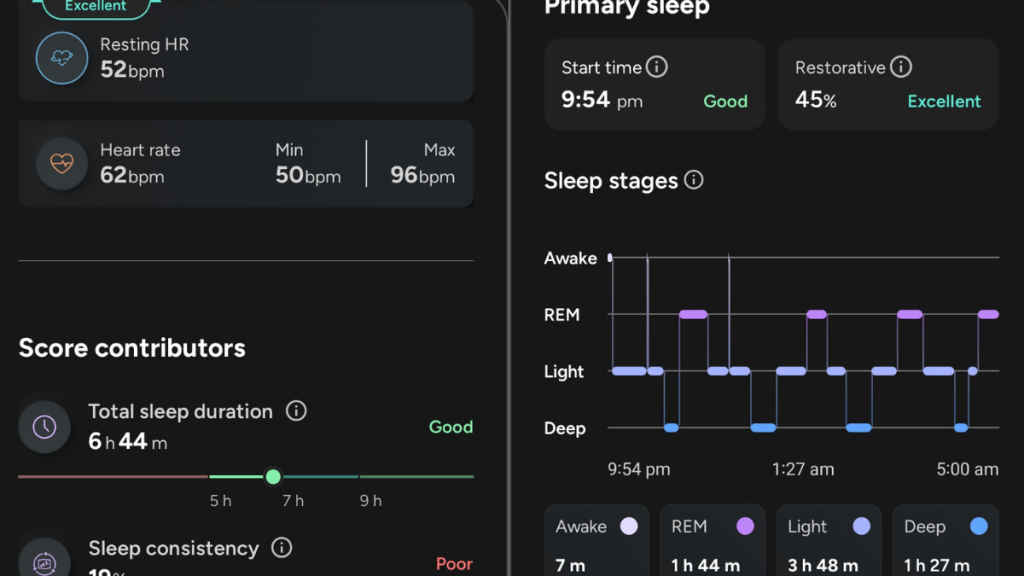
Sleep monitoring is one of the main reasons people buy smart rings. A ring is lighter than a watch and less likely to disturb sleep. The Gabit ring automatically tracks sleep using movement, heart rate patterns, and temperature changes.
The app shows:
- total sleep duration
- sleep debt
- consistency
- sleep stages like wake after sleep onset (WASO), deep sleep, REM sleep and light sleep
- resting heart rate
- sleep score, a grade like Poor, Good, and Excellent.
Sleep duration usually matched my actual bedtime and wake-up time. But the awake time could be slightly off.
Besides this, you can also test VO2 Max, log the food you consume to calculate calorie intake, compare it with calorie deficit, and get your recovery score on the Gabit app homescreen. By the way, the Gabit ring doesn’t support SpO2 or blood oxygen reading.
You can set the app appearance to day (light) or night (dark) mode, create tribes with fellow Gabit users and connect with these accountability partners of yours, set goals, and shop Gabit ring accessories, other Gabit and Nack (a Gabit company) nutrition products. The home screen also shows banner ads for Nack nutrition and other Gabit products.
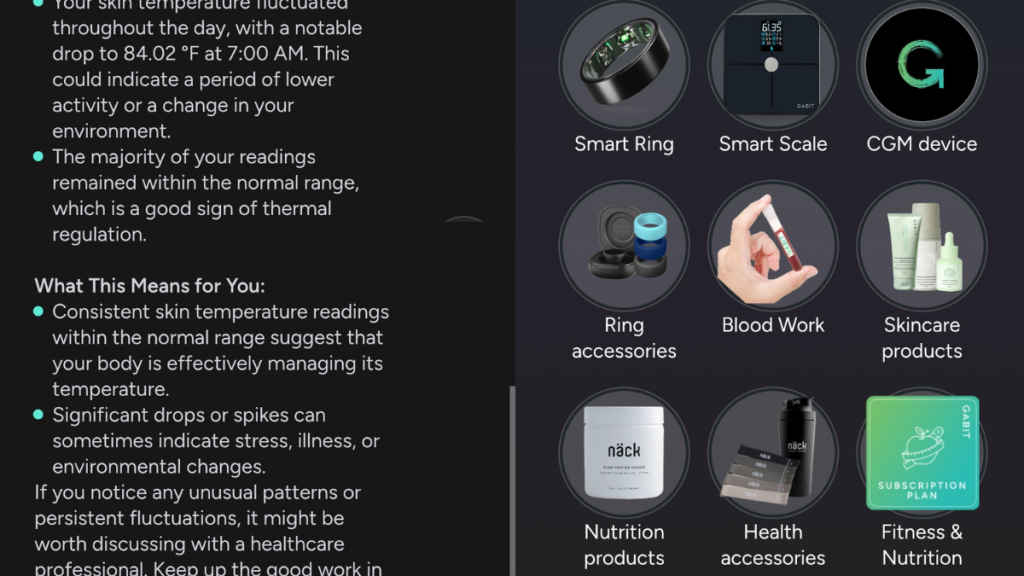
So, the Gabit ring relies heavily on its companion app. So, there is a lot of information densely presented. Besides that, those ads and tabs also fight for your attention. For some, this interface can seem crowded and overwhelming.
And of course, a limitation by design is that you need to use the phone app to manually run some tests, and you will need a stable internet connection to sync all the logged data and analysis properly.
Reliable battery life
Like I said in the intro, battery life is one of the big reasons I wanted a smart ring over a smart watch. The Gabit ring uses a very small lithium-ion battery between 14.5mAh and 21.5mAh, depending on size. And the company claims 7 to 10 days of battery life. In my testing, with regular syncing and workouts, I was getting by the weekdays.
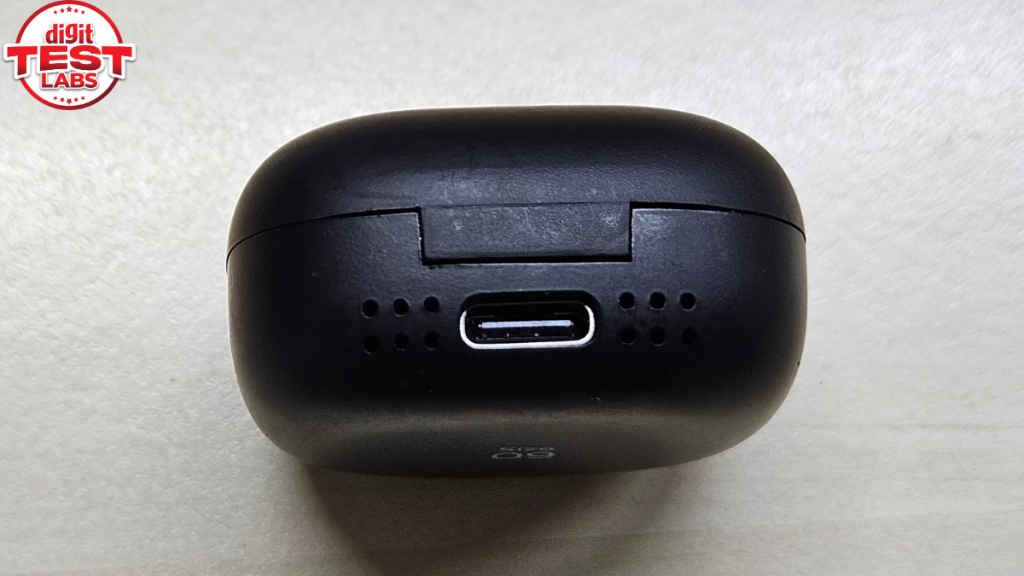
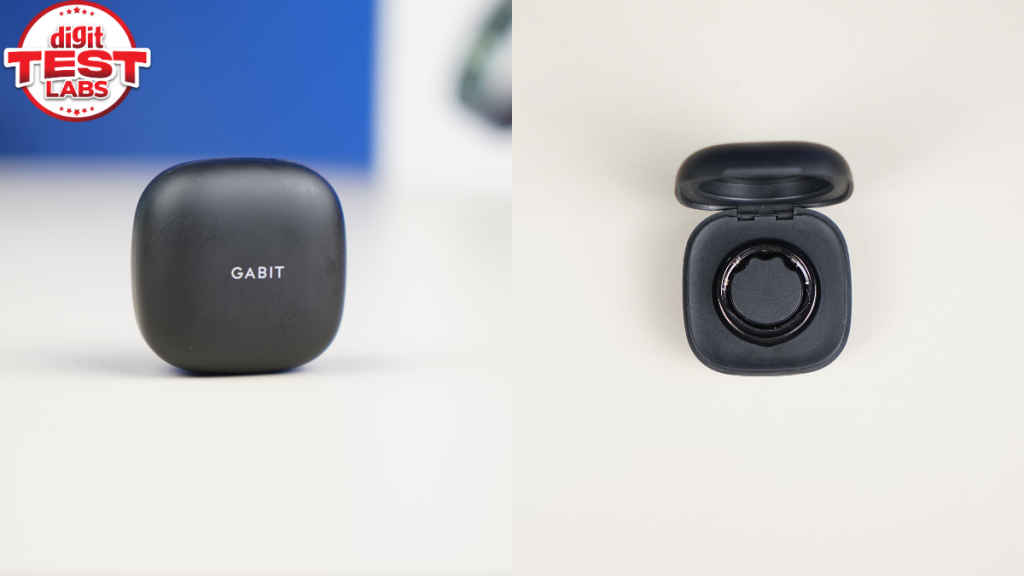
I didn’t have to charge it often like some smartwatches. And when the Gabit app gives you a low battery alert via its homescreen or a phone notification, you can place the ring in the bundled case. The case can be topped up with a USB-C charger and takes about 2 hours to fully fill the tank. A bit slow, but I don’t mind, as even if the ring is without any charge, it is still wearable as a ring, you know. You can’t do the same with a smartwatch.
The battery life is close to what many of the leading smart rings offer, but there are outliers like the Boat Valour Ring with up to 15 days of claimed runtime.
Should you buy a Gabit ring in 2026?
In daily use, the Gabit ring does a reliable job of passive health tracking. Heart rate readings are mostly consistent, sleep duration tracking works well, and the ring is comfortable enough to wear through the day and night. The titanium build feels durable, and battery life lasting most of the week is a practical advantage over many smartwatches that need daily charging.
The biggest benefit of the device is exactly that simplicity. You wear it, forget about it, and check the insights on the app later. You can use the app to manually run some of these tests and see all stats and results. The Gabit app UI and analytics could be improved.
If you are serious about workouts or athletic training and need deeper actionable insights, the Gabit ring may feel limited. There are no dedicated workout or sports modes, and heart rate readings can occasionally drift during intense movement. Athletes or fitness enthusiasts who rely on precise training metrics may still prefer a high-end smartwatch or fitness tracker.
However, if you are a regular user who wants a lightweight, continuous health tracker under Rs 15,000 that blends into everyday life, the Gabit ring is worth considering. It makes the most sense for people who like the idea of continuous health tracking but do not enjoy wearing a smartwatch all the time.
Keep reading Digit.in for similar reviews.


