
Vu Vibe DV review: A balanced QLED TV under Rs 35,000
 Follow Us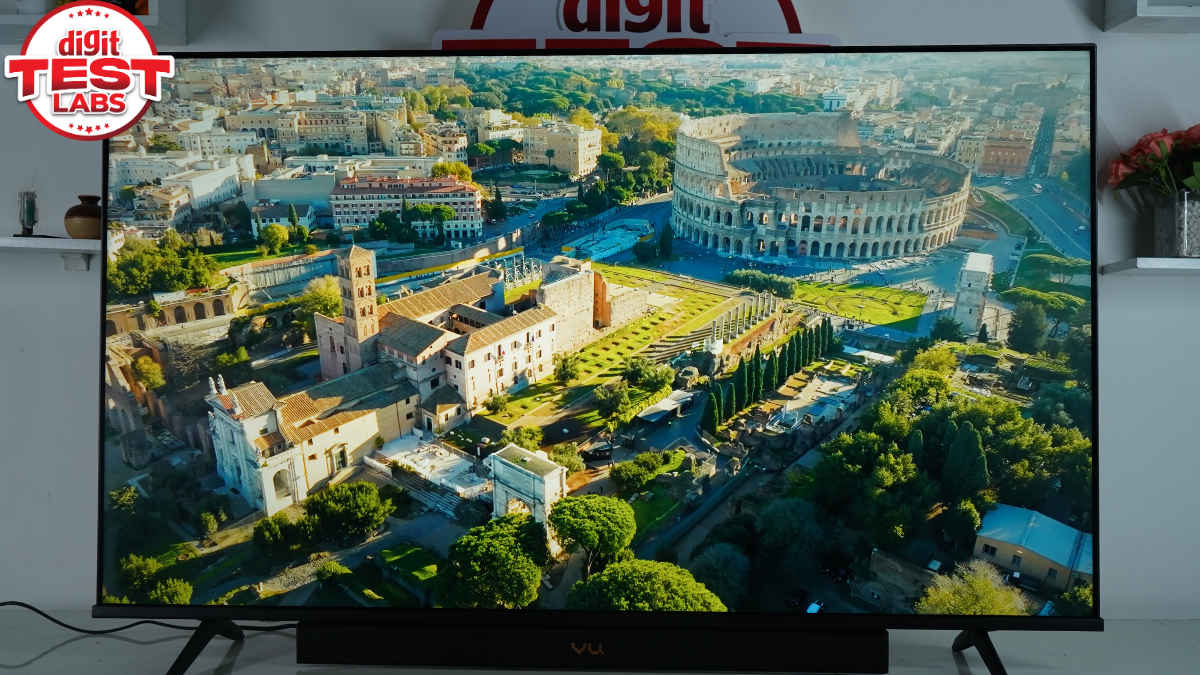

The Vu Vibe DV came to us for testing during the Digit Zero1 awards season last year. But since QLED TVs weren’t a category in the awards, it couldn’t participate. That said, over the months, we have used this TV a lot, and so I thought it deserves to be reviewed for the value it brings to the board. Vu launched the 55-inch model of this TV at Rs 36,999, and currently, it is available for Rs 34,990. And for that asking price, it brings a 4K HDR panel with Dolby Vision, HDR10, Google TV OS, a dedicated Game mode, and gaming features like VRR and ALLM.
Surely, the specs sound quite promising on paper, but the real question lies: how do they translate in real-world use? And so, should you invest in this 55-inch Vu Vibe DV QLED TV? Read on.
Vu Vibe DV: Display and audio
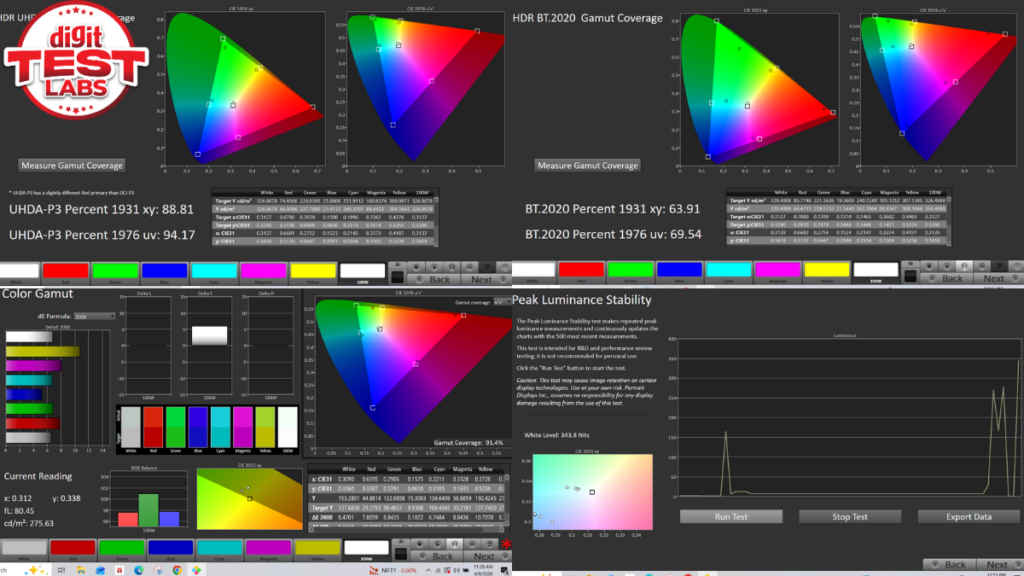
The Vibe DV uses a VA QLED panel with 4K resolution and support for HDR formats like Dolby Vision, HDR10, and HLG. The TV comes in multiple screen sizes: 43-inch, 50-inch, 55-inch and 65-inch. We have reviewed the 55-inch model. In our internal test, the TV projected 343.8 nits of brightness (close to the claimed 400 nits peak luminance) and 0.06 nits of black level, which gives about 5730:1 contrast ratio. That is not very high, but the results were clear and sufficiently detailed for a value midrange QLED panel. While watching Mission Impossible: The Final Reckoning’s underwater submarine scene, a favourite test scenario of mine, everything was quite legible on this panel.
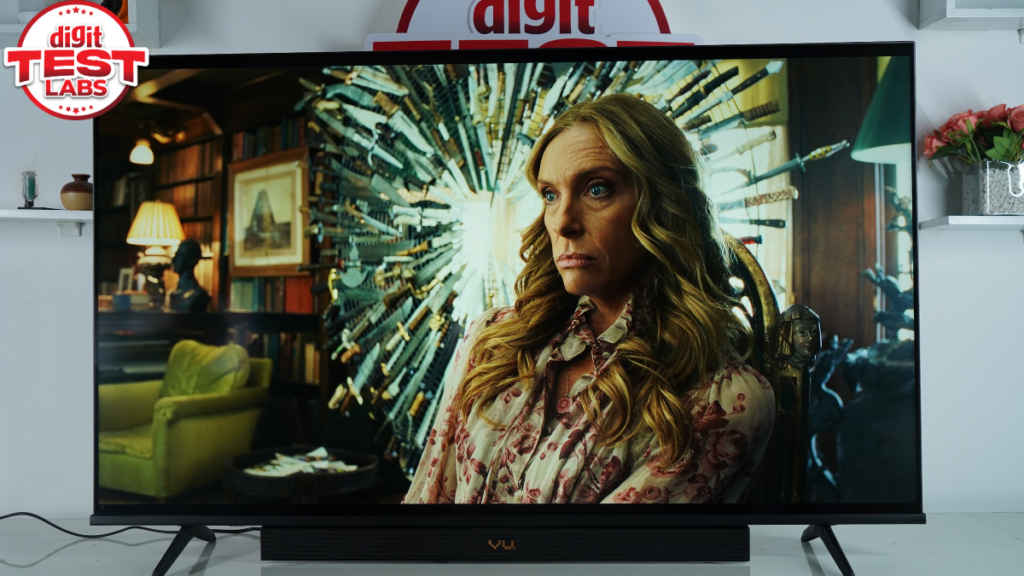
Colours are likeable but not very natural. The BT 709 colour gamut coverage measured around 91.4%, which results in an enjoyable SDR playback for YouTube, cable channels, and streaming content. As for HDR, the panel covered 69.54% in the BT 2020 gamut and 94.17% in UHDA-P3 coverage in Portrait Displays’ Calman colour calibration tool. Again, respectable numbers and in Filmmaker Mode, the skin tones and overall colours look slightly washed out, but the dark scenes and portions carry discernible details.
When it comes to motion handling, you can enable MEMC for smoother visuals in soap operas and sports, but in movies and web series, I suggest you disable this for a more original cinematic frame rate.
In case of games, the TV supports Game Mode, Auto Low Latency Mode (ALLM), and Variable Refresh Rate (VRR) through HDMI 2.1. But since the native refresh rate is 60Hz only, things like VRR are limited. So, you can have casual gaming. That’s it.
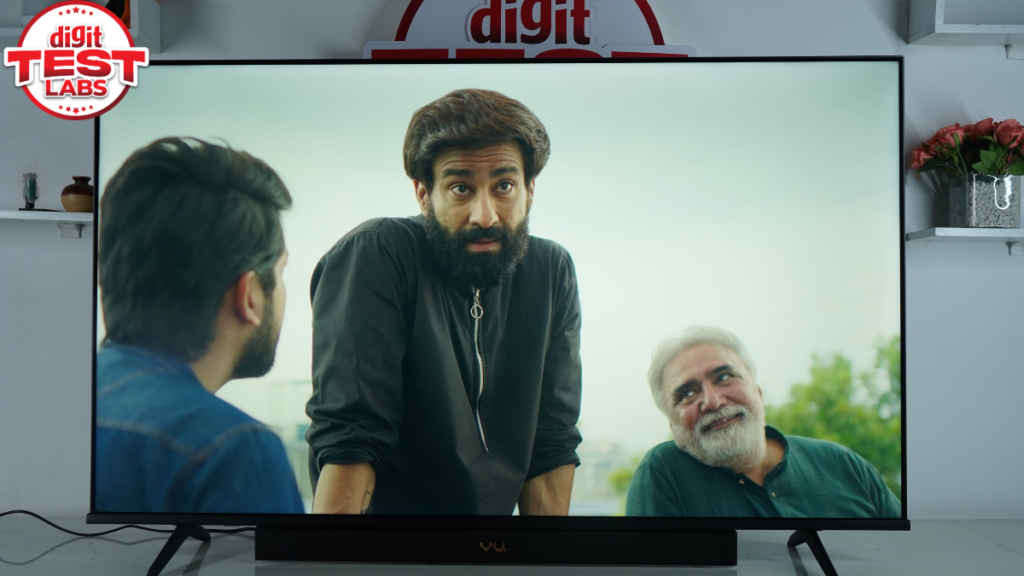
On the audio front, HDMI-based eARC and ARC are available. But the headlining feature is the integrated 88W soundbar with Dolby Atmos support. The system uses a 4.1-channel equivalent setup with two main speakers and two dedicated tweeters. This delivers good front-firing sound with clear enough vocals, dialogues and fine overall output. Since you sit in front of the TV, that matters to some extent. But, when compared against a comparably priced Lumio Vision 7, this one comes second in loudness and overall quality.
Also Read: Panasonic Shinobi Pro PX950 Mini LED TV review: Bright 4K HDR performance at a premium price
Software interface
Vu Vibe DV is powered by a 1.5GHz quad-core VuOn AI processor paired with a Mali-450 GPU. It comes with 2GB RAM and 16GB internal storage. These are rather standard offerings in this range.
On top of this, you get Google TV based on Android 12 with the December 2024 security patch. Considering some of its rivals are giving Android 14, this seems a bit dated under the hood. But, on the surface, the Google TV UI is quite familiar and easy to use, even for a new user. Google’s operating system organises content well across different streaming platforms instead of forcing users to jump between apps constantly.
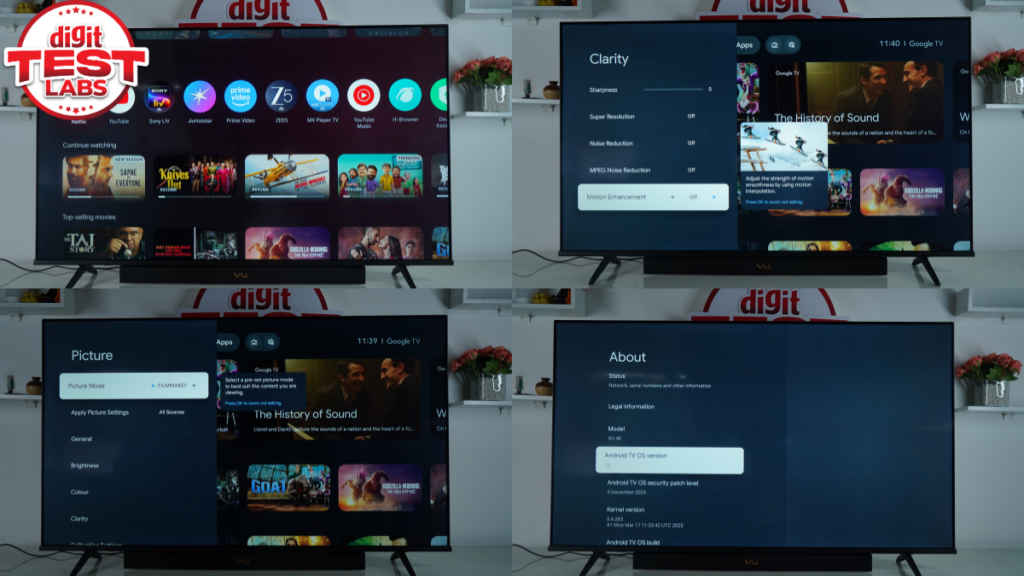
The everyday performance is largely smooth with occasional expected lags and micro-stutters. This is apparent in the time it takes to load all thumbnails on the homescreen after a cold boot. But, overall, the navigation across menus and apps feels responsive enough.
And since it is Google TV, you get built-in Google Assistant for voice commands, and for casting, there is both Chromecast and AirPlay support. So, you have pretty much everything one expects in this segment.
Design, remote and connectivity
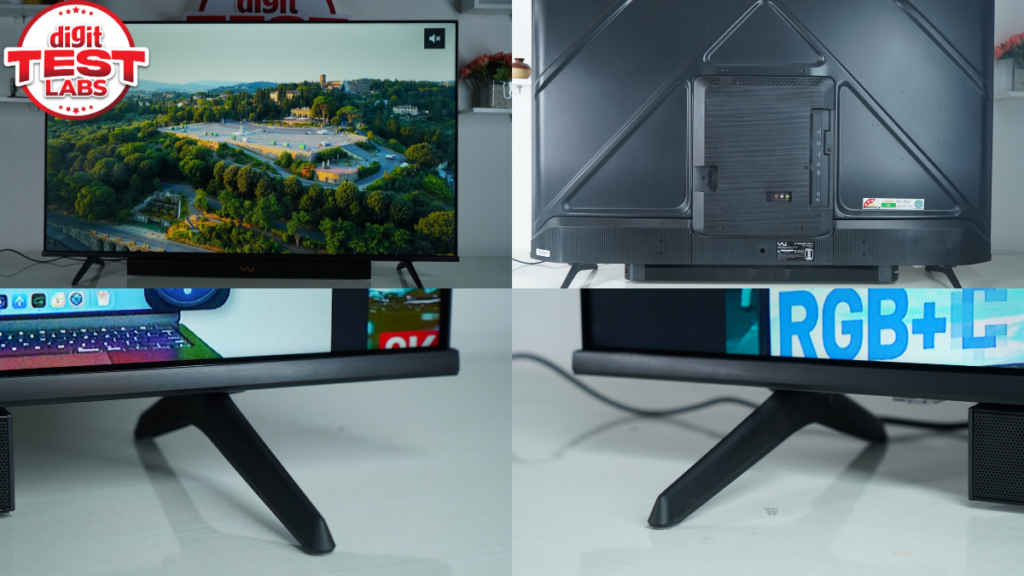
The Vu Vibe DV stands out because of the integrated soundbar beneath the display. There is a massive Vu insignia on this soundbar. So, there is no confusion about the brand name. It is a purposeful design choice. The rest of it is routine stuff: inverted-V stands, slim bezels on three sides, a tad thicker chin, to which the soundbar is connected.
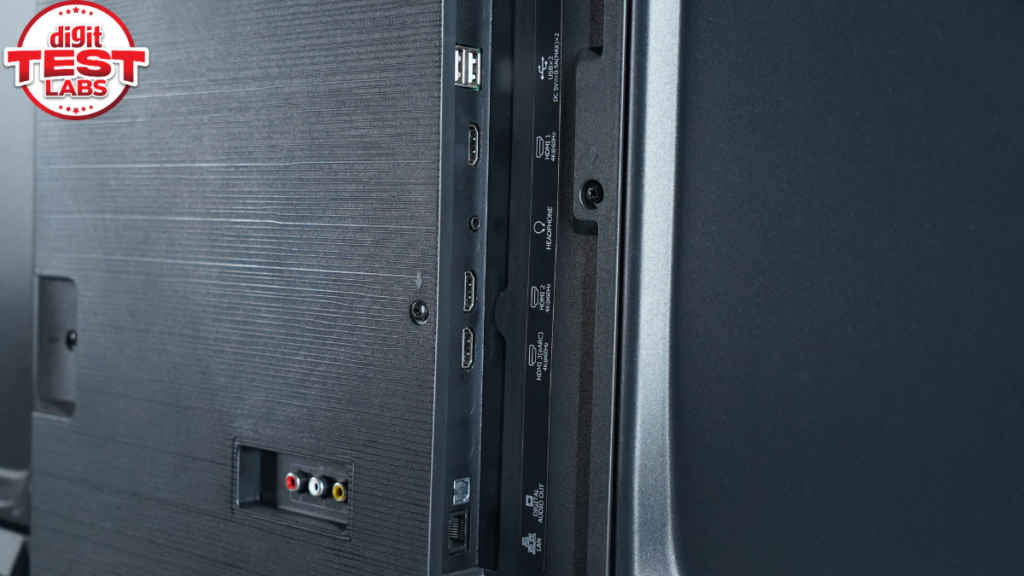
On the left side (behind the TV), you get the IO lineup, including three HDMI ports, one with eARC support, alongside two USB ports, Ethernet, optical audio out, AV input, and a headphone jack. In case you want to connect a different audio device, the HDMI eARC support would allow lossless audio passthrough through it.
Wireless options include dual-band Wi-Fi, Bluetooth 5.3, and Apple HomeKit.
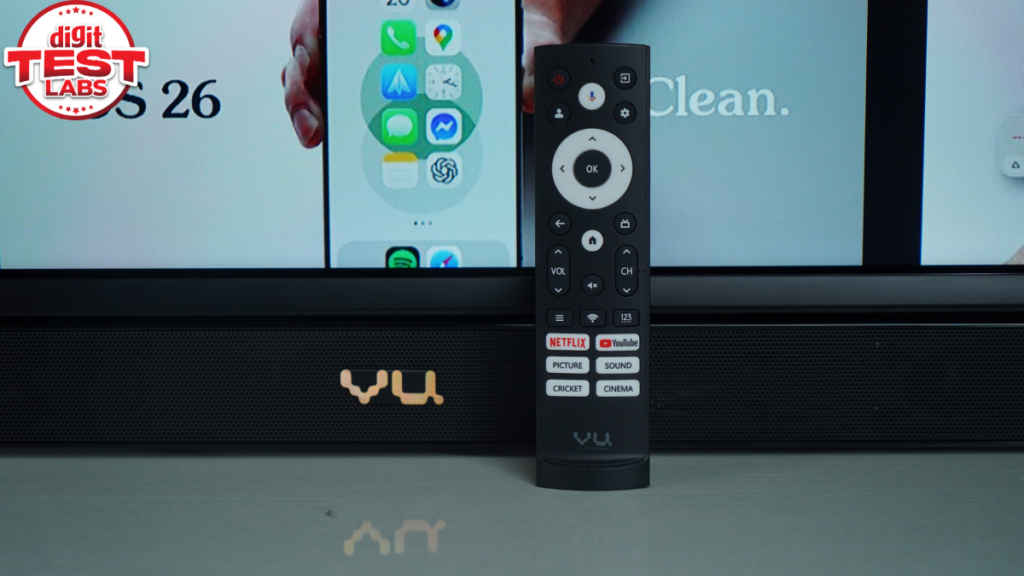
The remote connects via Bluetooth, and it also has a thicker bottom portion. It is very handy and has the requisite buttons for navigation, input modes, volume and channel change, and OTT hotkeys. The OTT hotkeys are limited to just Netflix and YouTube. Rest, you get hotkeys for Picture, Sound, Wi-Fi, and even two picture modes, viz., Cinema and Sports. These don’t take you to any settings page; they straight-up toggle or cycle through the modes in question. Perhaps, the idea is that these are the most commonly used settings on a TV by Vu’s target audience. It makes sense.
Should you buy Vu Vibe DV TV in 2026?
The Vu Vibe DV has a head-turning design and interesting features like a 55-inch 4K HDR QLED panel, an 88W integrated soundbar, Google TV OS, and a decent connectivity setup. The panel produces appealing visuals, and most users will have a good 4K viewing experience on this TV. The speaker setup delivers fairly loud and engaging sound. The software experience is neat and easy to use, with hiccups that are par for the course in this price bracket.
However, some things could have been better, like the audio tuning, as well as the colour and contrast calibration. We would have also appreciated more software updates and additional HDMI 2.1 ports.
For what’s on offer, especially at around Rs 35,000, the Vu Vibe DV should be serviceable for regular users. You are getting a balanced 55-inch QLED TV. But the market has other options like the Lumio Vision 7 (review) at this price. However, that TV has its own downsides, such as weaker shadow detail. So ultimately, the choice depends on what matters more to you.
Either way, the Vu Vibe DV QLED TV is a pretty decent option for its asking price.
Keep reading Digit.in for similar reviews.
Also Read: Hisense U7Q Mini LED TV review: Practical option under Rs 70,000 with fair trade-offs
Vu Vibe Series 55 inch Ultra HD 4K Smart QLED TV (55VIBE-DV) Key Specs, Price and Launch Date
| Release Date: | |
| Market Status: | Launched |


