
Cassette AC vs split AC: Which takes less electricity and offers better cooling for your room
 Follow Us
For small and medium-sized rooms, split ACs usually consume less electricity.
Cassette ACs consume more electricity per hour compared to a standard split AC.
A split AC is the better choice for homes and smaller rooms, while a cassette AC works best for bigger spaces.
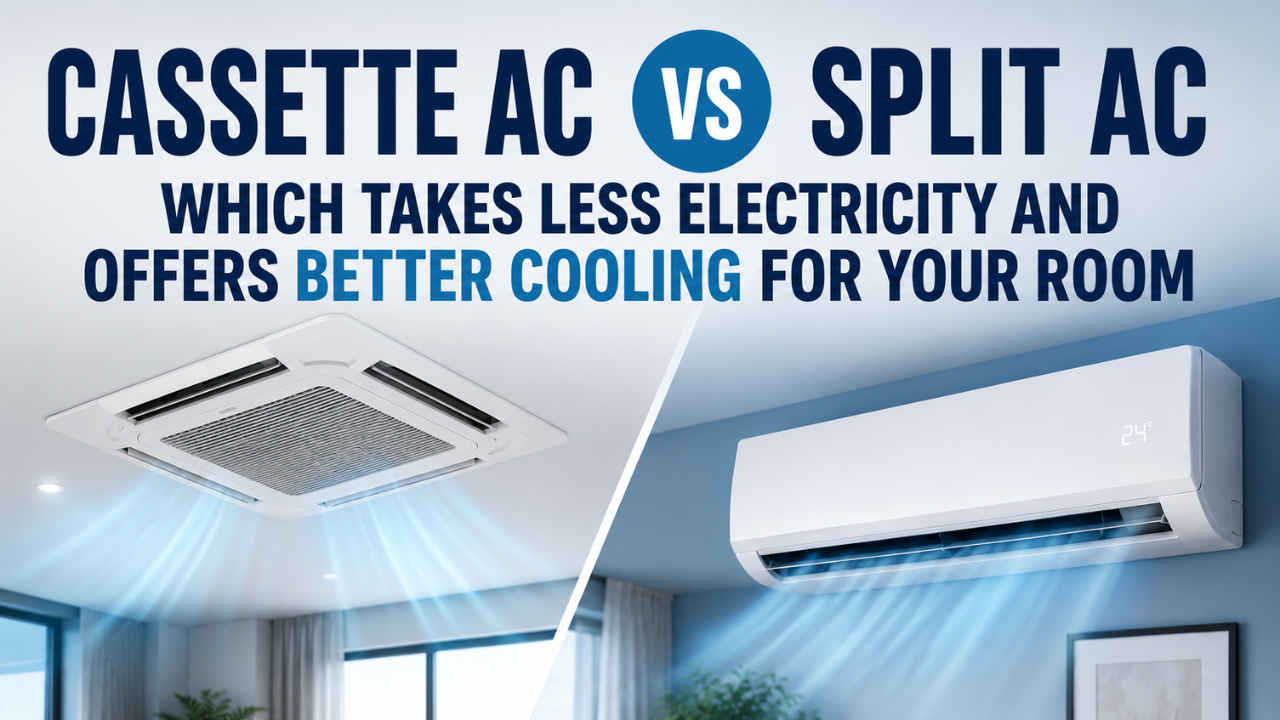

Buying an AC is no longer just about choosing the right tonnage or brand. The type of AC you pick also matters because it can affect cooling performance, electricity use and even how your room looks. Among the popular options available in the market are cassette ACs and split ACs, but both are designed for very different kinds of spaces.
 Survey
A split AC is the most common choice for homes. It is mounted on a wall and sends cool air directly into the room, making it suitable for bedrooms, living rooms and smaller office spaces. On the other hand, a cassette AC is fixed to the ceiling and spreads air in multiple directions. This makes it a better option for large halls, offices and showrooms.
Also read: Using Sleep Mode on your AC? Here is how it affects cooling and electricity use
Cassette AC vs split AC: Which takes less electricity?
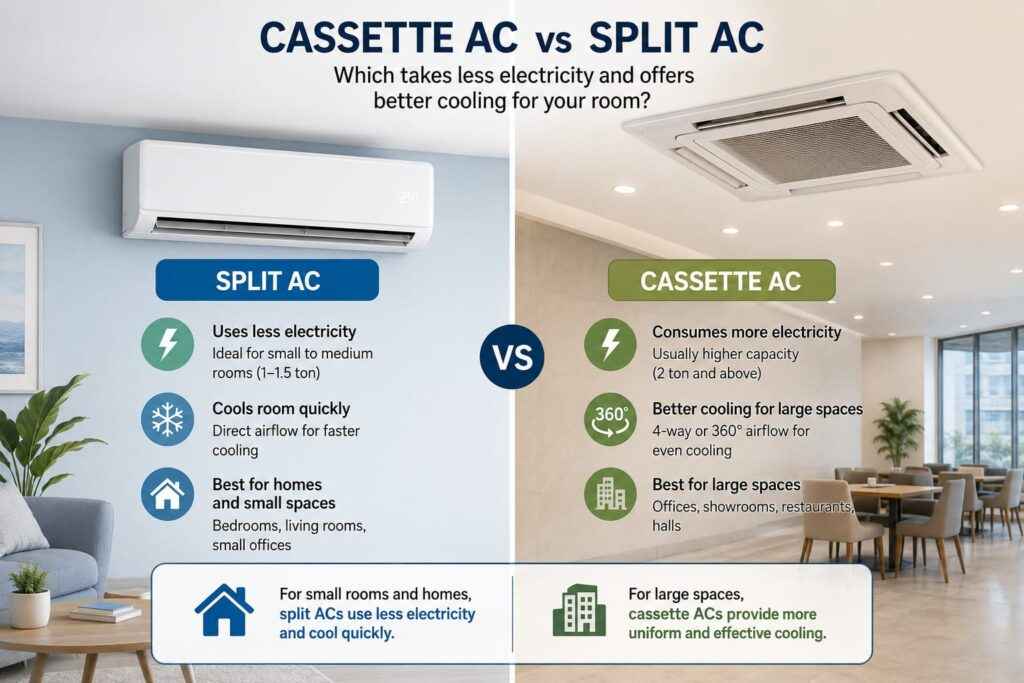
For small and medium-sized rooms, split ACs usually consume less electricity. Most home split ACs come in 1-ton to 1.5-ton capacities, which is enough for regular bedrooms or living rooms. Modern inverter split ACs are also designed to save power by adjusting cooling based on the room temperature, helping reduce electricity bills.
Cassette ACs generally have larger capacities, starting from around 2 tons. Because of this, they can use more electricity per hour compared to a standard split AC. While cassette ACs consume more power, they can sometimes be more efficient than installing multiple split ACs, like in large open spaces.
To put it straight, if you want an AC for a normal-sized room at home, a split AC is usually the more energy-efficient option.
Also read: Why AC gas leaks happen and how you can avoid them
Cassette AC vs split AC: Which offers better cooling?
When it comes to cooling smaller rooms, split ACs work very well. They provide direct airflow and cool the room quickly. This makes them ideal for bedrooms and personal spaces where comfort matters the most.
Cassette ACs are better suited for larger spaces. Their biggest advantage is 4-way or 360-degree airflow, which spreads cool air evenly across the room. This helps avoid uneven cooling or hot spots in corners. For offices, large living areas, restaurants or halls, cassette ACs can deliver more balanced and comfortable cooling.
So, a split AC is the better choice for homes and smaller rooms, while a cassette AC works best for bigger spaces that need uniform cooling.
Also read: Not getting enough cooling from your air cooler? Here are easy fixes to try


