
Hisense U7Q Mini LED TV review: Practical option under Rs 70,000 with fair trade-offs
 Follow Us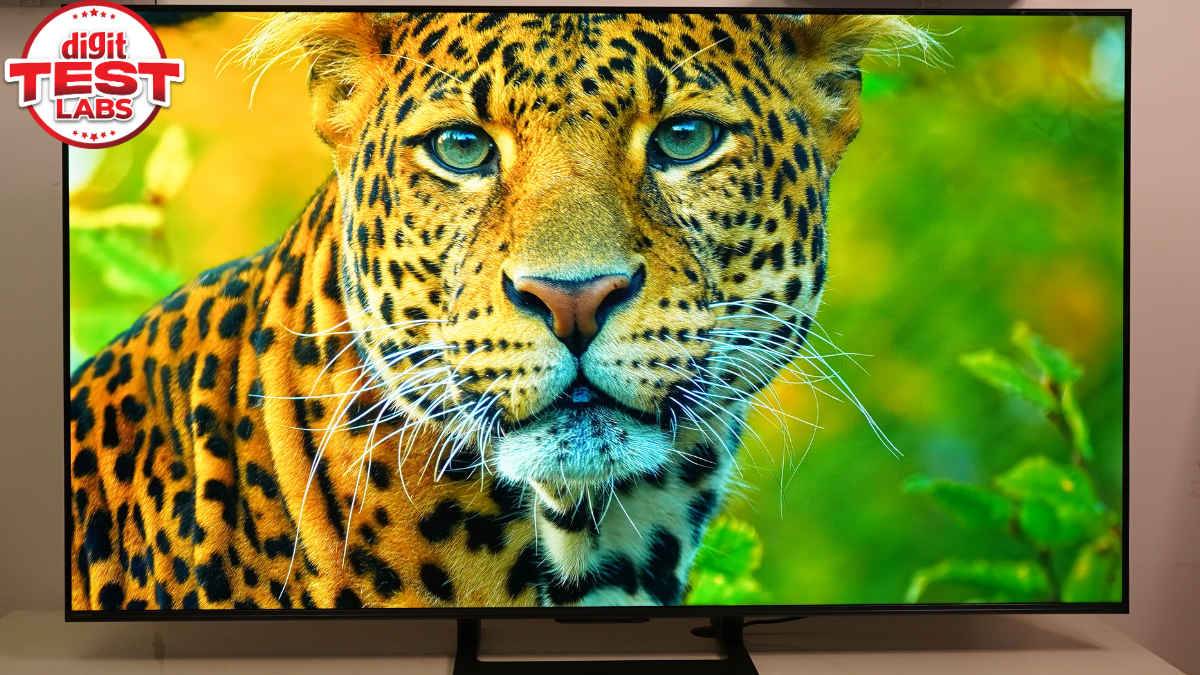

The Hisense U7Q is a 65-inch QD Mini LED TV that launched in India in June 2025 at Rs 79,999 and is now retailing for around Rs 69,999. It came in for the Digit Zero One Awards and was a runner-up for the best-value Mini-LED TV. But there was more to say about the TV than the picture-based metrics on which we decided the best value TV winner. It is specced to impress with a 144Hz refresh rate screen, MEMC, VRR, AMD Freesync Premium, Dolby Vision IQ and HDR 10+ Adaptive format support, Filmmaker mode, a few AI-based enhancements, 4 HDMI 2.1 ports, Vidaa OS, built-in Alexa voice assistant support, 47W 2.1 channel three-speaker setup tuned by Devialet, including a sub-woofer and Dolby Atmos support. In this review, after a long time of use, we will share our assessment of how good this TV is for the asking price.
Respectable visuals, rich in gaming features
The Hisense U7Q uses a 4K 8-bit+ FRC panel. It is a Mini LED LCD type with full-array local dimming. You can buy it in 55-inch, 65-inch, 75-inch, 85-inch, and 100-inch models. We got the 65-inch variant, and it is a big enough panel for engrossing movies, shows and any other content in a standard Indian room.
Hisense has added support for HDR formats like Dolby Vision, Dolby Vision IQ, HDR10, HDR10+ and HLG, which is impressive considering some brands exclude certain formats in this range.
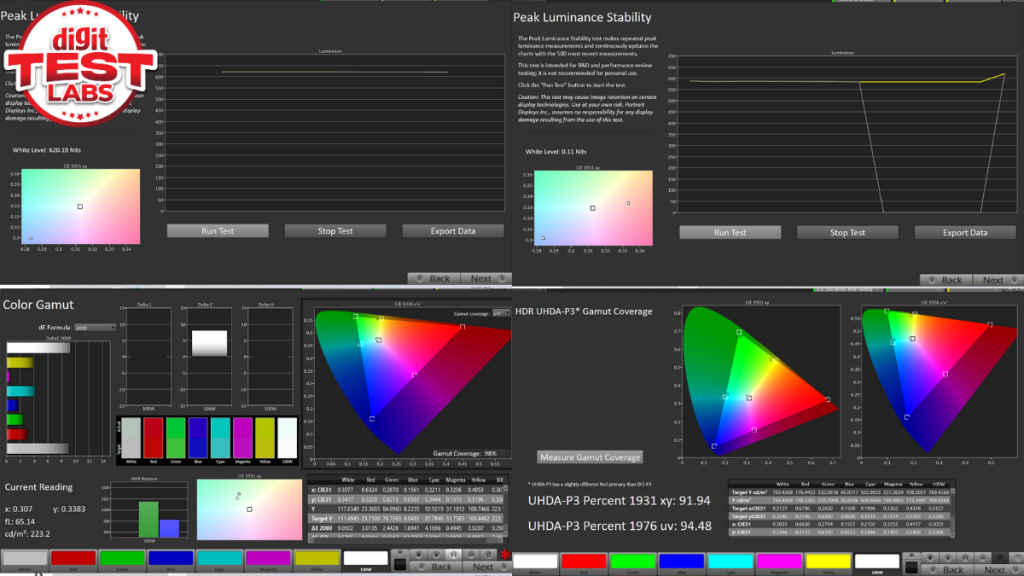
In peak HDR brightness testing at a 25% window on Portrait Displays’ Calman colour calibration tool, the U7Q reached 620 nits, which is lower than some newer Mini LED rivals but still sufficient for most HDR content in living-room lighting. Black levels measured 0.11 nits, which explains why the TV delivers reasonably deep blacks for an LCD, though not OLED-like. In colour coverage tests, the panel reproduced 94.48% of UHDA-P3, 71.7% of BT.2020, and 98% of BT.709, with an average Delta E of 3.1. These figures point to strong SDR performance, though HDR colour volume is not class-leading.
For comparison, the Lumio Vision 9 (review) posts stronger raw numbers in several areas. It measured 903 nits peak brightness at 25%, significantly brighter than the Hisense. Colour coverage is also wider, with 98.04% UHDA-P3, 82.12% BT.2020, and 100% BT.709, alongside an excellent average Delta E of 1. On paper, the Lumio clearly leads in colour accuracy and peak luminance.
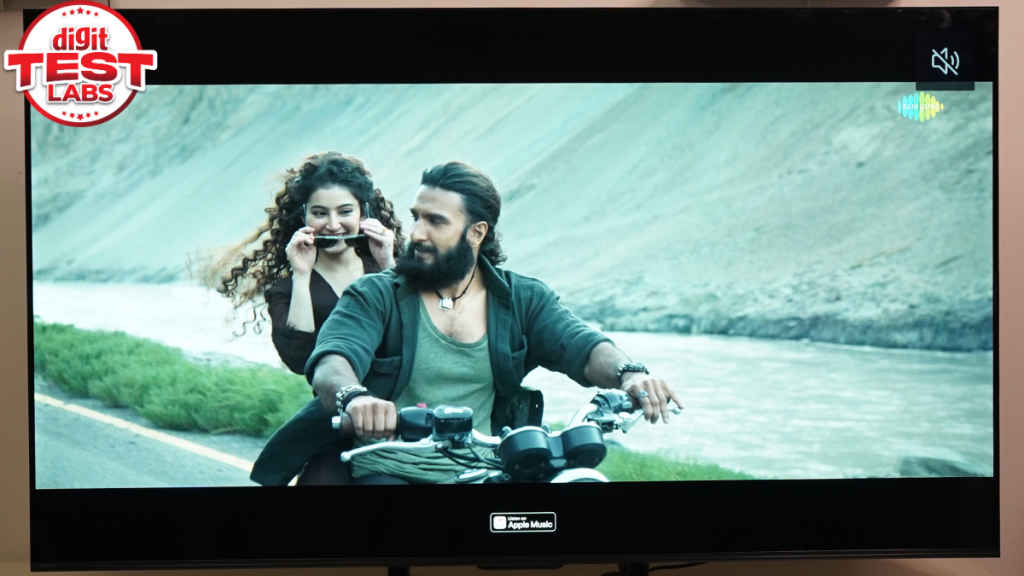
In everyday viewing, the Hisense U7Q offers a comfortable field of view. In a well-lit room, reflections are visible, but they do not significantly interfere with the on-screen image. Colours and contrast do not consistently pop, but the presentation remains stable and easy to watch over long sessions. Filmmaker Mode is available and useful if you want a more authentic picture profile that aligns closer to the creator’s intent in movies and shows.
The overall colour temperature leans slightly warm. At times, blues can appear faintly greenish. In certain scenes, colours may look a bit washed out, and subjects on screen do not always stand out strongly due to limited depth and fine detail. These impressions became more noticeable when the TV was viewed alongside a pricier Sony Bravia 5, which offers greater clarity and image separation. That said, at its price, many buyers may not mind the U7Q’s softer, less dramatic presentation. Skin tones are handled well, and importantly, there were no obvious blooming artefacts during our viewing, which is a positive. In the high-speed dogfight in Top Gun: Maverick, the TV also handled motion well.
When it comes to sports content, motion performance is less convincing. During fast-paced cricket matches, the ball occasionally appeared to skip slightly, creating a faint trailing effect. With older SD shows such as Sarabhai vs Sarabhai, detail levels were modest. You may be left wanting more texture or clarity in lower-resolution sources.
While the Lumio Vision 9 wins on colour accuracy and brightness benchmarks, the U7Q handles a wider range of HDR formats and also offers a fuller gaming feature set, including higher refresh rate support, VRR, ALLM, and better console compatibility. These shape how responsive and smooth the TV feels during actual gameplay.
Also Read: Panasonic Shinobi Pro PX950 Mini LED TV review: Bright 4K HDR performance at a premium price
As for gaming, U7Q has a strong feature set. With HDMI 2.1 support, high refresh rate capability, VRR, AMD Freesync Premium and ALLM, the TV handles modern consoles and PCs confidently. Input lag is low enough. Fast-paced shooters feel responsive, and racing games like Gran Turismo 7 benefit from smooth motion and consistent frame pacing. Colours in HDR gaming feel limited, though.
The TV supports popular console features and switches into game mode automatically when a compatible device is detected. For casual and even moderately competitive gamers, the U7Q offers excellent value in this price range.
Strong design and port selection
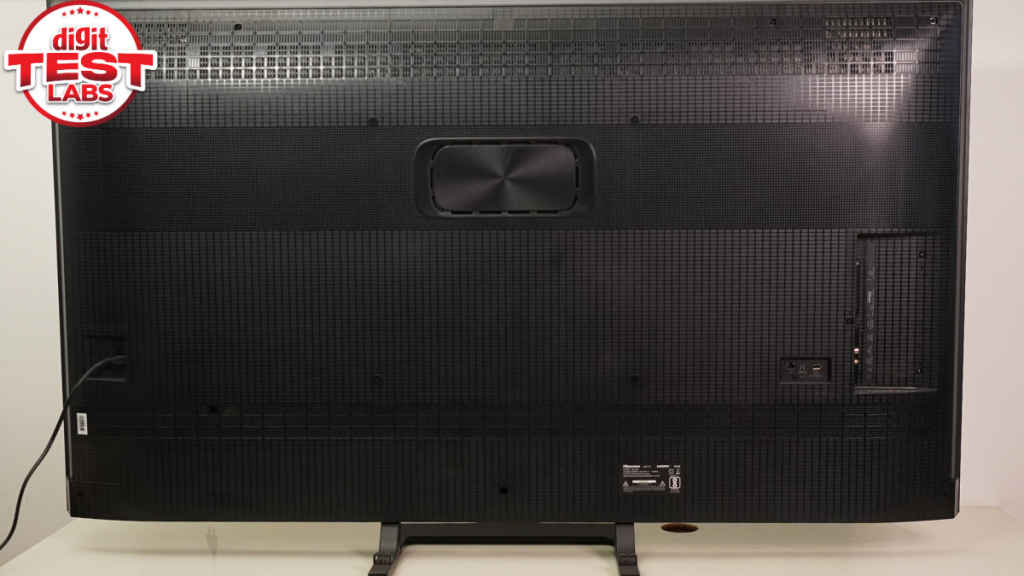
The Hisense U7Q has a clean, understated design. The bezels are slim, and the panel looks modern without trying to stand out unnecessarily. The central stand design provides good stability and leaves enough clearance for a soundbar. Build quality feels solid for the price, with no obvious flex or creaking during installation.
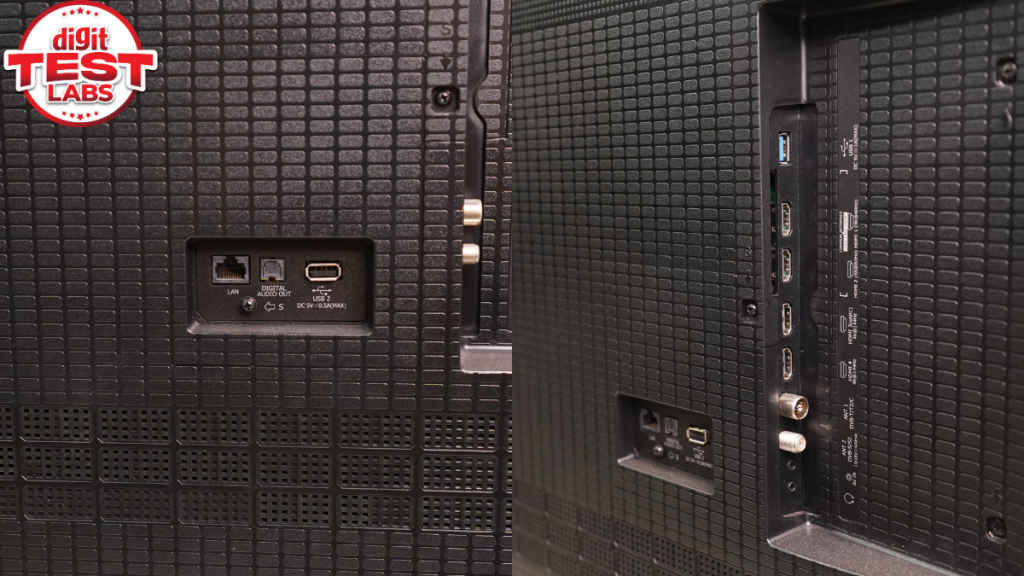
Port selection is practical. The TV offers multiple HDMI ports, including HDMI 2.1 for gaming, along with USB ports, Ethernet, optical audio out, and antenna input. HDMI 2.1 support includes features such as ALLM and VRR, which are important for console and PC gamers. Wi-Fi and Bluetooth connectivity are stable, and pairing external devices was trouble-free during testing.
Port placement is mostly rear-facing with some side access, making wall mounting manageable. Cable management is basic but functional.
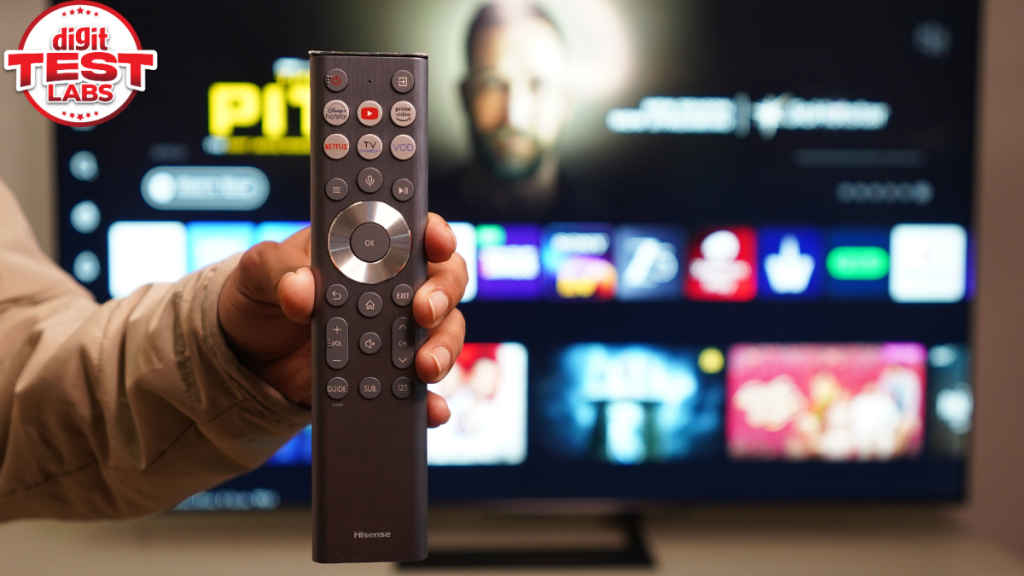
The remote is very long. The grey colour, brushed metal finish, and disc-like navigation ring in the middle give it a distinct look, but some may find it gaudy. It is battery-powered and has no charging option.
Useful UI and audio
The Hisense U7Q runs on Linux-based Vidaa OS, which remains one of the most user-friendly smart TV platforms. The screen powers on and turns off with a unique ‘curtain effect’. The home screen uses a vertical feed that mixes theme-based rows with platform-led recommendations. Banner ads are present but not intrusive.
Navigation is smooth. The menu is present on the left sidebar. The settings menu is logically organised with different modes and settings. It also has dedicated sections for kids and gaming, with the latter including free-to-play, controller-free casual games.
Voice control is flexible but sign-in dependent. Vidaa supports Alexa, Google Assistant, and Vidaa Voice, but each requires logging in to the respective service. This gives users the freedom to choose whichever ecosystem they are already comfortable with, rather than locking them into a single assistant.
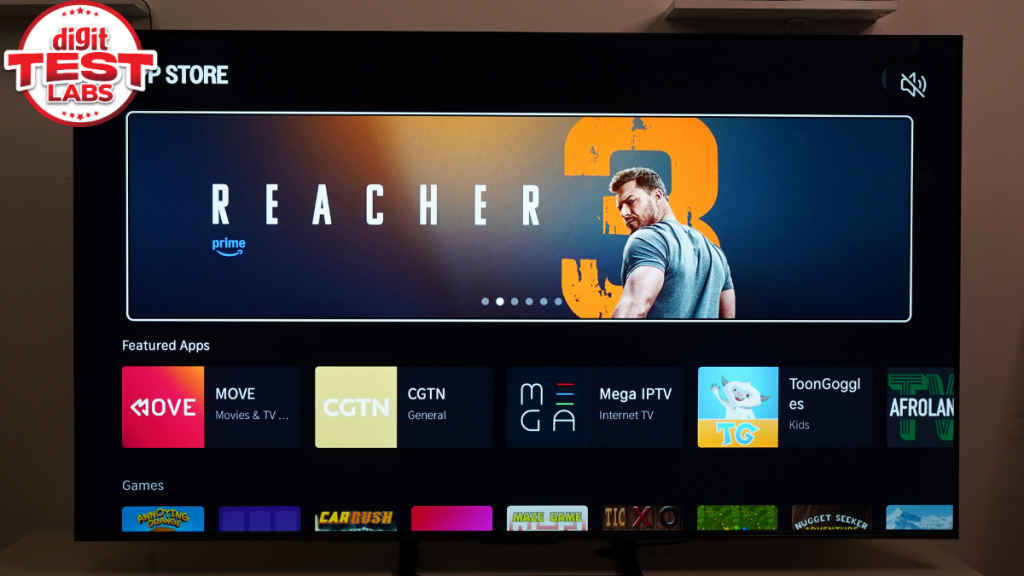
The built-in App Store has several apps, but not necessarily the popular names or the ones you want. For instance, it doesn’t include VLC or Spotify.
The TV did get some firmware updates during the review period, which was reassuring.
Audio performance is respectable for a TV in this class. The built-in speakers deliver clear dialogue, decent bass and adequate volume for everyday viewing. Volume increase with every step doesn’t feel satisfying. For films and sports, a soundbar will significantly improve the experience, but for news, shows and casual viewing, the built-in audio is sufficient.
Should you buy the Hisense U7Q?
At its current price of Rs 69,999, the 65-inch Hisense U7Q makes more sense today than it did at launch. It does not lead the segment in raw brightness, colour accuracy, or cinematic depth. Models like the Lumio Vision 9 offer better benchmark numbers, but TVs are not judged only by lab charts.
The U7Q’s strength lies in how complete the package feels at this price. It supports every major HDR format, including Dolby Vision IQ and HDR10+ Adaptive, offers a 144Hz panel with VRR and AMD FreeSync Premium, and includes four HDMI 2.1 ports. Gaming performance is impressive, and the feature set is future-ready in a way many rivals are not. In everyday viewing, the picture may not dazzle, but it remains stable, comfortable, and easy to watch over long sessions.
Audio performance is also better than most TVs in this range, thanks to the 47W 2.1-channel setup tuned by Devialet. You may still want a soundbar for cinematic impact, but you are not forced into one immediately. Vidaa OS is smooth and functional, even if app availability is not as broad as Google TV.
So, yes, for the price you pay, there are some tradeoffs like limited app availability on Vidaa OS, a long and dated-looking remote, ghosting in sports content, average upscaling, and weaker details and HDR punch. If you want the brightest, sharpest, most cinematic image, look elsewhere. But if your budget caps at Rs 70,000 and you value gaming features, HDR format compatibility, and respectable visuals, you can consider the Hisense U7Q. It offers a balanced mix of performance and features.
Keep reading Digit.in for similar reviews.
Also Read: Haier M92 QD- Mini LED TV review: Promising features, mixed execution


