

Motorola Edge 70 Fusion vs Nothing Phone 4a: Display, performance, operating system, battery, camera and price
 Follow Us
Both smartphones come with similar performance and storage options in the mid-range segment.
Nothing Phone 4a focuses more on camera features and longer software support.
Motorola Edge 70 Fusion stands out with a bigger battery, faster charging, and a smoother display.
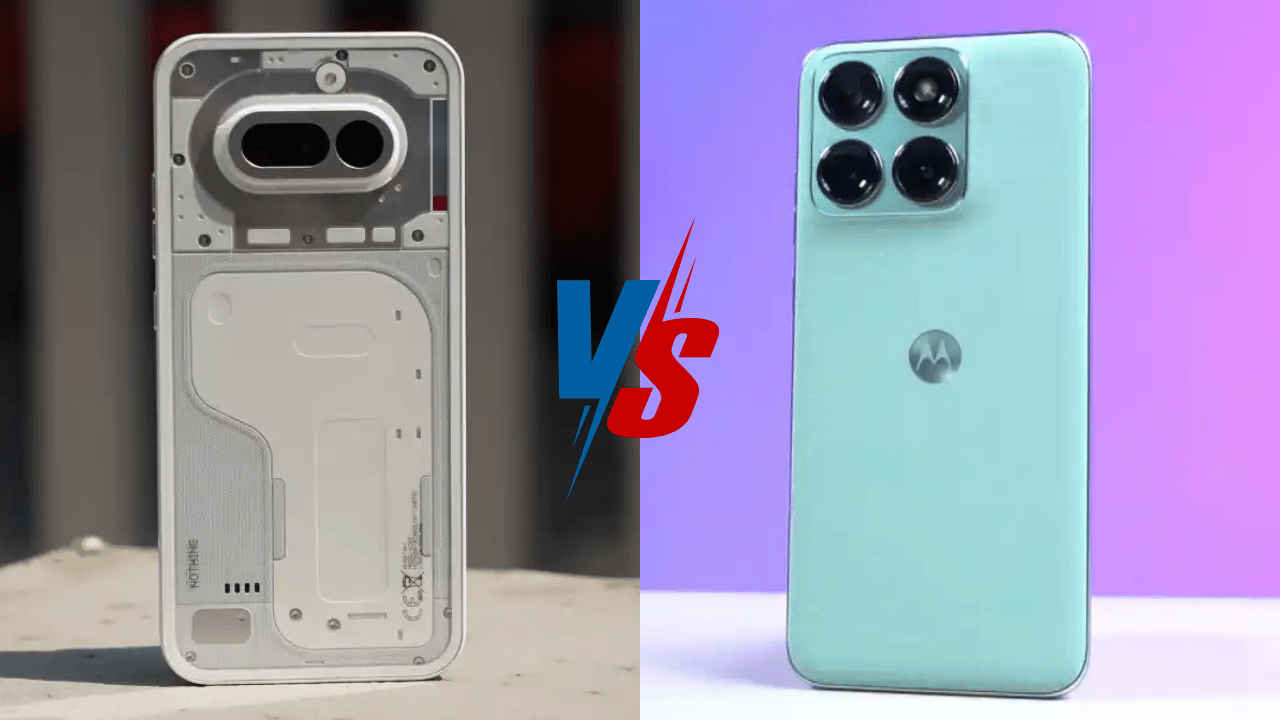

The Motorola Edge 70 Fusion and the Nothing Phone 4a are two mid-range devices that recently debuted in the Indian market, strong mid-range smartphones in India. Both devices, the handsets, run on a Qualcomm Snapdragon 7s Gen 4 processor and offer up to 12GB of RAM and 256GB of storage. While they have a similar processor, each phone has its own advantages and disadvantages. The Nothing Phone 4a stands out with its flexible camera system, longer software support, and clean Nothing OS. On the other hand, the Motorola Edge 70 Fusion is designed to offer the best in terms of battery life, fast charging, and a 144Hz display. Here’s a spec-based comparison of the Motorola Edge 70 Fusion and Nothing Phone 4a.
 Survey
Motorola Edge 70 Fusion vs Nothing Phone 4a: Display
The Nothing Phone 4a has a 6.78-inch AMOLED display with a maximum refresh rate of 120Hz. To safeguard the device’s display, the company has included Corning Gorilla Glass 7i. The device’s display can support a peak brightness of up to 4,500 nits under bright sunlight.
In contrast, the Motorola Edge 70 Fusion features a slightly larger 6.8-inch FHD+ AMOLED display, which supports a higher refresh rate of 144Hz. The device also sports Corning Gorilla Glass 7i to protect the device from accidental drops. The device’s display supports a peak brightness of up to 5,200 nits under bright sunlight.
Also read: Motorola Edge 70 Fusion with 7,000 mAh battery launched in India: Check variant-wise price and specs
Motorola Edge 70 Fusion vs Nothing Phone 4a: Performance
The Nothing Phone 4a is powered by the Snapdragon 7s Gen 4 processor. It offers up to 12GB of LPDDR4X RAM and up to 256GB of UFS 3.1 internal storage.
Similarly, the Motorola Edge 70 Fusion also runs on Qualcomm’s Snapdragon 7s Gen 4 chipset. It is paired with up to 12GB of RAM and up to 256GB of internal storage.
Motorola Edge 70 Fusion vs Nothing Phone 4a: Operating system
The Nothing Phone 4a runs on Nothing OS 4.1, which is based on Android 16. The company promises three years of software updates and seven years of security updates.
Meanwhile, the Motorola Edge 70 Fusion runs on Hello UI based on Android 16. Motorola has promised three major OS upgrades and five years of security updates.
Also read: OpenAI Codex app for Windows: What it can do, key features and how it works
Motorola Edge 70 Fusion vs Nothing Phone 4a: Battery
In terms of battery, the Nothing Phone 4a comes with a 5,400mAh battery, which supports 50W fast charging
The Motorola Edge 70 Fusion, on the other hand, comes with a 7,000mAh battery, which supports 68W Turbo Power fast charging.
Also read: Amazon Electronics Premier League 2026: OnePlus 13R available for under Rs 38,000
Motorola Edge 70 Fusion vs Nothing Phone 4a: Camera
For the photography enthusiasts, the Nothing Phone 4a comes with a triple camera setup on the back with a 50MP primary camera, a 50MP periscope camera, and an 8MP ultra-wide camera. On the front, it has a 32MP camera for selfies and video calls.
In comparison, the Motorola Edge 70 Fusion includes a 50MP main camera, a 13MP ultra-wide lens, and a 13MP macro camera. For selfies, the phone also features a 32MP front camera.
Motorola Edge 70 Fusion vs Nothing Phone 4a: Price
The Nothing Phone 4a was launched in the Indian market with a starting price of Rs 31,999. On the other hand, the base variant of the Motorola Edge 70 Fusion price in India is Rs 26,999.


