Qualcomm unveils Snapdragon Wear Elite with AI and 5G support for next-gen smart wearables at MWC 2026
 Follow Us
Snapdragon Wear Elite is called the first wearable platform with dedicated NPU for on-device AI.
It is fabricated on 3nm architecture and claims up to 30 percent better battery life.
It will be backed by Google, Motorola and Samsung as partners.
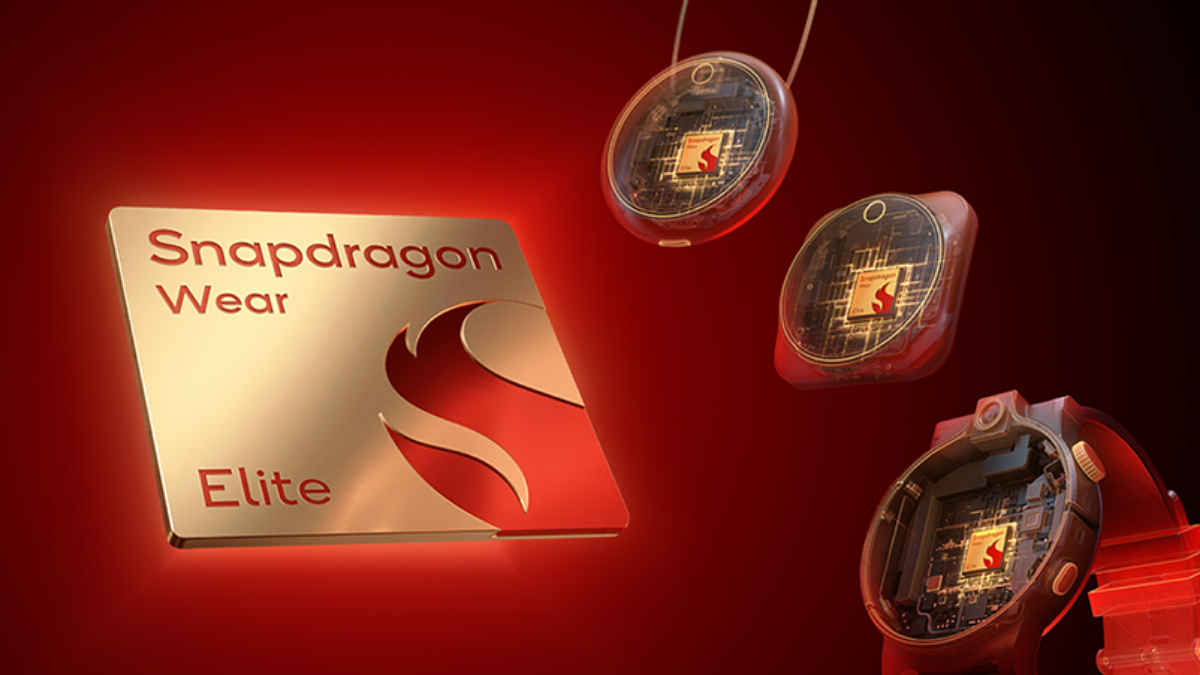

Qualcomm has announced the Snapdragon Wear Elite platform at MWC Barcelona, positioning it as the world’s first personal AI wearable platform with an integrated NPU for on-device AI. The new chipset is designed to power the next generation of smartwatches and emerging wearable form factors, including AI pins and pendants. The company says the platform will support Wear OS by Google, Android and Linux-based systems. Commercial devices powered by Snapdragon Wear Elite are expected to launch in the coming months.
 Survey
With wearables increasingly moving beyond fitness tracking towards AI-led contextual assistance, Qualcomm’s latest platform signals a shift from companion devices to standalone intelligent systems. Compared to previous Snapdragon Wear generations, this chip brings a dedicated NPU, a 3nm process node, faster CPU and GPU performance, and expanded connectivity, including 5G RedCap and satellite messaging.
Snapdragon Wear Elite specs and features
At the core of the platform is the Qualcomm Hexagon NPU, enabling up to 12 TOPS of AI performance and support for models with up to one billion parameters directly on-device. This means AI tasks such as voice assistants, contextual recommendations, sensor analysis and life logging can run locally, reducing latency and improving privacy.
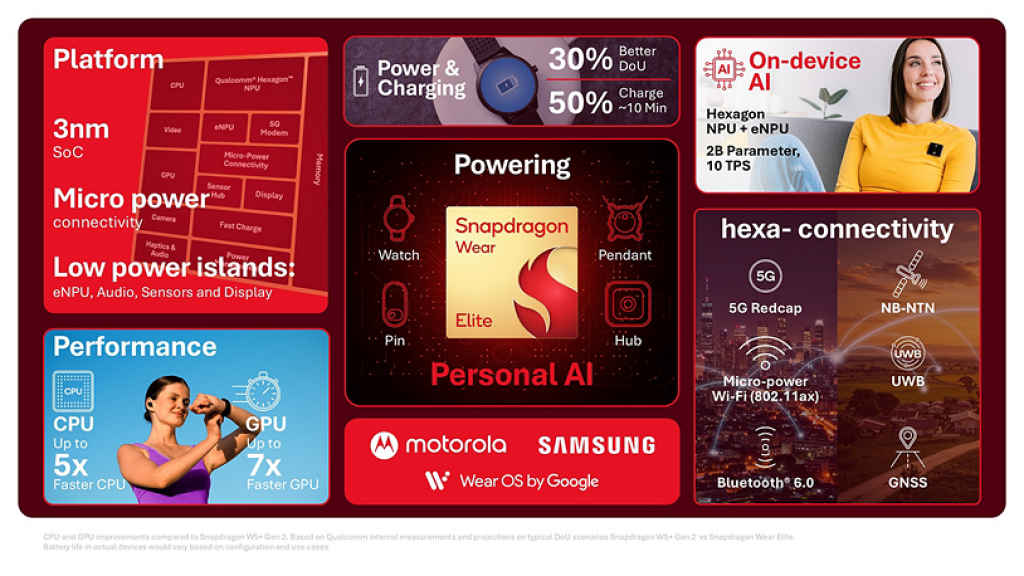
CPU and GPU performance also see significant gains. Qualcomm claims up to 5x improvement in single-core CPU performance and up to 7x faster GPU rendering compared to the previous generation. The CPU can clock up to 2.1GHz, paired with a Qualcomm Adreno GPU supporting OpenGL ES 3.2, Vulkan 1.2 and OpenCL 2.0.
Also Read: I trusted the V-Guard Crystal TT 100 Plus stabiliser to protect my TV: Here’s how it held up
The platform is built on a 3nm architecture, delivering up to 30% longer day-of-use battery life. Qualcomm also claims multi-day battery support depending on usage. It supports fast charging and is said to power a device up to 50% in under 10 minutes.
Snapdragon Wear Elite introduces a six-mode architecture combining:
- 5G RedCap for low-power cellular connectivity
- Micro-Power Wi-Fi 6 for always-on syncing
- Bluetooth 5.3 and Bluetooth 6.0
- Ultra Wideband for secure proximity-based interactions
- GNSS with dual-frequency L1 and L5 support across GPS, NavIC, Galileo, GLONASS, BeiDou and QZSS
- NB-NTN satellite connectivity for off-grid messaging
This combination enables always-connected wearables that can function independently of smartphones.
Other specifications include LPDDR5 memory at 6400MHz, up to 32GB eMMC storage, Qualcomm Spectra ISP for camera-enabled wearables, support for over 50 sensors, and security features such as Qualcomm Trusted Execution Environment. The platform supports Android, Wear OS, Linux and FreeRTOS.
Supported partners and platforms
The Snapdragon Wear Elite platform is supported by partners including Google, Motorola and Samsung.
Google says the chip will help advance Wear OS into a more intelligent, always-with-you system. Motorola has linked the platform to its AI companion concept showcased at CES. Samsung confirmed that future Galaxy Watch models will integrate the new chipset to deliver more personalised wellness experiences.
For buyers, the key benefit will be smarter, faster AI interactions directly on the wrist without constant cloud dependency. If you value on-device voice processing, contextual suggestions, or advanced health analytics, this platform could enable more responsive and private from a security standpoint.
However, real-world performance and power efficiency will depend on how device makers implement the chip and optimise their software. We will know when the first commercial products start arriving later this year.
Keep reading Digit.in for similar stories.
Also Read: Nano Banana vs Nano Banana 2: What’s new and what has changed?


