
Anthropic co-founder warns AI needs a brake pedal, calls for stronger regulations
 Follow Us
Anthropic co-founder Jack Clark has warned that the world needs stronger regulations for AI.
"Right now, it's like the AI industry has a gas pedal, but it doesn't have a brake pedal," he said.
In a recent blog post, Anthropic also warned about the possibility of "recursive self-improvement."
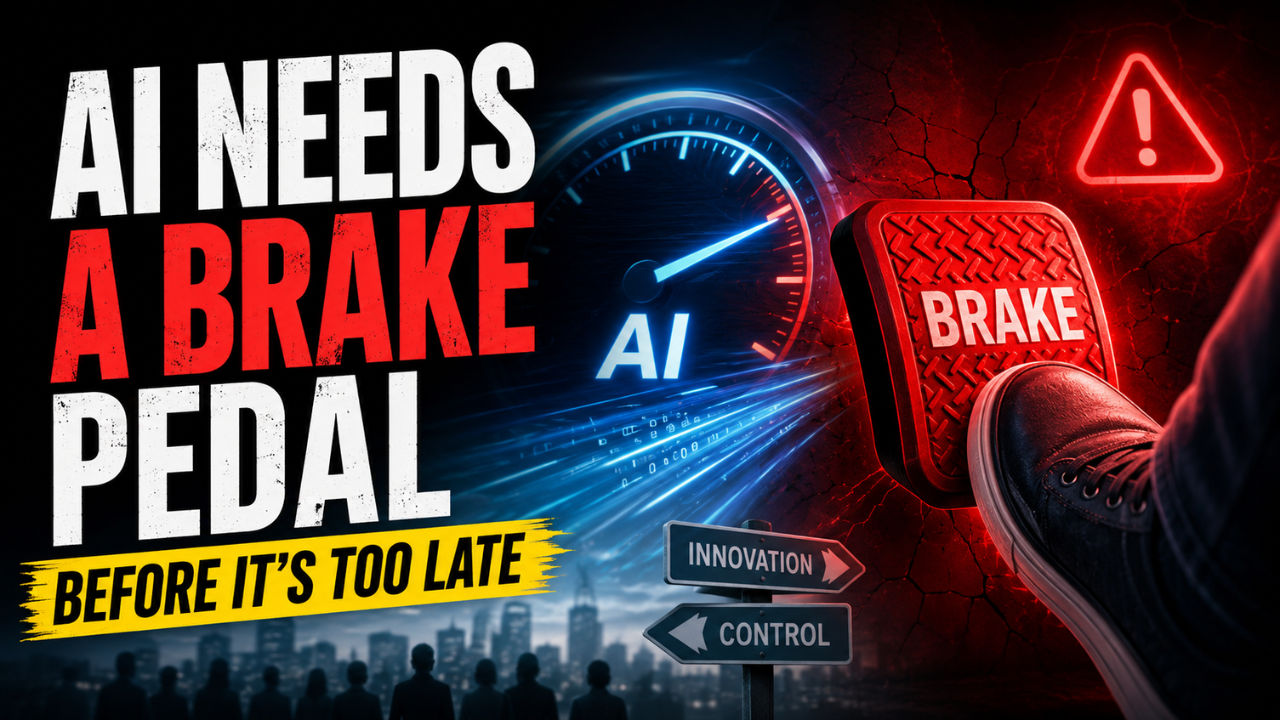

Anthropic co-founder Jack Clark has warned that the world needs stronger regulations for AI and a way to slow its development if necessary. According to Clark, AI technology is becoming more powerful at a rapid pace, and governments need to ensure that humans remain in control. Speaking to BBC Newsnight, Clark compared the current state of AI development to a vehicle that can accelerate but cannot slow down when needed.
 Survey
“You want the option to be able to take your foot off the gas and put your foot on the brake,” he said. “Right now, it’s like the AI industry has a gas pedal, but it doesn’t have a brake pedal.”
Clark believes policymakers should start preparing for the growing impact of AI on society. He said regulations will be needed to make sure people can trust increasingly advanced AI systems. “The world needs to do some thinking and we need to eventually develop some new regulations that allow us to be confident in these systems,” he said.
Also read: ChatGPT can now remember more about you with OpenAI’s new memory upgrade: Details
One area that concerns Clark is AI’s growing ability to create and improve software. He revealed that Anthropic’s AI chatbot Claude is already operating on code that is mostly written by AI itself. According to Clark, around 80 per cent of Claude’s code has been generated by the system, and he believes that figure could reach 100 per cent within the next two years.
He also expressed concern about AI’s effect on jobs. Clark noted that AI agents, which can perform tasks with limited human involvement, could eventually replace certain types of jobs.
In a recent blog post, Anthropic also warned about the possibility of “recursive self-improvement,” where AI systems become capable of improving themselves. “Taken far enough, and given enough compute, that trend points to an AI system capable of fully autonomously designing and developing its own successor. This is called recursive self-improvement. We are not there yet, and recursive self-improvement is not inevitable. But it could come sooner than most institutions are prepared for,” the company wrote.
Also read: Google cuts more jobs in Cloud division while pouring billions into AI: Report
“We believe it would be good for the world to have the option to slow or temporarily pause frontier AI development to enable societal structures and alignment research to keep up with the advance of the technology,” the company added.


