
OxygenOS is officially ending: OnePlus confirms it is moving to ColorOS
 Follow Us
OnePlus has confirmed OxygenOS will be replaced by ColorOS from Android 17 onwards, with existing eligible users given the option to voluntarily update
The announcement came on the same day Bloomberg reported OnePlus is winding down in the US, Europe and eventually India, which the company has denied
Realme has separately confirmed an identical transition, with Realme UI also giving way to ColorOS 17
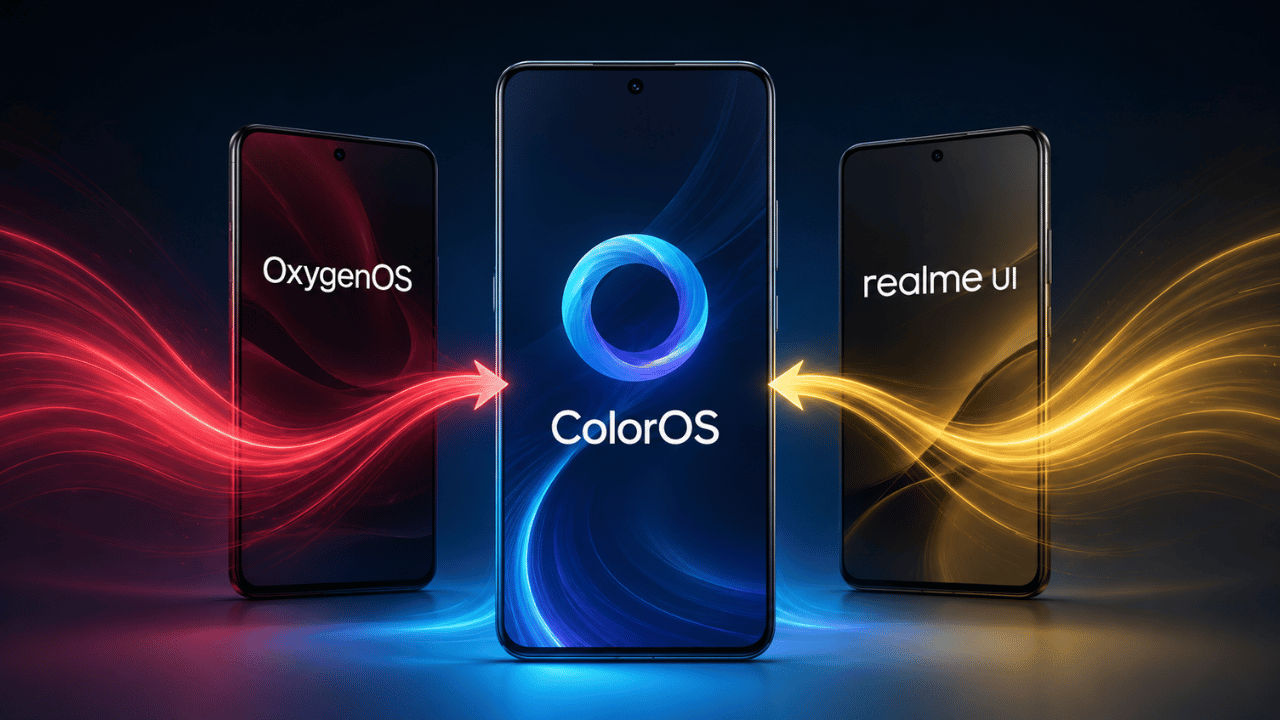

OnePlus has officially confirmed that OxygenOS is retiring. From ColorOS 17 onwards, OnePlus devices will ship with and transition to Oppo’s ColorOS. Existing OnePlus users with devices that fall within an eligible upgrade cycle will be offered the option to move to ColorOS 17 voluntarily once it officially launches.
 Survey
In a statement, OnePlus said, ‘As part of an operational adjustment to our software strategy, OnePlus devices will update from OxygenOS to ColorOS. This software update enables us to streamline software development, accelerate update cycles to our community, improve software quality, and make better use of our shared engineering and R&D capabilities to deliver a smarter, smoother software experience. During the course of this software update, our commitment to fast, intuitive and user-centric experiences for OnePlus users remains unchanged. We will share more details on the rollout roadmap at a later stage.’
A change that was already in motion
OxygenOS and ColorOS have been built on a shared software foundation for several years, with distinct visual identities maintained on top. In 2021, OnePlus founder Pete Lau formally announced the merger of the two codebases. OnePlus had already retired HydrogenOS, its China-only OS, in favour of ColorOS that same year. What today’s announcement does is extend that consolidation to global markets and puts an end date on OxygenOS as a separately maintained product.
The rationale behind this decision is that maintaining two engineering teams, two design systems and two update pipelines for what is essentially the same underlying code is expensive and redundant, especially in an industry dealing with higher component costs and tighter margins. Merging them into a single platform frees up resources and is expected to speed up software updates for users.
This announcement landed on the same day Bloomberg reported that OnePlus will begin winding down operations in the US and Europe as early as this week, with an eventual India exit planned for 2027 as part of a broader Oppo restructuring. Bloomberg attributed the move to financial pressures, lack of market momentum and geopolitical concerns around Chinese brands in the US.
OnePlus has confirmed the US, Canada and Europe wind-down on its community forums, calling it ‘by no means an easy call’, while committing to continued software updates and after-sales support for existing customers in those regions.
On India, however, the company pushed back directly, saying, ‘OnePlus India continues to operate its business as usual, with all local operations on track. We urge the media to exercise restraint before amplifying unverified speculation.’
Ford, Vice President of OnePlus India Business, reinforced this in an open letter to the OnePlus India community. He pointed to four new product launches, the N series performance during Amazon Prime Day and the upcoming OnePlus N6x as evidence of an active roadmap and noted that OnePlus users now have access to more than 600 service centres across India through the expanded Oppo network.
Realme is doing the same thing
The transition is not limited to OnePlus. Realme India confirmed to Digit that Realme UI will also be replaced by ColorOS 17 going forward. Existing Realme devices within the eligible upgrade scope, including those that launched with multi-year update promises, will receive ColorOS 17. Given how closely Realme UI has mirrored ColorOS since at least 2020, the change is unlikely to feel dramatic for Realme users. For OnePlus users, especially those who valued OxygenOS for its lean, near-stock feel, the transition to ColorOS carries more weight.
What comes next
A detailed rollout roadmap, covering which devices are eligible and when, has not yet been published. That is the most practically useful information missing from today’s announcement and OnePlus has said it will be shared at a later stage.
The harder question is what the OnePlus brand stands for once the software that largely defined it is gone. At a media briefing, the answer OnePlus offered was a commitment to a ‘fast and smooth’ experience, a strong product portfolio and continued investment in India. While those are reasonable assurances, the real test will come when ColorOS ships on a OnePlus device.


