

What are the jammers Delhi Police is using at Jantar Mantar during CJP protests, and how do they work?
 Follow Us
Delhi Police has deployed mobile jammers near Jantar Mantar during the CJP protest to temporarily block mobile signals.
The jammers interfere with 3G, 4G, and 5G signals, causing temporary loss of calls, SMS, and mobile data.
If your phone loses network, move away from the area or restart it after leaving the jammer's range.
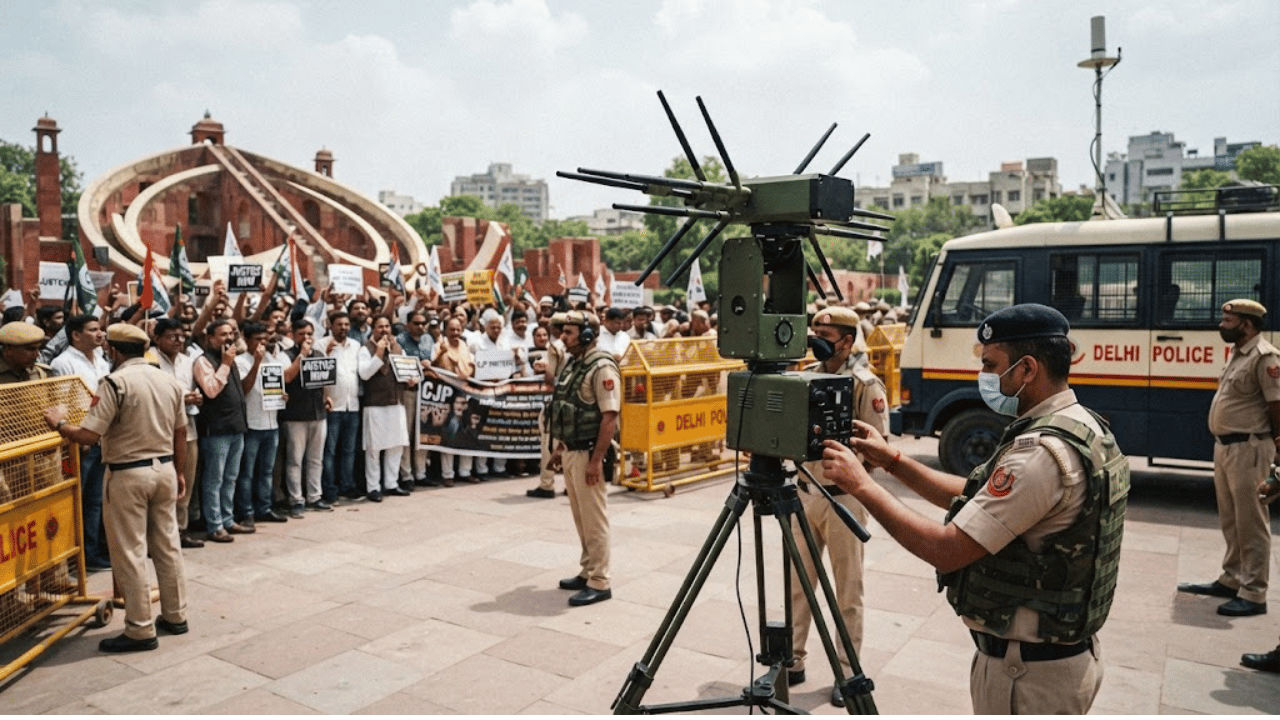

People visiting or passing near Delhi’s Jantar Mantar may find that their mobile network is not working properly. According to reports, Delhi Police has set up portable mobile jammers in the area to help control crowds during the CJP protest by temporarily blocking nearby mobile signals. These devices are designed to temporarily disrupt mobile phone signals within a limited range. The law enforcement authorities said that installing the mobile jammers will ensure that there are no hostile activities during the protest. If you’re curious about why the jammers are being used, how they work, and what you should do if your phone suddenly loses signal, then follow along with the article.
 Survey
Why did Delhi Police install mobile jammers?
According to reports, Delhi Police installed portable mobile jammers at Jantar Mantar. The law enforcement authority installed the device to manage the crowd during the CJP protest using the device. The police want to temporarily block local mobile communication in the immediate area. Officials believed this could help limit real-time coordination among large groups and reduce the chances of videos or live streams of sensitive police action being instantly shared on social media. Moreover, it’s important to note that the jammers are reportedly used only in a specific location and are installed for a limited period and will be removed following the police operations.
Also real: Oppo Find X10 Ultra, OnePlus 16 may skip India launch, new leak claims
How do mobile jammers work?
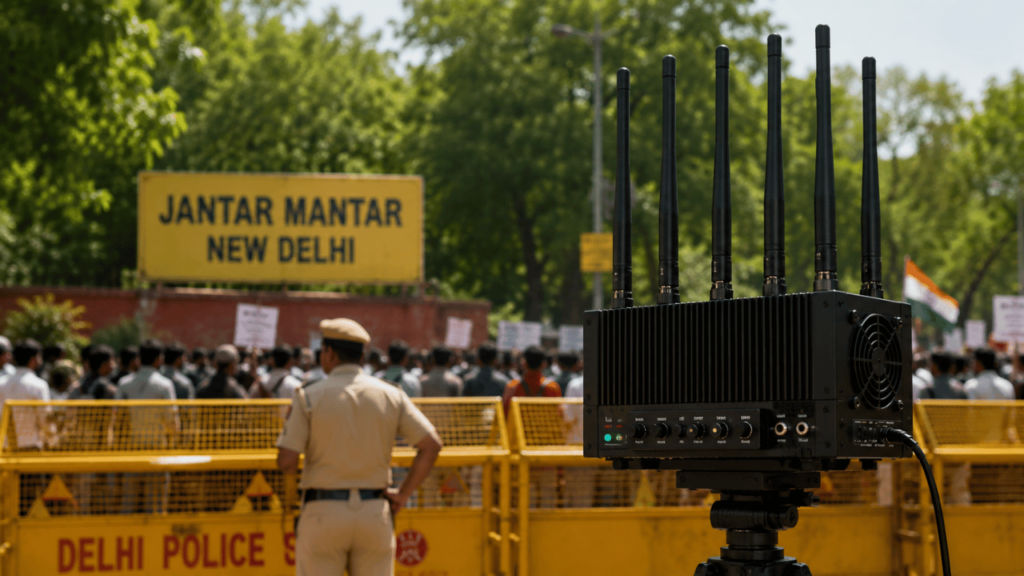
The working of a mobile jammer is simple. You install them in the area you want to restrict the mobile networks and turn on the power. Now, the jammers will emit radio waves at the same frequencies used by telecom operators for 3G, 4G, and 5G.
These signals then create interference which is stronger than the signal received by a mobile phone from a nearby cell tower, and because of that, the smartphone cannot connect to the network.
In simple words, if you’re inside the jammer’s range, then you may face a sudden loss of mobile data, calling networks and SMS services. It is important to note that the network restrictions are not permanent and it usually affects within a particular range, based on the power of the device being used and the environment in which it is being used. Normal network functions will be restored once the jammer is turned off or moved.
Also read: Apple trade secret lawsuit against OpenAI avoids naming Jony Ive: Here is why
What should you do?
If you’re travelling near Jantar Mantar and face a sudden loss of mobile network coverage, then avoid assuming that there is a problem with your phone. There is a high possibility that you may be in the range of a mobile network jammer. To fix the issue you can simply try and move away from your current location. After leaving the radius of the jammer, your mobile phone should reconnect to the network on its own. However, in case you still face this problem even after leaving the area, you can simply restart your phone.
Metro station closed
If you’re planning to travel in Delhi, note that the Delhi Metro has announced that several metro stations around Jantar Mantar will be closed for security reasons. These include Janpath, Rajiv Chowk, Patel Chowk, Central Secretariat, and Seva Teerth stations.


