

What is Window Seat: Google Gemini’s new demo to showcase Nano Banana 2
 Follow Us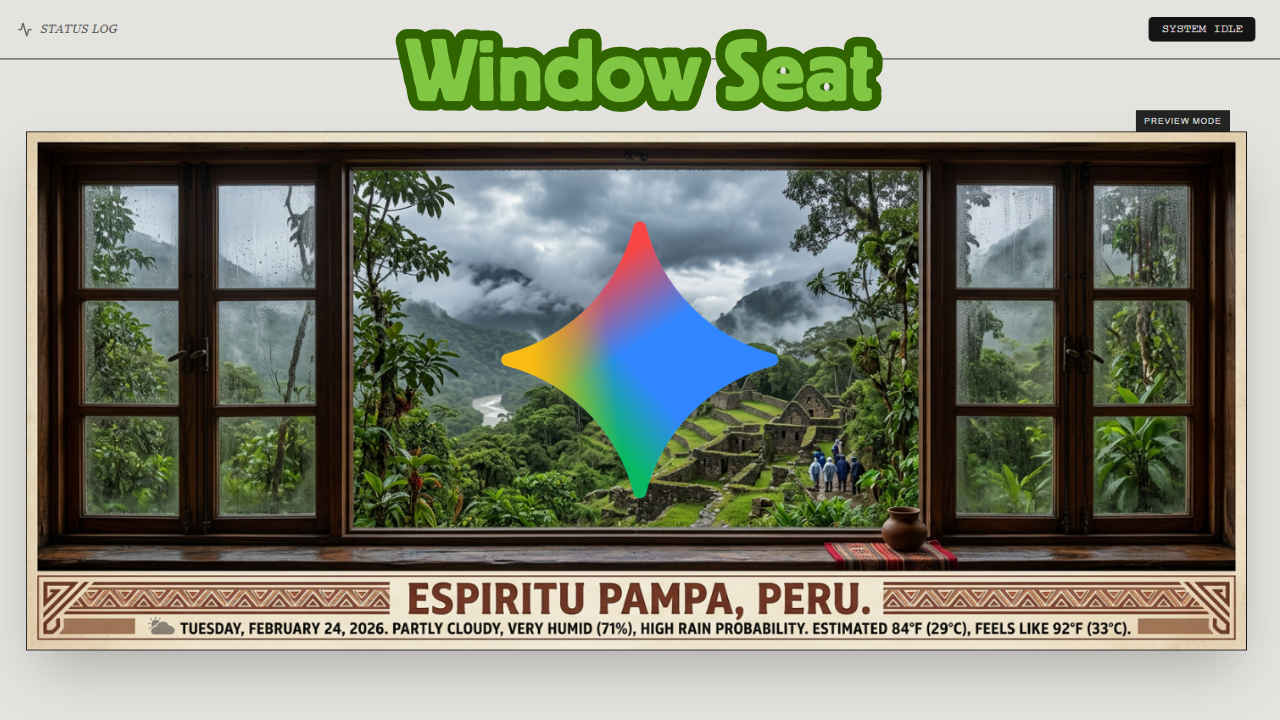

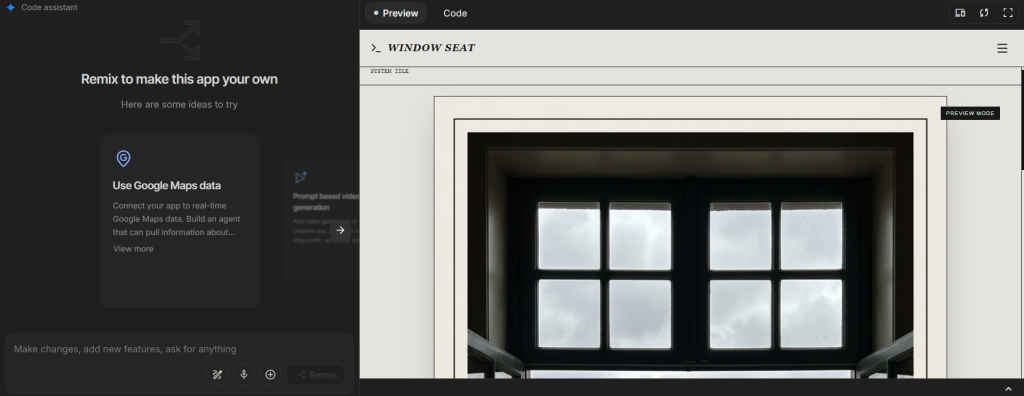
Google just announced its latest image model, Nano Banana 2, and the way they have chosed to show off its capabilities is really clever. They still have the usual benchmark comparisons and the cherry-picked gallery images, but they also built a demo app called Window Seat which is a virtual window that generates a photorealistic view from wherever you want on the planet. It’s a simple premise that ends up being an effective stress test for what the model can actually do.
 Survey
Also read: Nano Banana vs Nano Banana 2: What’s new and what has changed?
Nano Banana 2 runs on the Gemini 3.1 Flash Image architecture, which puts it in sort of a middle ground. It’s not the top-tier Pro model, but it’s clearly meant to be more than just a fast, throwaway generator. It delivers the quality without the massive wait time and from what the demo shows, they’ve made real progress on that front.
The thing that stood out most to me is what Google is calling visual grounding. Past image models had a bad habit of generating something that looks plausible but generic — ask for a Paris street and you’d get a vague impressionist idea of Europe. Nano Banana 2 actually pulls from Gemini’s knowledge base and live web data to make sure what it renders makes sense for the specific place you asked for. In Window Seat, that means London looks like London, not just another rainy city. It even pulls live weather data so the lighting in your generated view matches what’s actually happening outside right now.
Also read: India social media ban for teens under 16: What we know so far
On the technical side, the model supports native 4K output and has a “configurable thinking” feature that lets it spend more time working through complex spatial prompts before it starts rendering. The results have noticeably better lighting, richer textures and more coherent details. There’s also improved consistency for subjects across a workflow, which has historically been one of the messier problems in AI image generation.
What’s maybe most interesting from a practical standpoint is that none of this requires specialised hardware. Google optimised the whole thing to run efficiently within the Flash architecture, which means faster iteration and lower costs without the performance tradeoffs. Whether that holds up outside of a controlled demo remains to be seen, but as a proof of concept, Window Seat makes a strong case.
Also read: Agents vs. Agentic AI: The new smartphone spec you should care about


