
OpenAI wants to build the UN of AI: Good luck with that
 Follow Us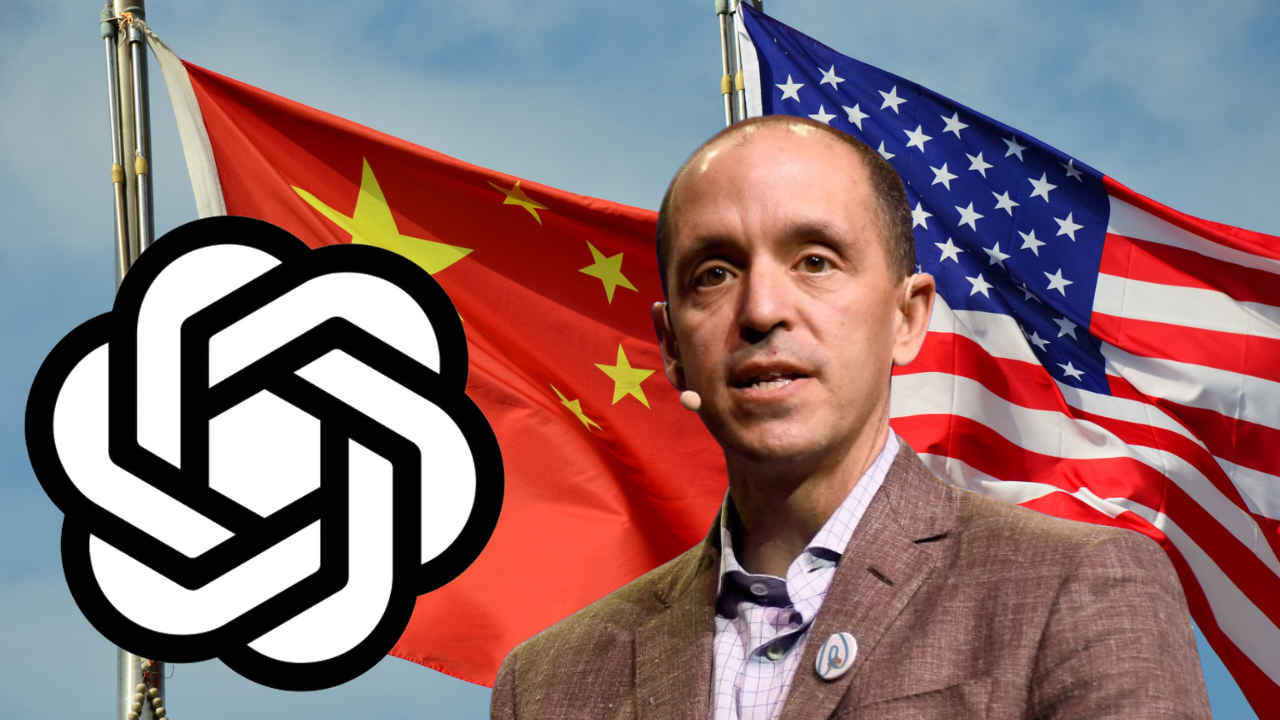

Chris Lehane could not have had better timing than this. Hours before Trump was set to meet with Chinese leader Xi Jinping in Beijing, the vice president of global affairs for OpenAI came to DC to sell a grand plan for international AI governance, with America and China working together around the same table. He proposes an international agency, something similar to the International Atomic Energy Agency, pieced together from various AI research institutions across the globe, with America’s Commerce Department at its hub. It’s a pretty neat idea that is likely going nowhere fast.
 Survey
Also read: LG’s Sanjay Chitkara on AI making appliances smarter and building products for India
It is, of course, in the IAEA example where I have my first point of discussion. It is clear why Lehane uses the IAEA as his model. It is an organization that was established for global safety standards of nuclear energy, with China and America as member countries. But what is also important to note is that the IAEA is an American creation, established in the context of America’s terms, and molded to fit its purposes throughout history. It is multilateral in membership and unilateral in spirit. If that is the model OpenAI is proposing, China is not going to miss the subtext.
This framing by Lehane himself brings the power structure into the foreground. Lehane argued that America should use its advantage in AI to establish a global governance framework. That isn’t a proposal for a neutral institution; it’s a US-centric proposal with open-access to membership. And that’s an important distinction, especially for Beijing.
Then there is the issue of the White House. The Trump administration has shown multiple times that it doesn’t want any kind of global governance framework that allows other nations to monitor its technologies. The upcoming White House executive order on AI cybersecurity stresses voluntary model review over mandatory pre-deployment evaluations advocated by OpenAI. OpenAI is promoting an internationalist approach to a domestic administration moving in the opposite direction. This isn’t politics. This is PR.
Also read: From the laptop to the cursor: Google is rebuilding the PC around Gemini
To be fair to Lehane, the timing was not accidental. Anthropics’ revelation regarding Mythos scared US policymakers enough that they floated the idea of establishing a separate channel for the dialogue on AI with China prior to the summit. This is a window of opportunity. The time when both sides at least acknowledge that AI must become an integral part of their foreign policy discourse. OpenAI wants to mold that dialogue into a certain form before anyone else gets there.
That, to a certain extent, is certainly justified. The issue is that there is a huge difference between having an inkling and making a practical step. The International Atomic Energy Agency took years of negotiation and a specific historical moment, the aftermath of Hiroshima and the early Cold War, to make it politically viable. There is no cooperation between the two nations when it comes to AI similar to the one they established concerning nuclear weapons. The technology is moving too fast.And the current American administration is not exactly in a multilateralist mood.
Establishing a UN of AI is a compelling idea. It is also, right now, a fantasy dressed up in policy language. Good luck with that.
Also read: Googlebooks vs Chromebooks: How are two different and which should be your next laptop


