
Nvidia vs Google: Why Jensen Huang is attacking ‘inflexible’ TPUs
 Follow Us
Nvidia attacks Google's "inflexible" chips as Meta eyes TPU deal
Nvidia argues GPUs are versatile assets while TPUs are risky
Google’s Ironwood optical chips threaten Nvidia’s monopoly on AI scaling
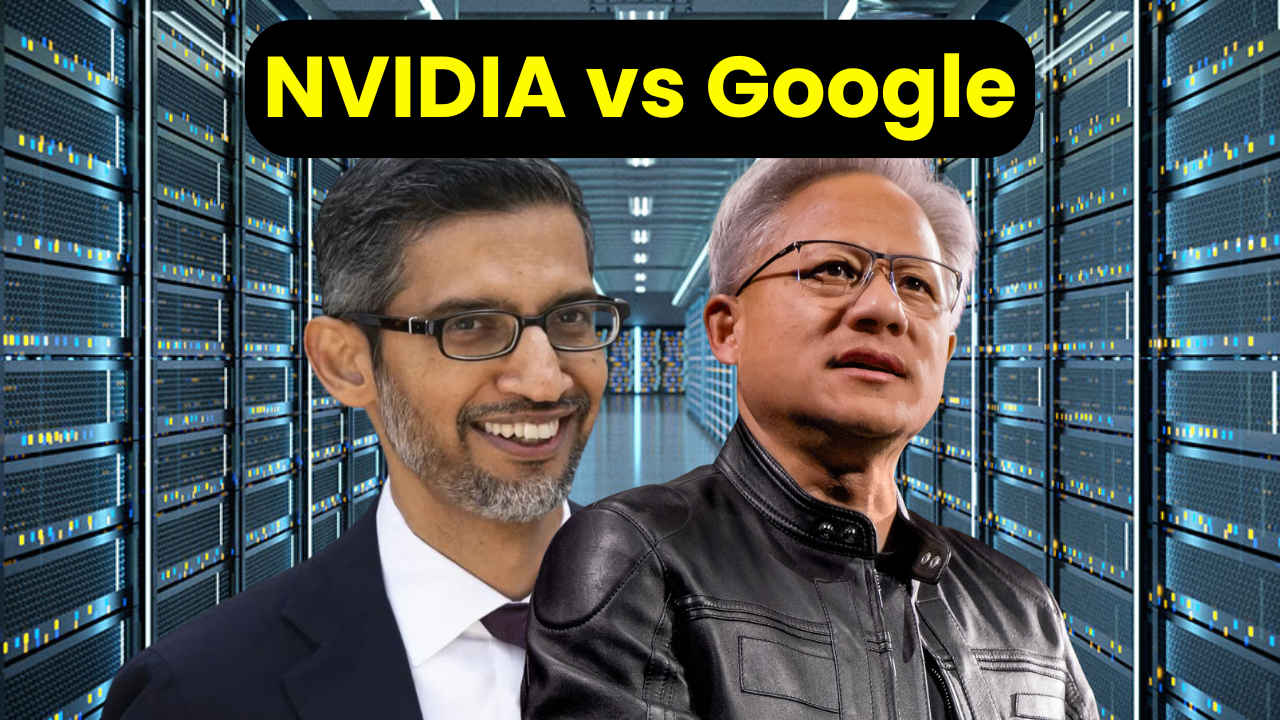

The mask has finally slipped, and for the first time in the generative AI era, the undisputed king of hardware looks a little rattled.
 Survey
Usually, when competitors like AMD or Intel announce “Nvidia killers,” Nvidia CEO Jensen Huang responds with silence or perhaps a benchmark chart that politely ends the conversation. But this week, following reports that Meta (one of Nvidia’s biggest customers) is in talks to lease Google’s custom chips, the reaction was different. It was loud, it was public, and it was defensive.
Nvidia’s official response didn’t just tout its own speeds and feeds. It explicitly attacked Google’s approach, dismissing their chips as inflexible “ASICs” while branding its own GPUs as the only “fungible” currency of the AI world. Reading between the lines of that statement, one thing is clear: the era of the polite monopoly is over. The street fight has begun.
Also read: OpenAI vs Google: Why Sam Altman fears ChatGPT might be losing the AI race
Decoding the ‘Fungibility’ panic
While he didn’t say it in as many words, Nvidia’s focus on “fungibility” is a tacit admission that the raw performance gap is closing.
NVIDIA is arguing that their GPUs are like cash, you can spend them on anything. If the AI hype cycle shifts from Large Language Models (LLMs) to something else next year, a warehouse full of Nvidia H100s can be repurposed for video rendering, simulation, or drug discovery.
By contrast, they are painting Google’s Tensor Processing Units (TPUs) as gift cards – incredibly valuable, but only usable at one specific store. Because Google’s chips are ASICs (Application-Specific Integrated Circuits) built strictly for today’s AI math, Nvidia implies they are a risky bet in a volatile market. It’s a smart, logical argument. But the fact that the $4 trillion giant feels the need to make it publicly proves they are worried that customers like Meta are starting to do the math, and finding that specialization might be worth the risk.
The ‘Ironwood’ headache
Nvidia has a right to be sweaty. Google’s AI hardware journey, which started with some rocky experiments years ago, has matured into a genuine threat.
Also read: Beyond ChatGPT: ‘Godmother of AI’s bold bet on spatial intelligence with World Labs
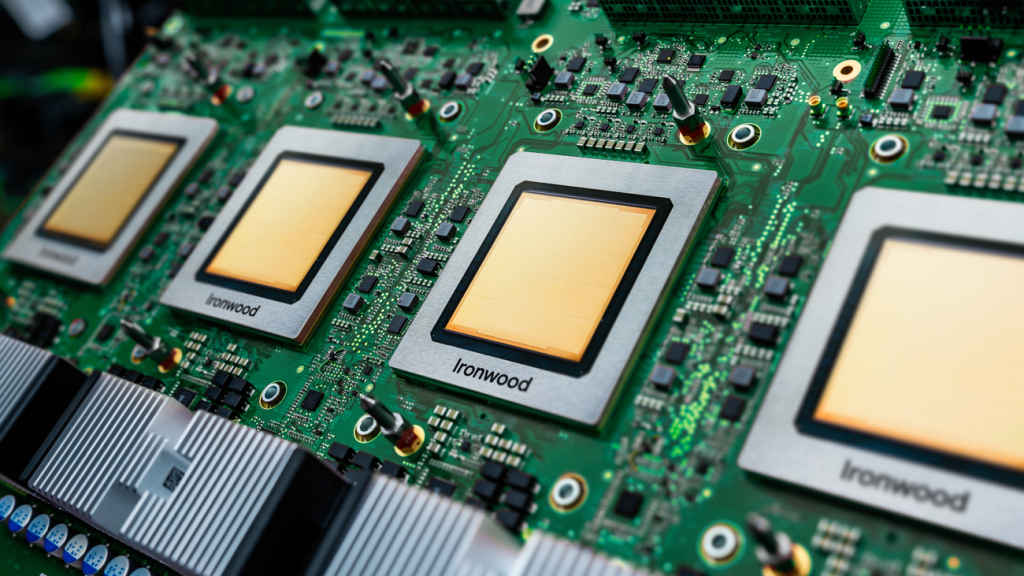
The new 7th-generation “Ironwood” TPU isn’t just catching up; in some ways, it has changed the game. While Nvidia wins on raw muscle per chip, Google has mastered the art of the swarm. Their “Ironwood” pods use optical interconnects (lasers) to link over 9,000 chips into a single, massive super-brain. For a company like Meta, which needs to train models on trillions of parameters, that kind of friction-free scaling is dangerously attractive.
If OpenAI vs Google is the software battle, Nvidia vs Google is the hardware battle of 2025.
The billion-dollar hedge
Ultimately, what we are seeing is the “frenemy” dynamic of Silicon Valley reaching its breaking point. Nvidia is “delighted” by Google’s success in public, but in private, they know that every dollar Meta spends on a Google TPU is a dollar denied to the Nvidia ecosystem.
Jensen Huang knows that he can’t win on price, Google’s vertical integration makes their chips cheaper to operate. So, he is doubling down on fear. He is betting that Big Tech is too afraid of the unknown to abandon the safety of the Nvidia “standard.”
But if this week’s defensive posturing is any indication, even Nvidia knows that “safety” might not be enough to hold off the hungry, specialized wolves at the door forever.
Also read: Indian AI healthcare revamp: 5 insights from Medi Assist and BCG report


