
OpenAI vs Google: Why Sam Altman fears ChatGPT might be losing the AI race
 Follow Us
Altman warns Google’s Gemini 3 now threatens ChatGPT’s technical leadership
Google’s resurgence deepens pressure on OpenAI’s valuation, growth, and strategy
OpenAI fears losing the long-term superintelligence or AGI race to Google
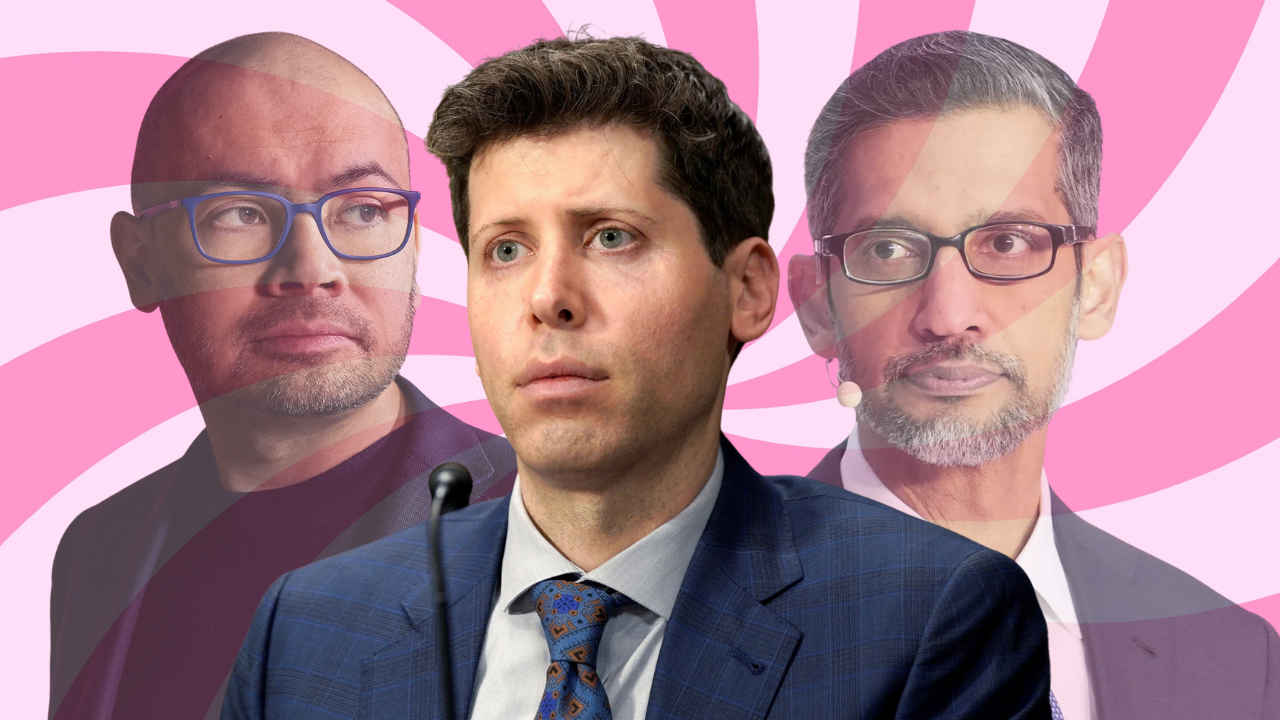

By now, the cat is out of the bag, and Sam Altman’s fears are out for all of us to examine and dissect. The Co-founder and CEO of OpenAI appeared jittery, as Altman’s leaked internal memo declared Google’s latest AI progress as a serious short-to-medium term threat to OpenAI’s unquestioned lead into the GenAI race.
 Survey
According to the leaked memo, Sam Altman thinks Google’s AI assault on OpenAI’s market leadership threatens the ChatGPT maker’s technical as well as economic outlook. He has warned staff to brace for “rough vibes” as OpenAI navigates the emerging competitive AI landscape to throw its weight behind longer-term superintelligence or AGI bets.
Sam Altman’s Google-sized AI headache
While he didn’t say it in as many words in his internal memo, Sam Altman did acknowledge Google’s Gemini 3 challenging OpenAI’s ChatGPT-5.1’s technical leadership. He praised Google’s recent “excellent work,” particularly in AI pre-training, and noted that OpenAI is “catching up fast.” That’s enough for us to read between the lines – it’s Altman’s rare admission that Google’s Gemini 3 has reduced the capability gap and perhaps even surpassed OpenAI’s ChatGPT-5.1 in some areas.
Google’s strength in pre-training isn’t a surprise, given their proprietary TPUs are finally firing on all cylinders, proving OpenAI’s NVIDIA-stack isn’t unbeatable to some degree. Add to that Google’s unique advantages in access to AI training data and their vast ecosystem integration (in things like online search, Android smartphone, web browsing, etc), and you can see why Sam Altman struck a worrisome tone in his internal memo.
Sam Altman also admits in his leaked internal OpenAI memo that trying to do “too many hard things” at once isn’t going to be easy. It’s no secret that Altman wants OpenAI to be the best research lab, the best AI infrastructure company, and the best AI platform/product company, which in a hotly competitive industry is a difficult needle to thread. Execution risk and organizational strain are real dangers for OpenAI’s team to meet the demands set forward by their CEO. And the fact that a sleeping giant (in the form of Google) has just emerged to challenge their supremacy is only going to add to pressure on OpenAI and makers of ChatGPT.
Making OpenAI sweat: Google’s AI turnaround
To its credit, in less than two years, Google has turned its AI story around. I remember how in February 2023, in its very first demo (before it was renamed to Gemini), the then Google Bard fumbled badly by providing incorrect information about the James Webb Space Telescope’s discoveries, leading to a $100 billion drop in Alphabet’s market value. Later in August 2024, at Google’s hardware product launch, Gemini failed twice while giving a live demo. In February 2024, Gemini created wrong, racist, sexist historical images – it stirred up such a controversy, where Pichai had to apologise publicly and Google having to disable the image generation feature for a few months.
And these are just a few instances where Google seriously fumbled in its AI product launches. But finally, from those disastrously early lows of trying to get its AI rocketship off the ground, Google seems to be doing nothing wrong for everything AI-related it has launched in the second half of 2025. Starting with Nano Banana in Gemini. Conversely, OpenAI’s ChatGPT is facing significant controversy over its potential negative psychological and social effects on users, prompting demands for stronger oversight and protective measures.
If Studio Ghibli image trends went viral in March 2025, prompting Sam Altman for users to take it easy with the image edits using ChatGPT, Google’s Nano Banana in Gemini unleashed a similar tsunami of viral image editing trends online, unleashing people’s creativity here in India and around the world. This time around, there were no controversies, everything went flawlessly well, and Google seemed to have learned from past mistakes. It was one of the first signs where Google Gemini had stolen OpenAI ChatGPT’s thunder.
Also read: Gemini 3 vs Gemini 2.5: A Complete Breakdown of Google’s Next-Gen Upgrade
With Gemini 3’s release, Google has claimed superiority over OpenAI’s ChatGPT-5.1 in a whole host of benchmark results. Independent testing shows Gemini 3 offers sharper critical analysis, more thorough solutions, and superior visual and spatial reasoning in complex image interpretation and bias analysis. While ChatGPT 5.1 is stronger in mathematical reasoning and coding logic, and provides smoother conversations via automatic model routing, Gemini 3 delivers deeper insights and creative storytelling.
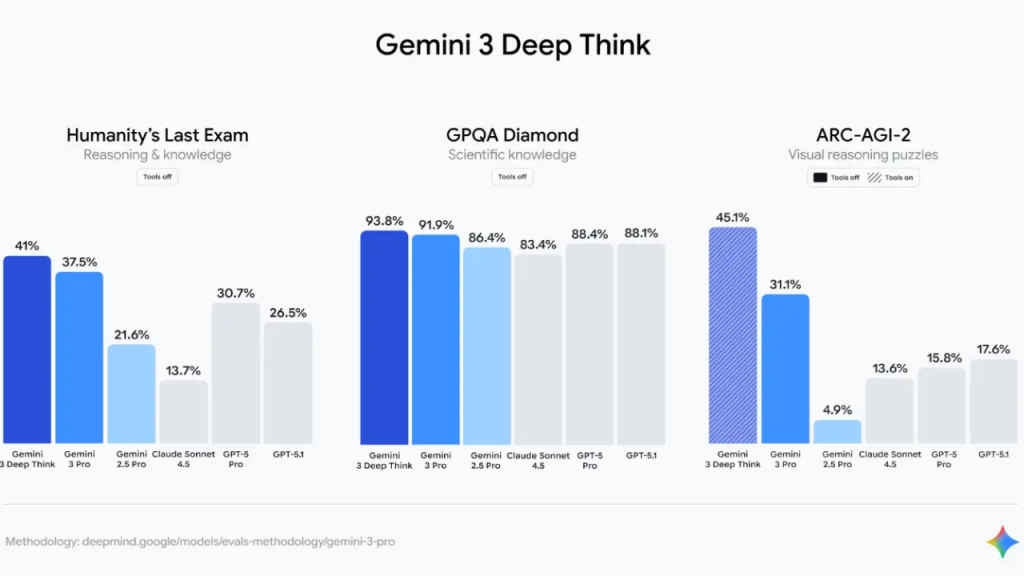
Ultimately, as of now, Gemini 3 excels in raw cognitive strength and multimodal tasks, whereas ChatGPT 5.1 provides a more natural user experience for long dialogues. This has only bolstered Google’s assault on OpenAI’s hitherto unchallenged market leadership in all things GenAI.
In this regard, Sam Altman’s internal memo reflects concern that benchmarks and developer sentiment showing Gemini 3 ahead erode OpenAI’s perceived moat. Thus, it will make it harder to justify ChatGPT’s premium position with customers, partners, and investors for getting future business.
OpenAI vs Google: Beyond ChatGPT and Gemini
What Sam Altman can’t hide in his memo is the fear of Google’s strategic might as compared to OpenAI’s impressive but still fledgling existence. OpenAI, still privately held, is currently valued at around $500 billion with annual revenue of roughly $13 billion dollars, but it remains loss‑making with an estimated 2024 loss of roughly $5 billion dollars and projected 2025 cash burn in the $8 billion range.
By contrast, Google (via its parent Alphabet) has a market capitalization of roughly $3.9 trillion, with revenue of about $350 billion and 2024 net income of around $100 billion, making it a mature, highly profitable mega‑cap rather than a high‑burn hyper‑growth bet.
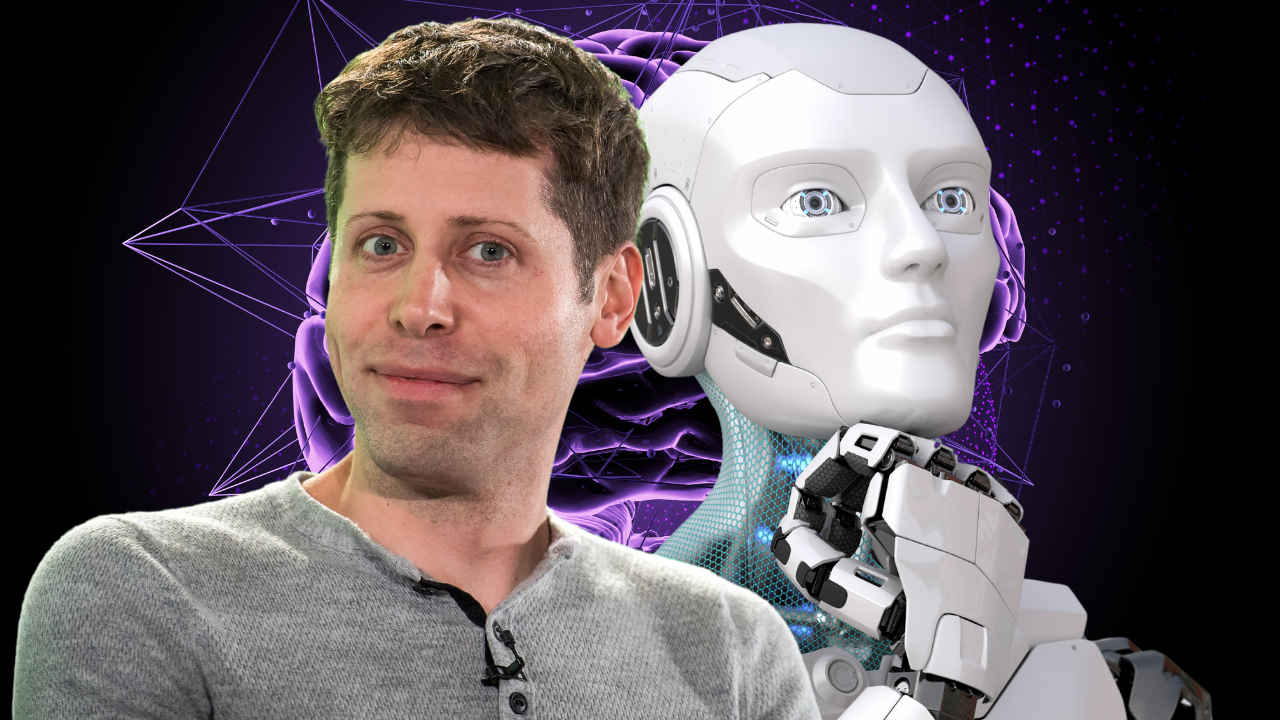
Another key consideration is that Google has DeepMind. If Sam Altman has a lot of charisma, then Demis Hassabis has true gravitas in AI research. I mean, no disrespect to Sam Altman, but Hassabis has been doing AI before the term AI became cool and sexy for everyone and their grandmother to dish out as a punctuation mark. More than Sundar Pichai and Google, I bet Sam Altman’s more worried about Demis Hassabis and DeepMind – because they’ve been doing what OpenAI wants to do for far longer.
Ultimately, underneath the memo is also a strategic fear that OpenAI might get beaten in the race for AGI or superintelligence – something that Sam Altman has been very vocal about in the recent past. If Google (or others) reach superintelligence first, OpenAI’s entire mission and business rationale could fall apart, given how much of its identity and valuation are tied to winning that race.
Also read: Sam Altman on AGI: OpenAI visionary on the future of AI


