Not just Instagram, maybe Meta’s data security culture is the real hack
 Follow Us
Instagram’s 2026 breach exposes 17.5 million users' private data
Meta’s repeated data leaks reveal deep-rooted cultural complacency
Other big tech peers avoid such leaks, so why can’t Meta?


I’ve long stopped being shocked and surprised whenever Meta is in the headlines for all the wrong reasons. Having said that, the latest Instagram data leak of early January 2026 – exposing the personal information of over 17.5 million users – still managed to sting. Not because it was unexpected, but because of the numbing predictability of it all.
 Survey
Like clockwork, here comes another breach at Meta. Another unacknowledged vulnerability. Another round of corporate PR spin masquerading as damage control.
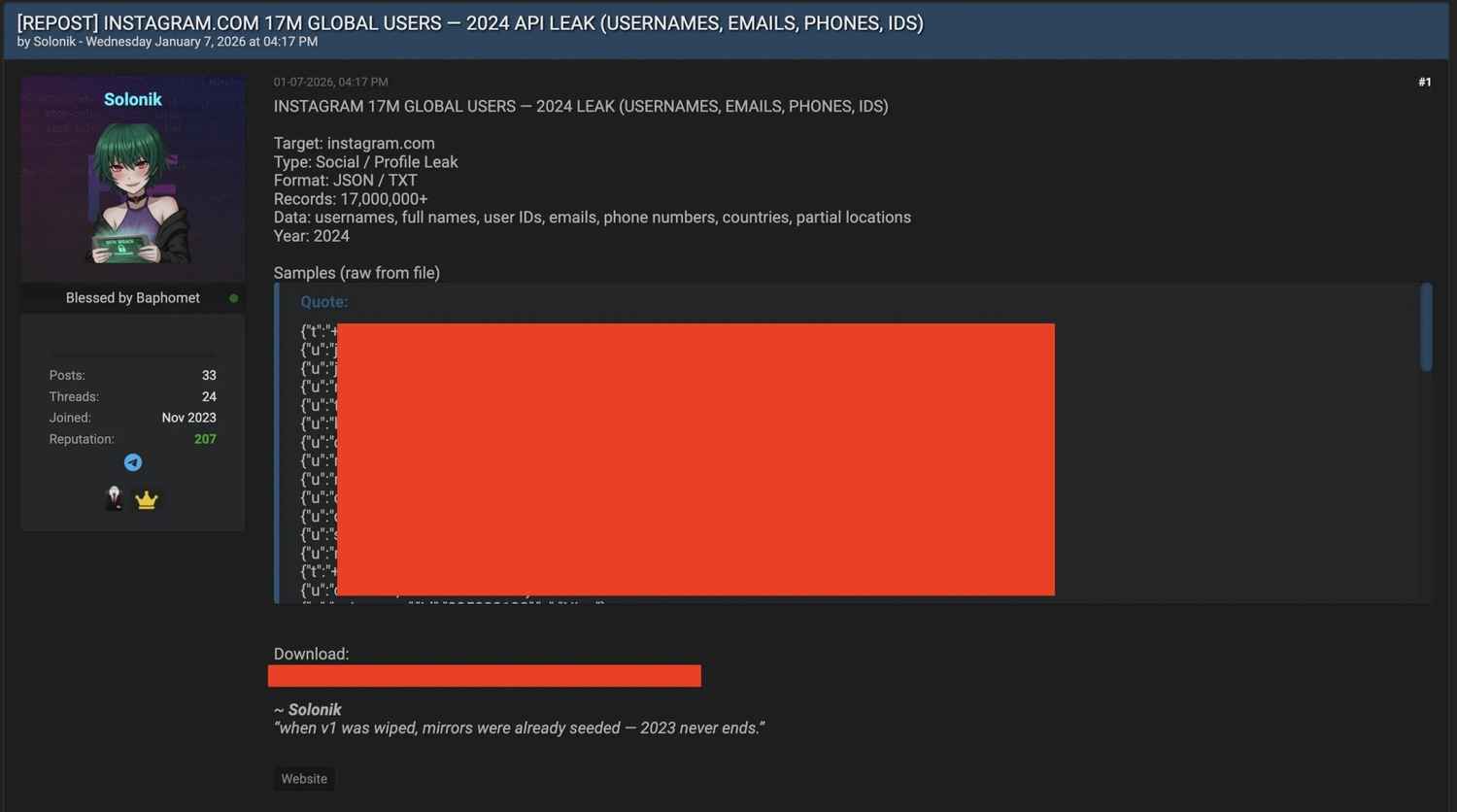
Except this time, it’s not just a bug. It’s a 2024 API vulnerability that apparently went unpatched long enough for someone calling themselves “Solonnik” to dump the data for free on BreachForums. Names, emails, phone numbers, partial addresses – all up for grabs in some dark corner of the internet. Meanwhile, Meta’s official stance on the whole Instagram data leak is simply claiming it as a “technical issue.” Nothing more to see here.
Let’s pause for a moment and ask ourselves: why is it always Meta?
Why aren’t we hearing about 17 million Apple IDs leaking onto the dark web? Or gigabytes of Gmail data suddenly being sold by cybercriminals on the dark web? Why is it always Facebook, or Instagram, or a Meta service – platforms secured by complacency and after thought, when it comes to private user data?
Also read: Massive Instagram data breach: Millions of numbers & emails leaked
Maybe, and I’m just thinking aloud here, this isn’t just a security issue. It’s a cultural one. Because Meta’s true vulnerability isn’t an open API – it’s an open secret at this point. That ultimately user trust is a cost they’re willing to write off. It’s evident from past behaviour, if you don’t believe me.
Remember the 2019 revelation that Facebook stored hundreds of millions of passwords in plaintext – accessible to employees? Or the 2018 token breach that handed over access to up to 90 million profiles? Or the massive phone number scraping operation from the same year that exposed 220 million user accounts? And who could forget the OG sin – Cambridge Analytica – when data from 87 million users was weaponized for political gain? The EU fined Meta €251 million for that little mishap – only in 2024, by the way.
There’s a strange sense of deja vu about all this. Same headlines leading to the same vague denials. Same shrug of the shoulders from a company that has had the better part of a decade to clean house – and hasn’t. Maybe it can’t?
And before someone points to “scale” as the problem – as in, it’s just hard to protect billions of users over increasingly complex digital platforms – I’d argue that’s exactly why it should be harder on Meta. Because if you’re running the digital infrastructure of half the planet’s social interactions, you don’t get to say, “Oops.” You definitely shouldn’t get to keep moving fast and breaking things, especially when those things are people’s identities.
So when does it all change?
When does Mark Zuckerberg stop playing the superintelligence messiah and start being the responsible steward of the platforms billions of people still rely on every single day? When do we stop treating these data leaks as isolated events, and start seeing them as symptoms of systemic rot?
Because at this point, it doesn’t look like just a bug in the system. It appears to be the system. #DeleteFacebook anyone?Also read: Meta’s trust problem: Investigation reveals how scam ads stayed profitable


