
Jensen Huang compared future PCs with how we use phones today: It makes sense
 Follow Us
NVIDIA CEO Jensen Huang says the PC's future mirrors how phones abandoned calls
RTX Spark offers 6,144 CUDA cores, one petaflop, a Windows platform for agents
Huang envisions PCs becoming companions like R2D2 and C3PO - personal assistants
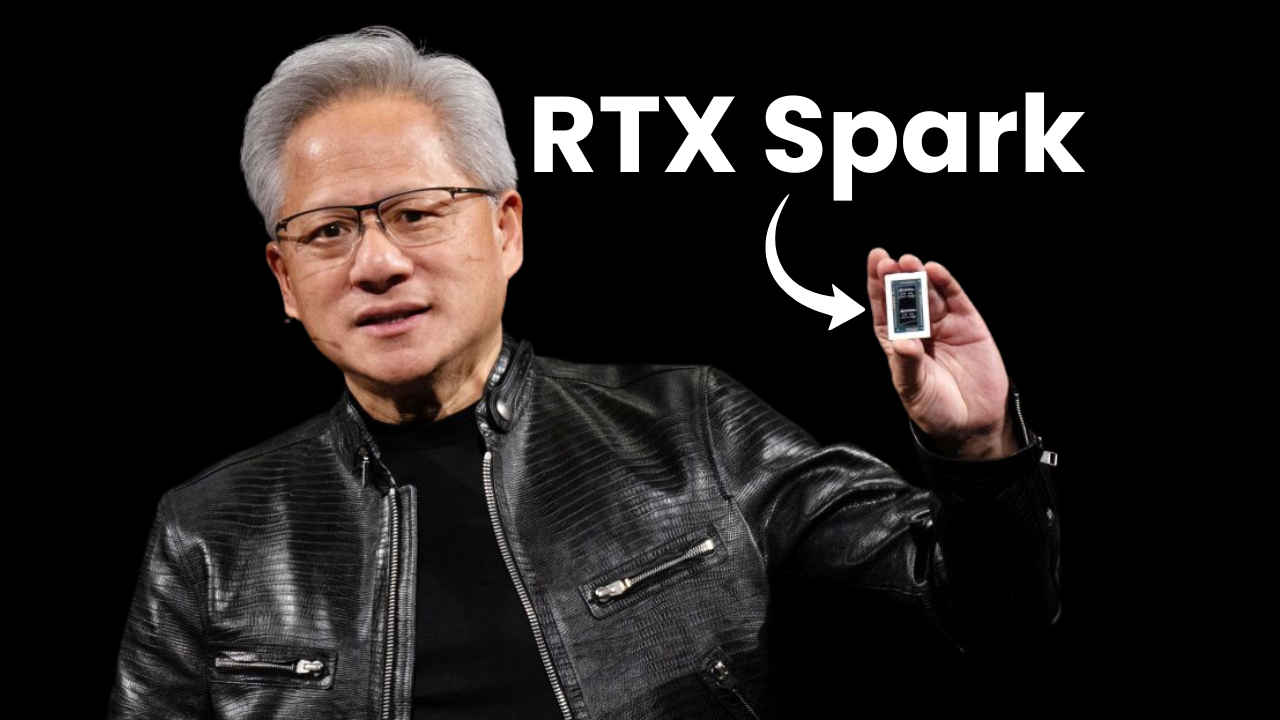

During his NVIDIA GTC keynote at Computex 2026 while showcasing the RTX Spark chip, Jensen Huang explained his vision of where personal computing is heading with an indispensable device around which our modern, digital lives revolve – the smartphone.
 Survey
“15-20 years ago, we used to have an idea called a phone,” NVIDIA’s founder and CEO told the Computex 2026 audience in Taipei. “Today, we have an idea called a PC.” He pointed to the difference between the idea and how the device is being currently used by billions around the world.
According to NVIDIA CEO Jensen Huang, the handheld wireless communication device we generally call smartphones now has stopped being defined by its original purpose long ago. “Today, when you think about your phone, the one thing you don’t do with it is make phone calls. You do just about everything else,” highlighted Huang.
That is the exact transformation now coming to the good old PC, Huang argued, catalysed by the NVIDIA RTX Spark chip.
Also read: NVIDIA RTX Spark brings CUDA, Blackwell and local AI agents to thin Windows laptops
“Microsoft and NVIDIA are going to reinvent the PC,” he declared, unveiling the first Windows laptops running on RTX Spark on stage during his keynote at Computex 2026. “Everything we’ve learned over 33 years distilled into one chip,” Huang emphasised.
Of late, for the past year or so, the feeling within consumer PC analysts was that NVIDIA may be paying more attention to their AI and enterprise datacentres market rather than churning out GPUs for PC or laptop gamers. But that obviously changes now with the RTX Spark announcement.
The hardware is seemingly built to back all of Jensen Huang’s rhetoric on stage at Computex 2026 during the unveiling of RTX Spark. On paper, the specs sound insane. It has a Blackwell RTX GPU with 6,144 CUDA cores, one petaflop of AI performance, a custom 20-core Grace CPU built in partnership with MediaTek, 128 gigabytes of unified memory, and what Huang called “a Windows platform for agents.”
The agentic angle is crucial in Huang’s framing of how the PC will evolve in the future. Instead of launching applications, clicking and typing as we do on Windows PCs and laptops, NVIDIA CEO Jensen Huang’s betting on that to change in the future. Because according to him, the RTX Spark allows the good old PC to run a whole new class of AI that acts on your behalf rather than waiting for your input.

What does that actually look like for the person at the desk, working on their laptop or desktop PC in the near future? Here Huang used sci-fi to explain his vision. The PC of the next decade, he predicted, “is going to be completely different” from what we know it as today. “You would assist AI agent computers running in your house,” he said. “And these, in time, become a lot more like R2D2 to you. It becomes more like C3PO to you.”
Huang and NVIDIA’s promise isn’t just a faster version of the PC we already know very well for the past 30-odd years. They envision a companion device that handles work autonomously, one that is increasingly delegated work than actively operated upon. This is where Huang’s phone analogy makes sense. Just like no one decided their phone would become a camera, wallet or map, it just happened over time, the same is inevitable for the PC.
Also read: New NVIDIA SoCs powered Windows laptops coming: Why it matters


