
Elon Musk’s Starlink shaping 2026 Iran-US-Israel cyber war, here’s how
 Follow Us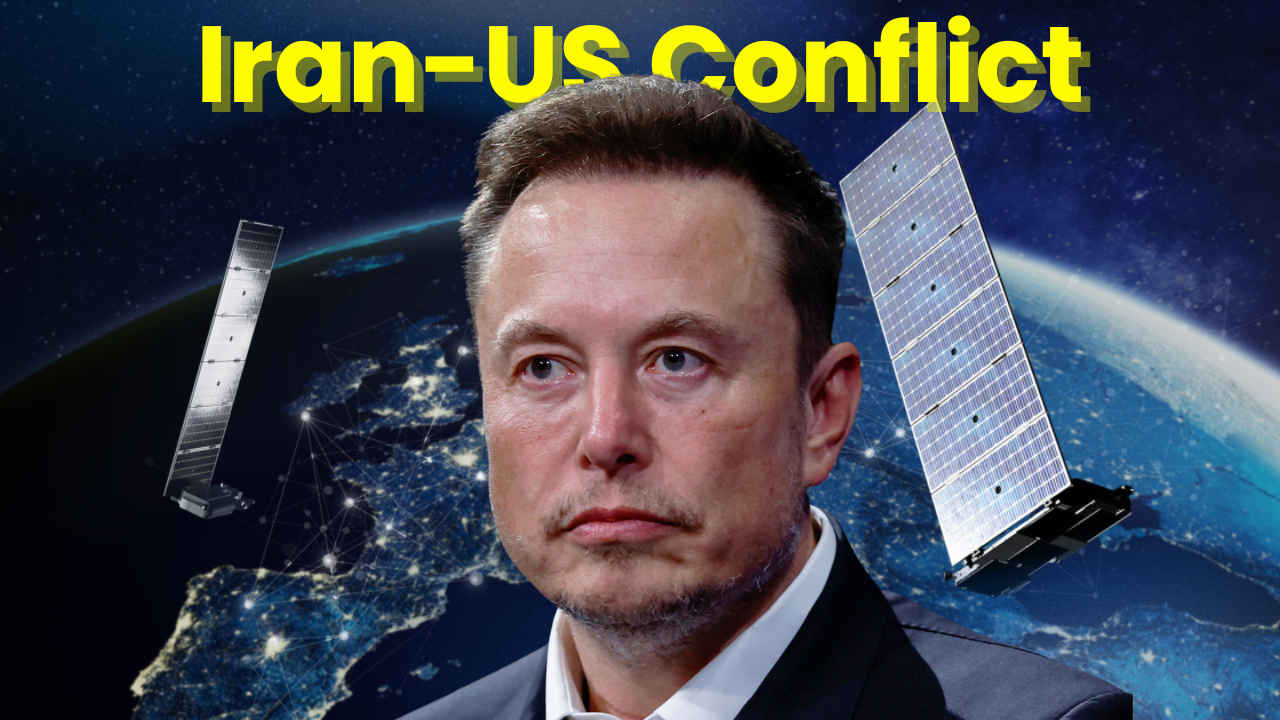

I didn’t expect a satellite internet service to be the most interesting character in a war. But here I am, deep in news reports and the detail I keep returning to is this: when Iran’s internet went dark, when ninety million people lost connectivity almost overnight, the regime’s own hackers simply switched to Starlink and kept going. The same service Iran had officially banned. The same signal being used by the very country they were at war with to beam internet into a nation their bombs had just helped silence.
 Survey
Also read: OpenAI defended Anthropic in its feud with US govt: Here’s how
You genuinely cannot make this up. On February 28, the United States and Israel launched coordinated strikes across Iran, targeting military installations, nuclear sites, and government infrastructure. Within hours, Iran’s internet collapsed to nearly 1% of normal traffic. Whether by government kill switch, by the largest coordinated cyberattack the region has ever seen, or some brutal combination of both, ninety million people went dark. Israel and the U.S. were simultaneously waging war in the sky and, apparently, keeping the lights on from orbit.

Also read: Iran-US-Israel war: Guy used AI to build 24-hour replay of Operation Epic Fury
That’s the first irony. Iran had banned Starlink in mid 2025, treating it as a Western intrusion – a tool of foreign influence the regime wanted no part of. Then the bombs fell, the internet died, and Handala Hack, a group linked to Iran’s Ministry of Intelligence and Security, was spotted routing operations through Starlink IP ranges to keep attacking Israeli and regional targets. The banned technology became the lifeline. The enemy’s infrastructure became the getaway car.
The broader cyberwar is no less tangled. Iranian-aligned campaigns have hit fuel infrastructure in Jordan and industrial control systems in Israel. DDoS attacks have hammered U.S. and Israeli logistics networks. Hacktivist groups including 313 Team have run parallel pressure campaigns while state actors do the quieter, more calculated work in the background. Meanwhile, U.S. Cyber Command and Israeli intelligence units have been conducting their own offensive operations – degrading Iranian communications, disrupting command networks, and running operations that blur the line between a cyberattack and an act of war.
Both sides are fighting hard, and both are fighting dirty. What makes this moment genuinely unprecedented is how thoroughly it has collapsed the idea of clean, controllable technology. Starlink was designed to connect the world regardless of politics. It is doing exactly that, for protesters trying to speak freely, and for state operatives trying to attack their neighbours. For the country that built it, and for the country that banned it and is now quietly depending on it. The satellites don’t discriminate. They just transmit.
Also read: Grok didn’t really predict US strike on Iran: Here’s why


