
Amazon Connect Health explained: The new healthcare AI agent by AWS
 Follow Us

Last month, I caught a bug or allergy of some kind which had me coughing badly for weeks. I don’t know about the severity but it was annoying. What was even more annoying was trying to find a decent ENT in my area and then once I found him, I had to figure out the medicines because by the time I had gotten home, I forgot which one was which and the writing on the prescription was too illegible to be helpful. Ever since, I’ve wondered why AI health tools don’t focus on connecting us with professional help rather than trying to replace it. That’s exactly the problem AWS is looking to solve with Amazon Connect Health.
 Survey
Also read: Is ChatGPT Health safe? Study finds AI missed half of medical emergencies
What Amazon Connect Health actually does
Rather than playing doctor, Amazon Connect Health is designed to be the administrative layer that sits between patients and the care they need. Think of it less like ChatGPT diagnosing your symptoms and more like a highly efficient personal assistant who knows your medical history, speaks fluent insurance, and never puts you on hold.
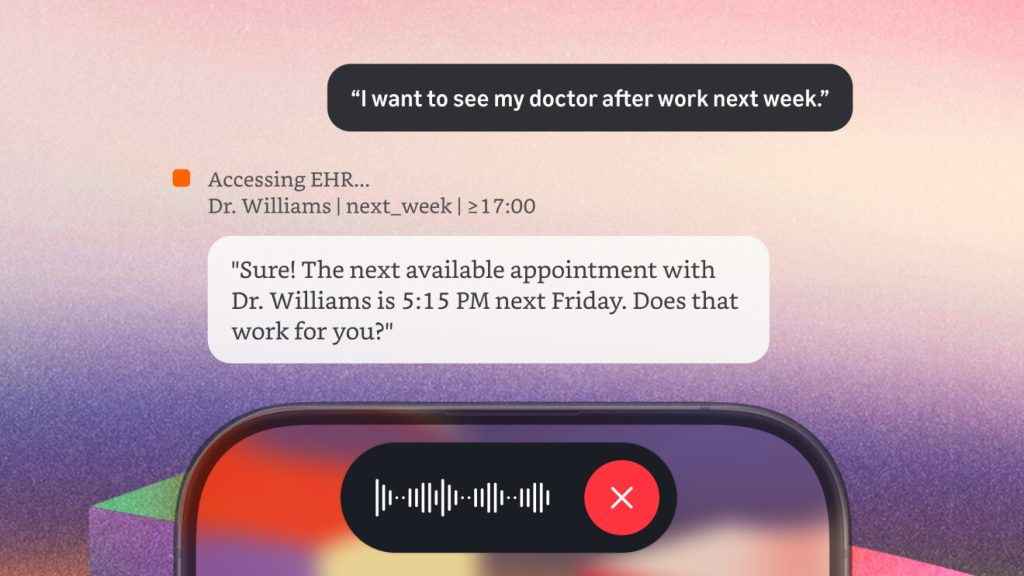
The system integrates directly with Electronic Health Records (EHRs) to handle the unglamorous but critical work: verifying your identity, checking your insurance, finding appointment slots that actually fit your schedule, and compiling your medical history before your doctor even walks into the room. If you had used something like this during your ENT hunt, you could have described your symptoms once, had the system surface available specialists in your area covered by your insurance, and booked the first available slot all in a single call.
Also read: Cochlear Nucleus Nexa: The world’s first smart hearing system
The prescription problem, solved
The post-visit chaos you experienced – arriving home with a prescription you can’t read and no memory of which medication does what – is also squarely in Amazon Connect Health’s sights. After every appointment, the system generates patient-friendly after-visit summaries for your provider to review and share. Not clinical notes full of jargon, but plain-language breakdowns of what was discussed, what was prescribed, and what happens next.
There is a meaningful difference between an AI that tries to diagnose you and one that helps you actually access care. The former carries enormous risk, a misread symptom, a missed red flag. The latter carries enormous value precisely because it stays in its lane. Amazon Connect Health is built on the premise that the healthcare system’s biggest failure isn’t a lack of medical knowledge; it’s a failure of logistics.
Early results back this up. UC San Diego Health reduced call abandonment rates by 30% after deployment, and providers using the ambient documentation feature are spending measurably less time on paperwork and more time with patients.
Healthcare AI that earns trust won’t do so by replacing doctors. It will do so by making sure you can actually get to one and that when you leave, you understand exactly what they told you.
Also read: Gaming PC vs. gaming laptop: What makes more sense for you in 2026


