
Applied for MUDRA loan recently? Beware of fake approval messages on WhatsApp, here is how to stay safe
 Follow Us
Fake WhatsApp messages are falsely claiming MUDRA loan approvals.
Scammers may ask for Aadhaar, PAN and other sensitive documents.
Always verify loan-related messages through official sources.
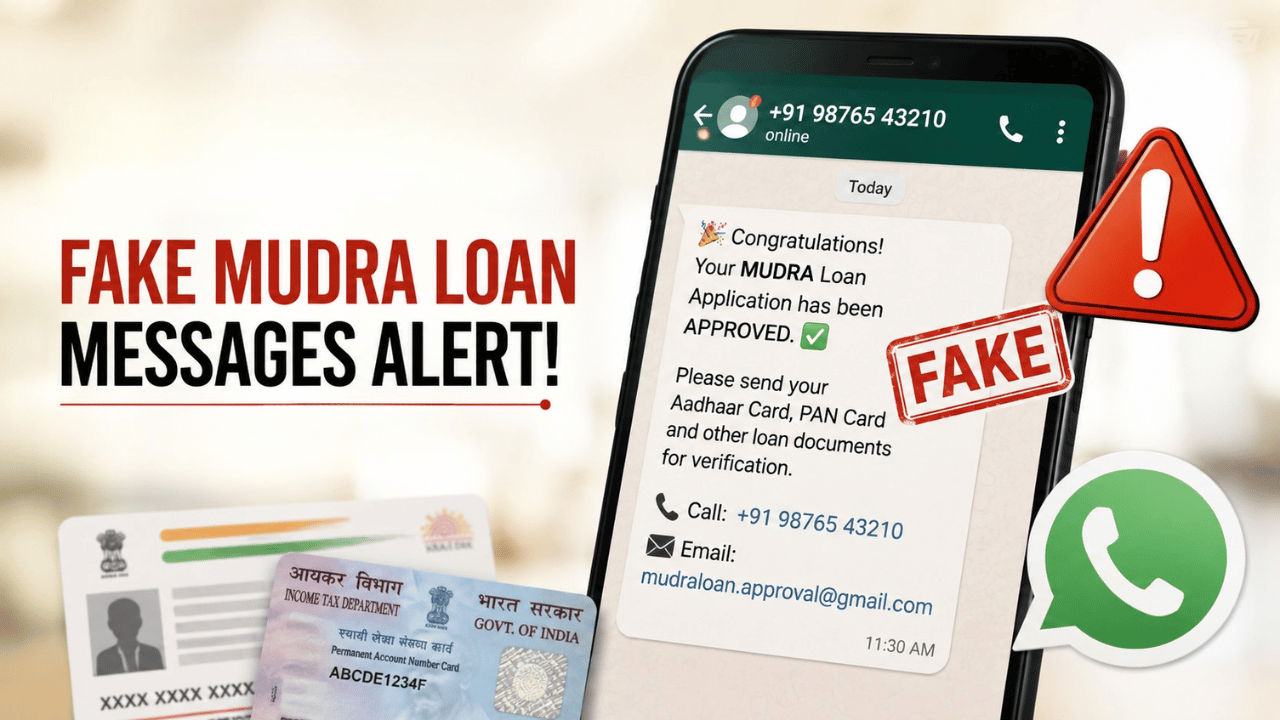

Have you applied for a PM MUDRA loan and recently received a WhatsApp message claiming that your application has been approved and asking you to share your documents? Be extremely careful before moving forward, as the government has recently warned the citizens of a new scam where they are circulating fake messages that appear to be related to MUDRA loan approvals and request sensitive documents such as Aadhaar and PAN cards. The authorities have confirmed that these messages are fake and being circulated with malicious intent. Here’s everything you need to know about the fake MUDRA loan approval message and how you can stay safe.
 Survey
Fake MUDRA loan message
Scammers are getting smarter, and they have now taken their MUDRA loan scams a step further. As we previously reported, several users across the country received WhatsApp messages redirecting them to a website that appeared to be an official MUDRA loan portal and asked them to provide their personal details.
Now, the notorious people have started sending a new version of these messages, claiming that the recipient’s MUDRA loan application has been accepted. The messages then provide a mobile number and an email address, asking users to share documents such as their Aadhaar card, PAN card and other relevant loan documents.
Also read: iQOO 15 price drops on Amazon, available for under Rs 75,000 with bank offer
The Press Information Bureau (PIB) Fact Check has recently debunked this claim. The agency clarified that the message is fake and was being circulated with malicious intent. They also added that MUDRA loan messages are not communicated through social media platforms. Lastly, they urged citizens to remain cautious and report any such suspicious messages to the relevant authorities.
Did you also receive a #WhatsApp message claiming that your MUDRA loan application has been approved?
— PIB Fact Check (@PIBFactCheck) September 2, 2026
⚠️ Beware! This #FAKE message is a #SCAM .
✅ MUDRA loan approval messages are not communicated through social media platforms.
✅ MUDRA is a refinancing institution and does… pic.twitter.com/ifAJ1WYaou
How to stay safe
Here are the easy ways that can help you to stay safe online:
- Never share your documents with unknown people.
- The government never asks you for money to approve your loan, so do not send money if someone asks for it.
- OTPs are highly sensitive information and are required at many steps during a load process, but make sure to check what OTPs you are receiving and do not share them with anyone.
- Be extremely cautious of random calls, messages, or websites that promise quick or guaranteed loans.
- Always double-check details through official bank or government sources.
Also read: Samsung Galaxy A36 price drop alert! Get a discount of over Rs 4,000 on Amazon, here is how
How to apply for MUDRA loan
If you want to avail a loan under the Pradhan Mantri MUDRA Yojana (PMMY), let me tell you that they are only offered through lending institutions approved by the Government of India. These institutions include public and private sector banks. Whether it be a regional rural bank (RRB), small finance bank (SFB), cooperative bank, RBI-registered non-banking financial company (NBFC) or microfinance institution (MFI).
You can initialise the process online by heading to the official MUDRA website. However, one thing to keep in mind is that the third-party agents or private websites are not authorised to approve or process MUDRA loans on their own. If you’re facing any issues, then I recommend you contact authorised banks or lending institutions directly for accurate information and to avoid fraud or other risks.


