
Oura Ring 4 review: It changed how I think about rest, not exercise
 Follow Us

I am a speedcuber. I wear a ring on my finger. These two facts are, occasionally, in conflict. But more on that later. Three weeks ago I started wearing the Oura Ring 4 on my left ring finger, and somewhere between the first sleep report and the third readiness score, I realised I had been thinking about health tracking completely wrong. I had been obsessed with the output: steps, calories, workout duration. The more interesting story, it turned out, was happening while I was doing absolutely nothing. While I was asleep.
Also read: Gabit smart ring review: Good habits take time, not a timepiece
First impressions
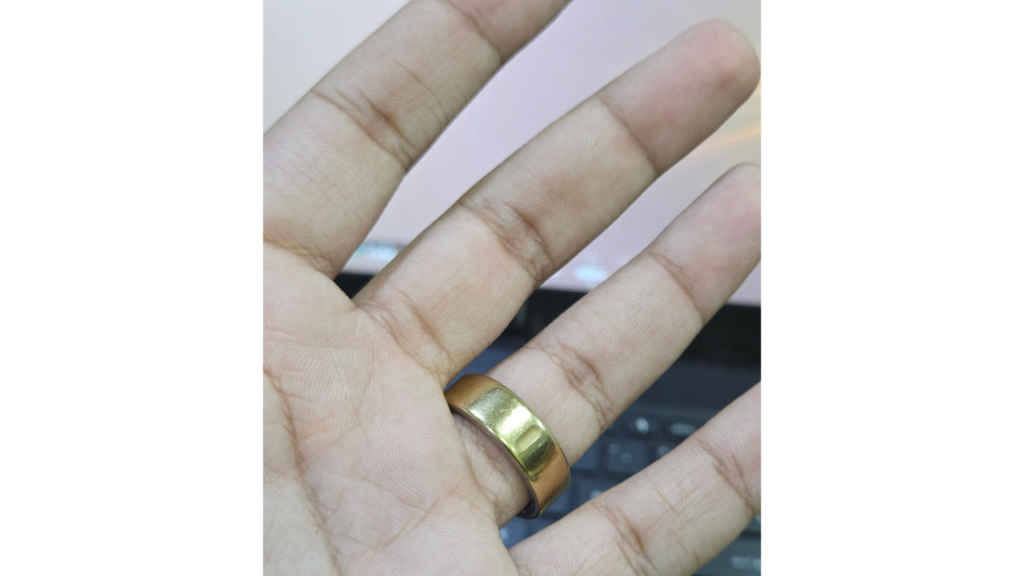
The ring arrives in a small, considered box alongside a magnetic charging puck and a USB-C cable. The puck is compact, grey in colour, and takes up almost no space on a night stand. Setup is straightforward. Download the app, tap the ring to your phone, done.
The hardware feels premium in a quiet way. All-titanium construction, inside and out, with sensors that sit flush against your finger rather than pressing into it.
That said, the ring is noticeably thick. If you have never worn a ring before, or are used to a slim band, it will feel a little foreign for the first few days. It is not uncomfortable exactly, just present in a way that takes some adjustment. By the end of the first week I had largely stopped noticing it.
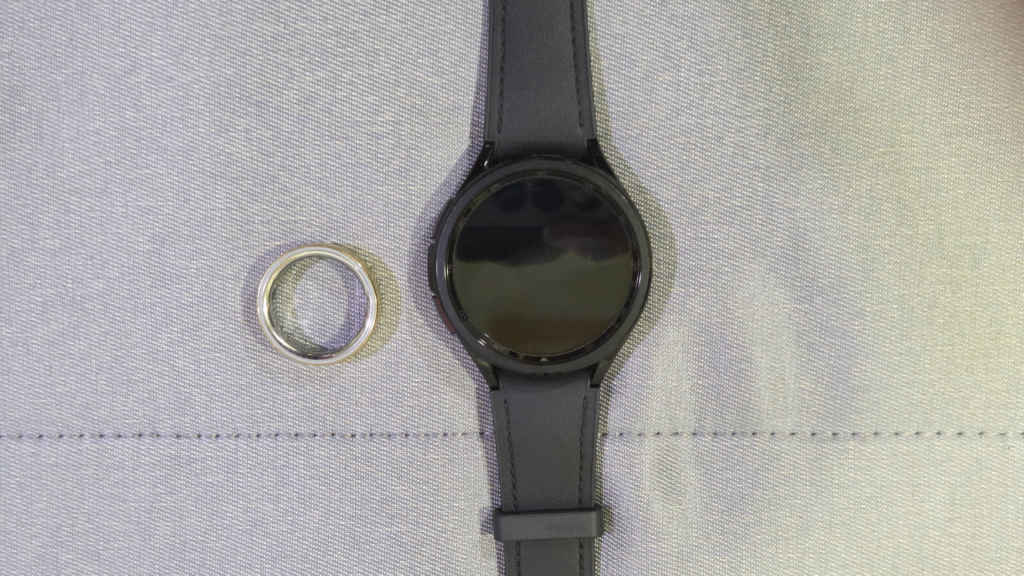
For context, I use a Samsung Galaxy Watch 6 Classic as my daily driver. I like it. It does a lot. But I have never fully gotten used to wearing a watch all the time, and I almost never sleep with it on. The strap is not particularly breathable and in Mumbai’s humidity, you start sweating faster than you would expect. Mid-workout, the watch sometimes feels like it needs to come off. The ring never once gave me that urge.
The sleep gap that changed my mind
I want to lead with the most important thing this ring did in three weeks of testing, because it is the argument the rest of this review builds around.
On one particular night, my Galaxy Watch logged my sleep at 5 hours 36 minutes. The Oura Ring logged 6 hours 45 minutes. That is over an hour of sleep the watch simply did not register. For a device that is supposed to tell you how recovered you are, that is not a rounding error. It is a fundamentally different picture of your night.
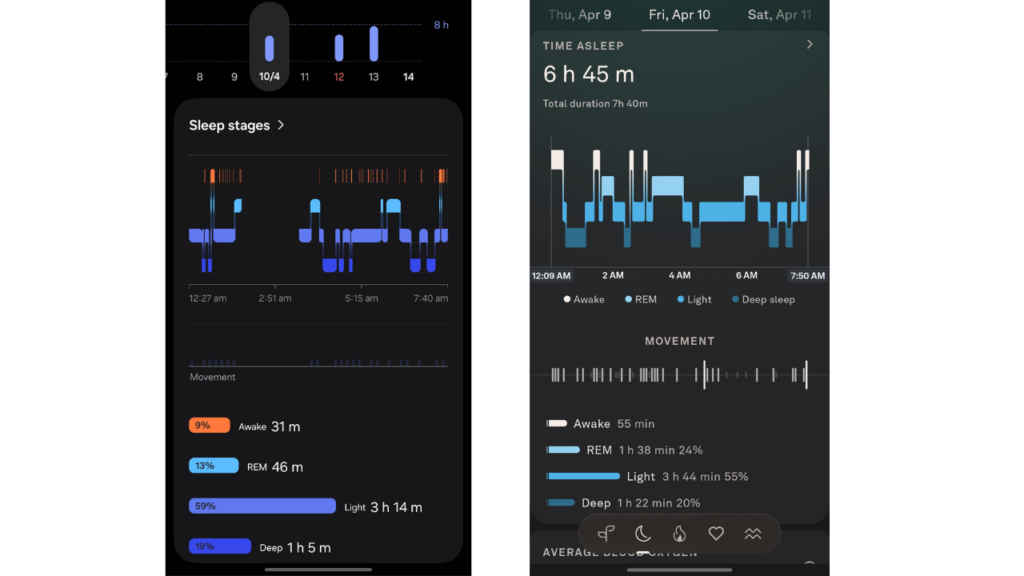
Now, I can tell you which device was closer to the truth on that particular night because the watch’s own app shows a straight hour of no data recorded around 1:30 am. I was asleep. I would know if I wasn’t asleep. The watch just was not paying attention. Ring-based optical sensing has a stronger research track record for sleep staging than wrist-based tracking regardless, largely because the finger has cleaner blood flow signal and is less prone to movement artefacts. But on this night the case made itself. The ring was there. The watch was not.
The practical consequence of this matters more than the spec difference. A health tracker that gives you incomplete sleep data is quietly giving you a distorted readiness score every single morning. You are making decisions about how hard to push in a workout, or whether to have that third coffee, based on numbers that do not fully reflect what your body went through the night before. The ring fixed that for me. It also got me in the habit of trying to get a better sleep score that has caused me to be the most well-rested I have been in a long time
The actual cost
The ring starts at Rs. 28,900 for the silver and black variants, going up to Rs. 39,900 for the premium finishes. Add the subscription at Rs. 599 per month after the first free month, and you are looking at roughly Rs. 35,000 in year one for the base model. Without the subscription you only get three days of data history and the three headline scores, which strips out most of what makes the ring worth owning. Budget for it from the start.
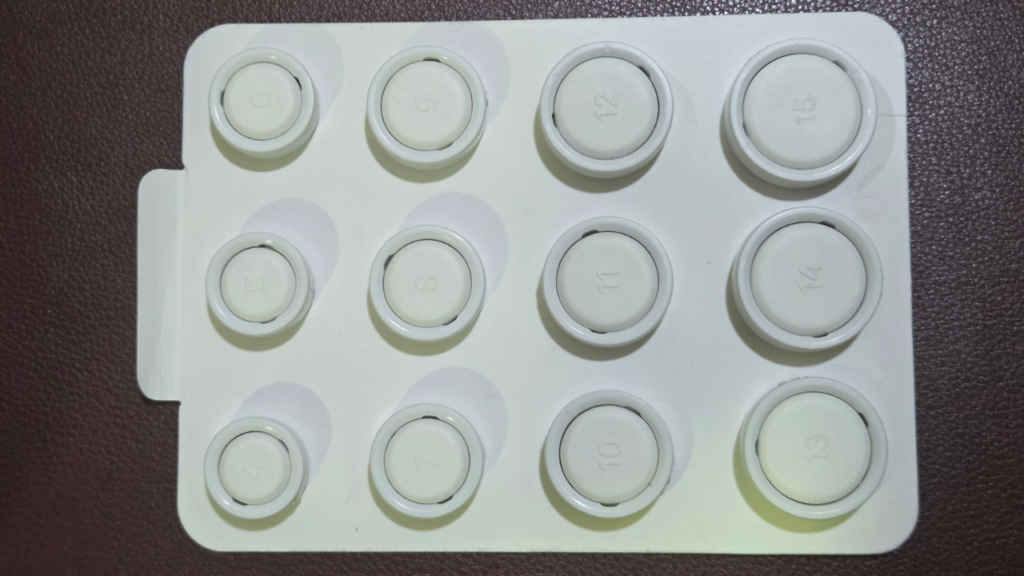
One practical note for Indian buyers: get the sizing kit first. It costs Rs. 999 and will save you from the considerably worse situation of getting the wrong size on a Rs. 28,900 purchase and that cost also get adjusted in the final price of the ring.
The app is genuinely beautiful
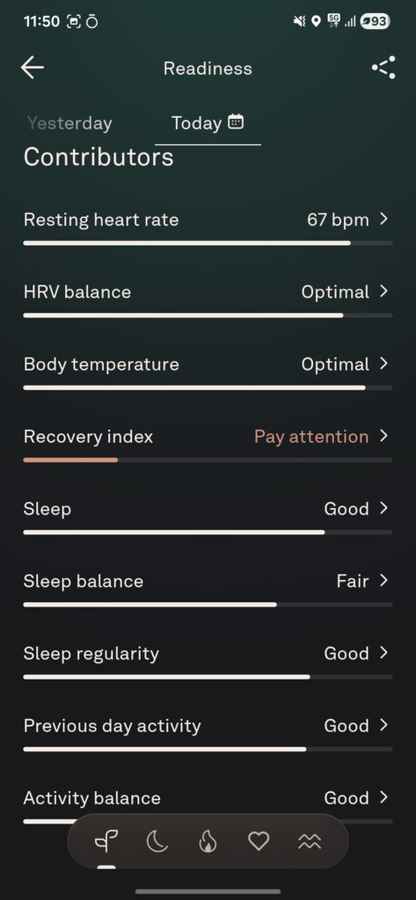
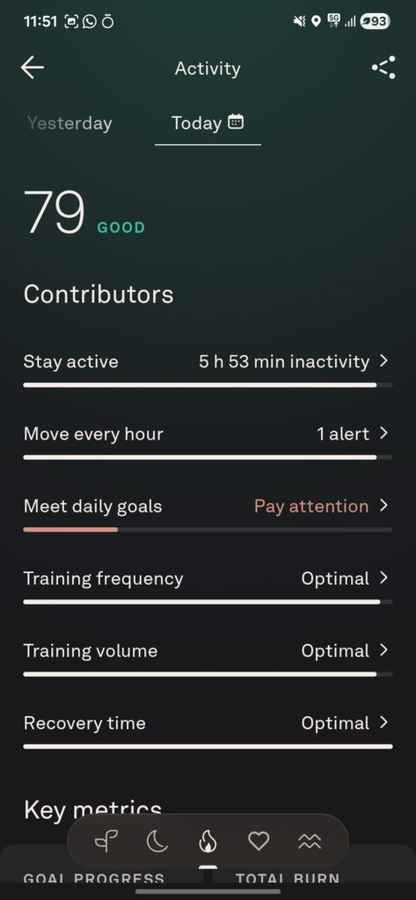
Built around three scores you see every morning: Readiness, Sleep, and Activity. Readiness is the one I became slightly obsessed with. It pulls together resting heart rate, HRV balance, body temperature, sleep quality, sleep regularity, previous day activity, and respiratory rate to tell you how ready your body is to take on the day. Each contributing factor is tappable so you can understand exactly why your score landed where it did. It is not a number you can easily manufacture by just sleeping more or working out harder, which means when it moves, you pay attention.
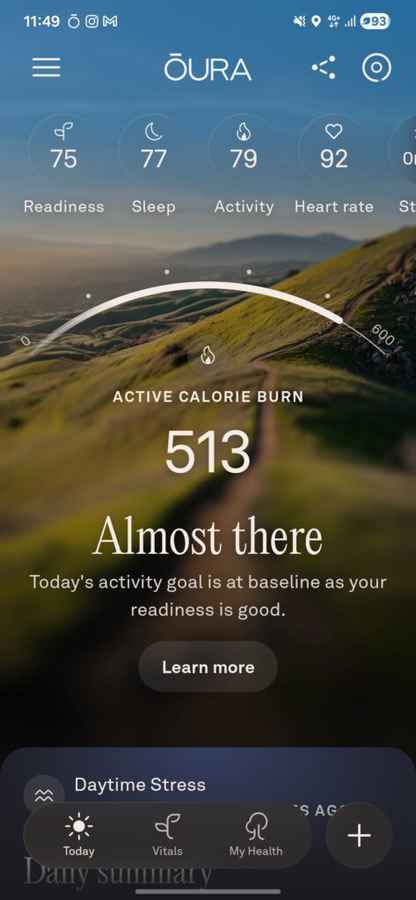
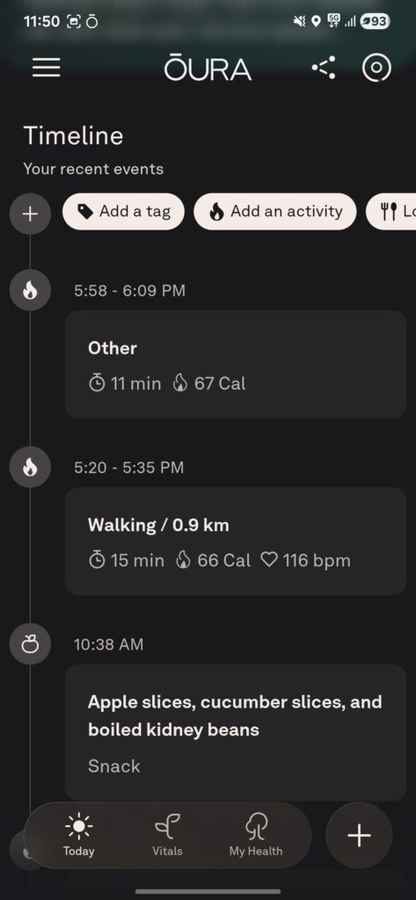
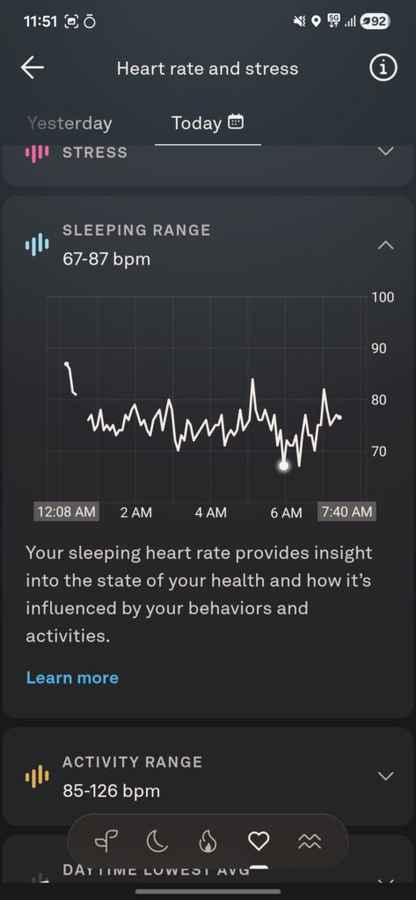
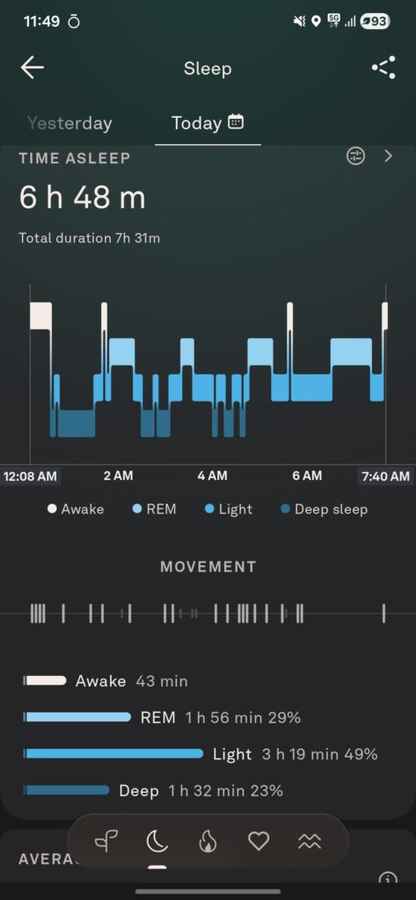
The sleep breakdown sits underneath that. You get your sleep stages charted across the night: REM, light, deep, and awake, alongside body movement, breathing regularity, disturbance timestamps, and HRV tracked across the full night. After two weeks of consistent use, longer-term patterns start appearing like sleep debt over the past 14 days and stress resilience trends.
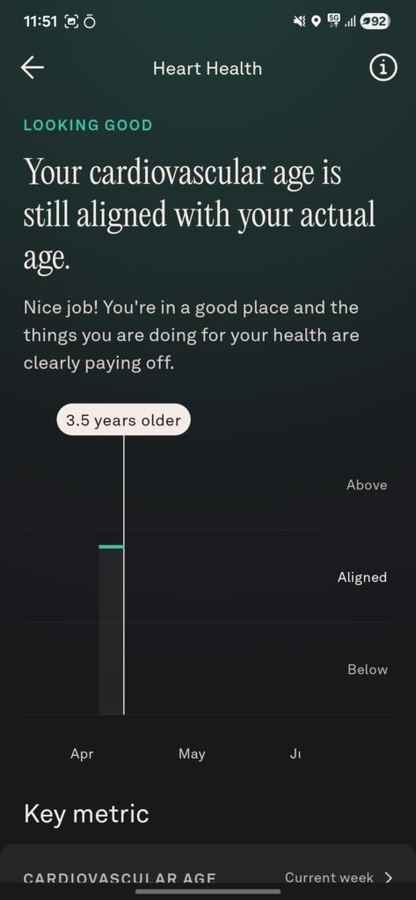
After two weeks it also surfaces your cardiovascular age, which estimates arterial stiffness relative to your actual age. Mine came in 3.5 years older than I am, sitting within the ideal range. I will be honest, I do not fully know how much weight to give that number. Oura derives it from HRV and resting heart rate patterns over time, so it is not arbitrary, but it is also not a cardiology report. I found it useful as a directional signal rather than a hard verdict, something to watch trend over months rather than act on immediately.
There is a meal logging feature where you photograph your food and the app breaks down protein, fibre, added sugars, fats, and carbs. It is a nice addition and, more often than not, it detects the food accurately but is peripheral to what the ring does best.

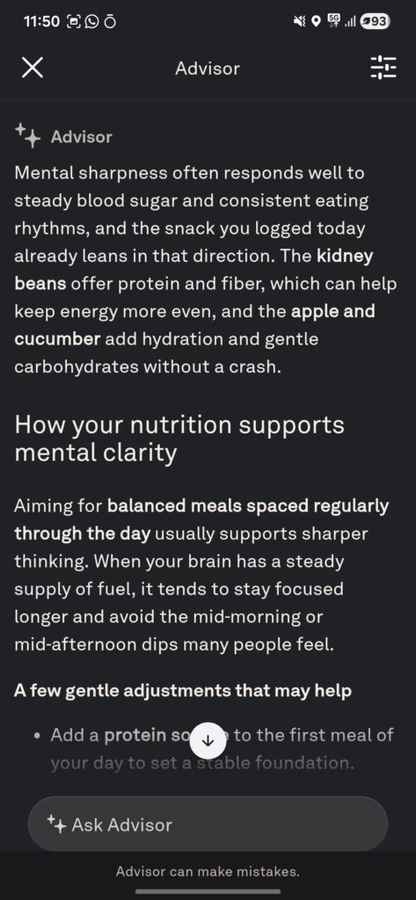
Oura also has an AI advisor that reads your data and offers personalised suggestions. It works, it is fine, and I would not miss it if it were not there. The data itself is the interesting part. The chatbot layer on top of it felt like it was trying a little too hard.
Where it falls short
The Oura Ring 4 is not trying to be a sports watch and should not be judged like one. But the gaps are worth knowing about clearly.
Step counting is noticeably less accurate than the Galaxy Watch. It tends to overcount or undercount depending on the activity. For workouts, the watch gives you pace, distance, and cadence. The ring gives you none of that. If you run, cycle, or swim and care about performance metrics, you will still need a watch. The ring sits firmly in the wellness category: sleep, recovery, stress, and fatigue. Outside that lane it does not pretend to compete.
The ring also has no vibration motor and no LED display, so there are no notifications, no alarms, no glanceable stats. Entirely passive. Some people will find this freeing. Others will find it limiting. Know which one you are before buying.
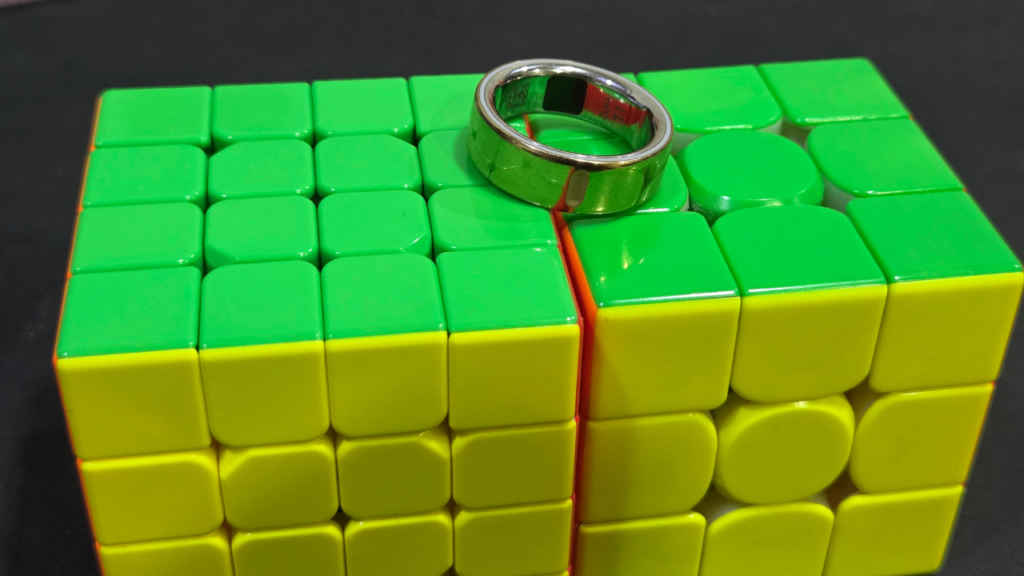
And then there is the speedcubing problem. I solve cubes competitively and wearing the ring on my left ring finger means it rubs against my middle and index fingers during solves, which messes with my grip and affects my times. I now take it off before sitting down to cube. A minor inconvenience in the grand scheme, but worth knowing if any of your hobbies involve precise finger movement.
Battery life
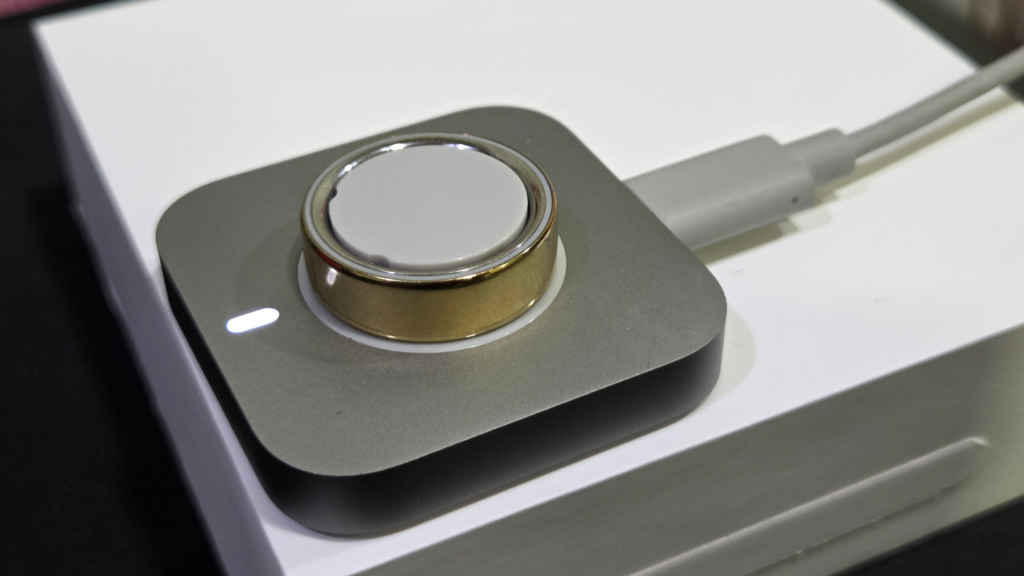
Rated at eight days. In three weeks of real use I consistently hit seven days per charge, with the charger taking about an hour to top it back up. Compact puck, USB-C, no complaints. It is one of the better battery experiences in wearables and one of the least interesting things to write about, which is exactly how battery life should be.
So, who is it for?
The Oura Ring 4 is not a fitness tracker that also does sleep. It is a recovery and wellness tracker that also logs your workouts. That distinction sounds small but it reframes everything about how you use it. You stop asking what you burned and start asking whether you were ready to burn it in the first place.
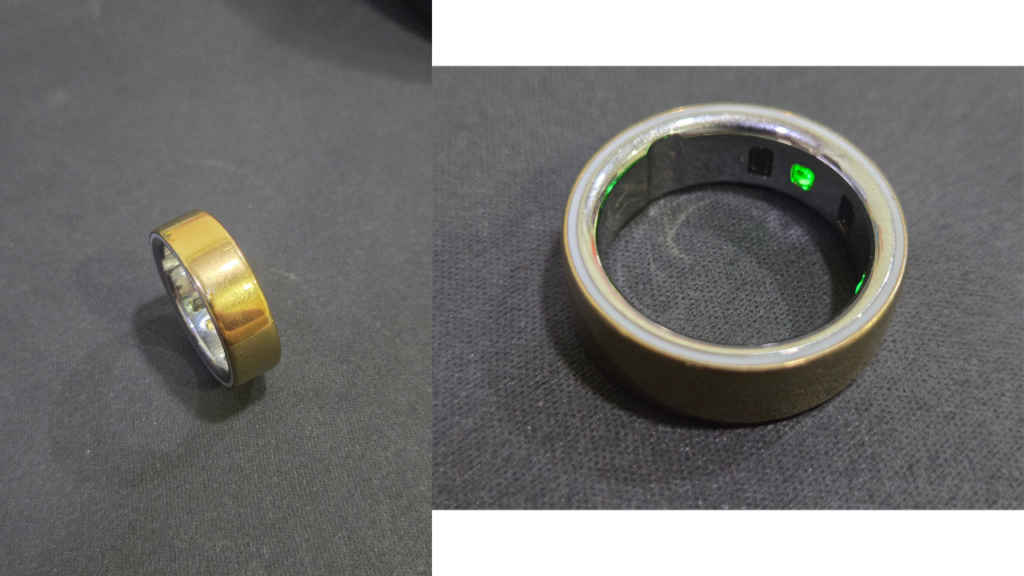
If you want a smartwatch replacement, look elsewhere. If you want pace and cadence and GPS routes, look elsewhere. But if you want to understand what your body is actually doing when you are not watching it, and you want a device comfortable enough to wear through every workout, every night of sleep, and every sweaty Mumbai afternoon without once wanting to take it off, this ring makes a serious case for itself.
Also read: Somebody recorded 40 years of concert audio and put it all online for free


