
Xiaomi S Mini LED 75 2026 review: Big-screen cinematic TV under Rs 1 lakh but with some compromises
 Follow Us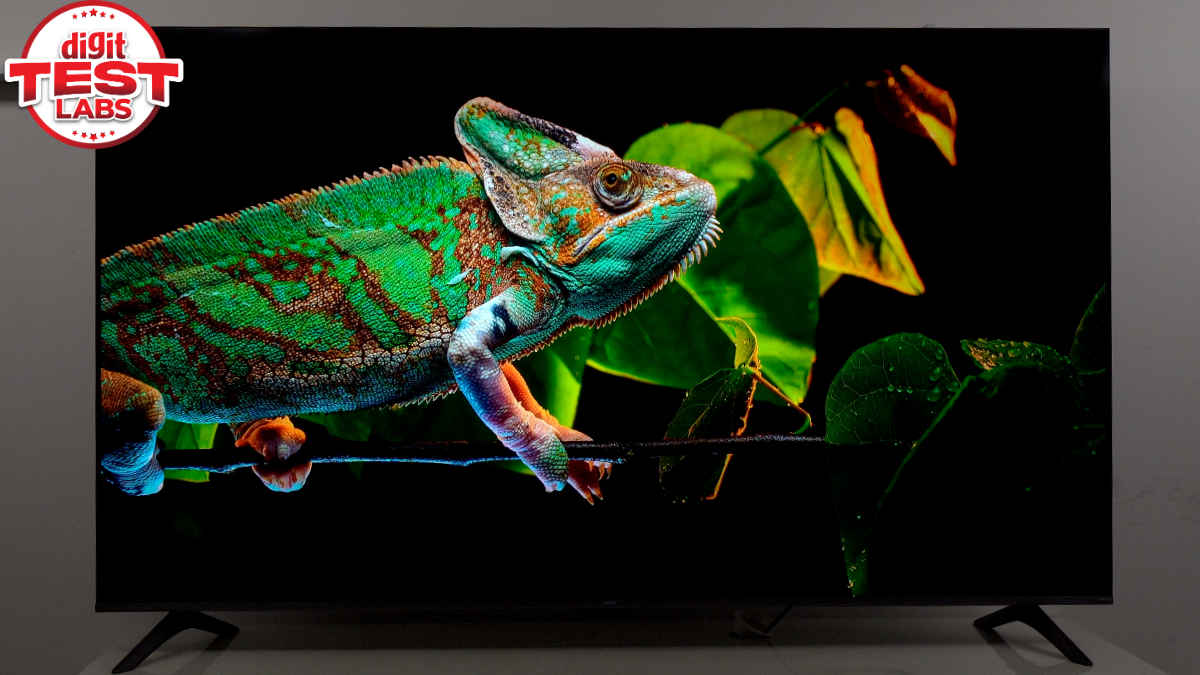

Reviewing a large-screen TV is always fun, and if it is a high-end model, then you’re always in for a treat, thanks to the grand visual experience. When the Xiaomi TV S Mini LED 75 arrived at our doorstep, moving it to the Digit Test Labs was a bit of work, but even in its packed state, it was already turning heads. For obvious reasons, I had to take the help of some of my colleagues to unbox and set it up on a table. They all gawked at the visuals for some time, and that was their reward, I guess. But, as someone who reviews a lot of TVs, my task was beyond just enjoying what’s in front of me.
I have consumed a lot of content on the Xiaomi S Mini LED 75-inch TV, for a few weeks now, and here’s my full review that should tell you if it’s worth shelling out Rs 99,999 on a panel this big, how much of an impact the Mini LED tech makes, whether the sound has a big presence, and everything else that matters in your everyday TV use.
Xiaomi TV S Mini LED 75: Display and audiovisual quality
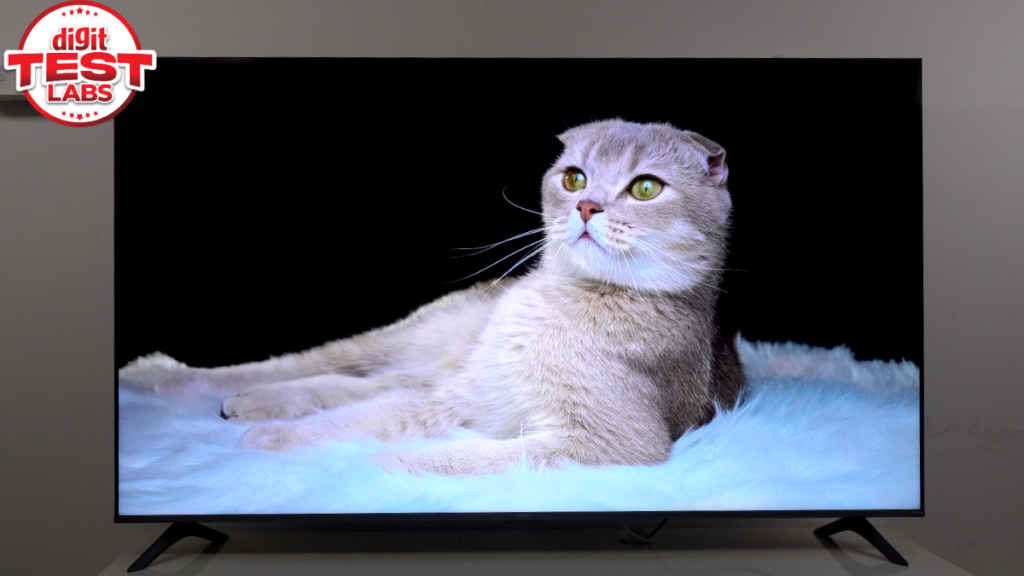
The main selling point of the Xiaomi S Mini LED TV is, of course, the screen: a 75-inch VA LCD panel with QD-Mini LED backlighting. The company claims 512 dimming zones, 1,200 nits of peak brightness, and 94 per cent DCI-P3 colour coverage. The result is finely bright visuals, punchy colours, deep blacks, and agreeable viewing angles. Due to the bright and vibrant visuals, I didn’t mind watching even ads sometimes. Personally, I love watching travel shows or city walkthrough videos on such big screens for the scale and immersion.
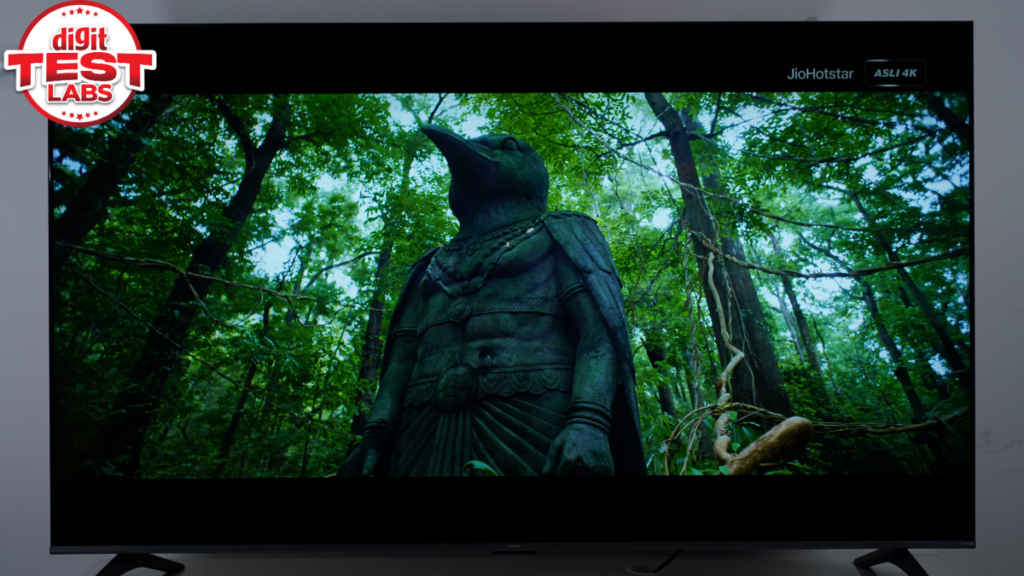
In regular everyday SDR content, the screen was easy on the eyes. I watched a few sitcom episodes and the Malayalam film Sambhavam Adhyayam Onnu on JioHotstar, and the forest-heavy scenes especially looked rich and captivating on the large panel. Upscaling performance is decent overall, as I had a pleasant rewatch of some scenes from Meet Joe Black.
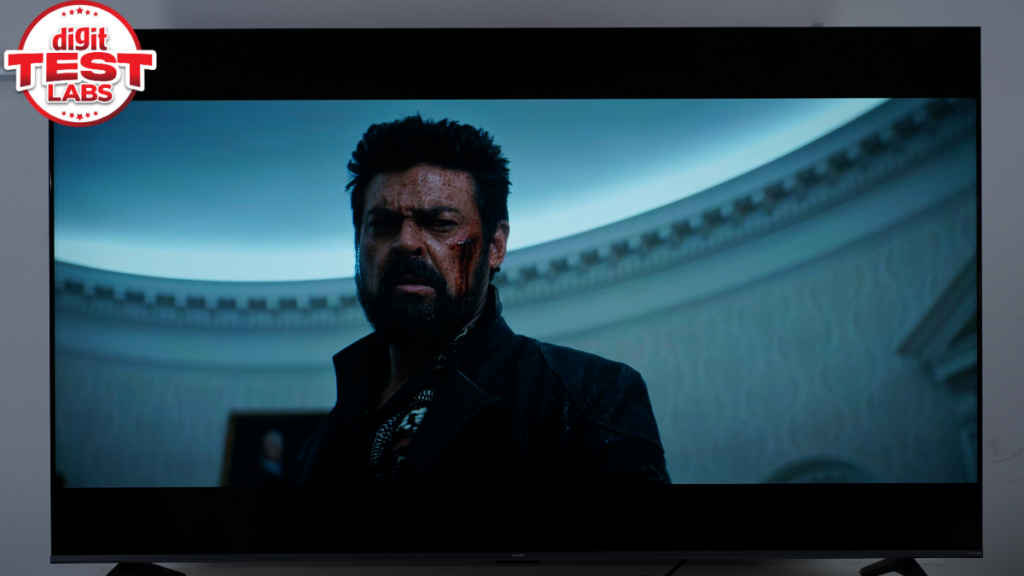
HDR performance, however, is a little more inconsistent. While watching the final episode of The Boys in HDR10+ on Amazon Prime Video, one of my colleagues immediately pointed out visible graininess in some scenes. At the same time, close-up shots of characters carried realness with strong facial detail and depth. Another thing was that the colours looked very saturated, and skin tones, in particular, appeared pinker or redder than natural. Switching the colour temperature from Warm to Neutral improved things noticeably for me.
Watching Top Gun: Maverick on Amazon Prime Video also exposed a few more limitations. The dogfight sequences were not always the easiest to follow, especially during fast aerial movements. In the darker command room scenes, close-up shots of actors looked sharp and detailed, but the background showed visible choppy artefacts. Around the 1 hour 34 minute mark, I also noticed temporary image retention where the pocket watch impression lingered briefly on screen.
Other than this, motion handling is fine for watching IPL and tracking the movement of the ball, for instance. But I saw there is visible stuttering during other fast-moving scenes and panning shots. For example, the opening drone sequence in the Wild Isle documentary on Prime Video showed noticeable judder.
The Xiaomi S Mini LED display’s plus and minus were apparent on Dolby Vision content, too. Say, in Stranger Things on Netflix, the villain, Vecna’s veiny body, looked creepily lifelike. So, the Xiaomi TV screen has its appeal whenever subjects are well-lit and in focus; you can see more life in them. But, here too, some pixelation artefacts were visible in darker scenes.
I didn’t encounter any jarring blooming issues, but there was noticeable banding in the gradient-heavy desert scenes of the Dune 3 teaser trailer.
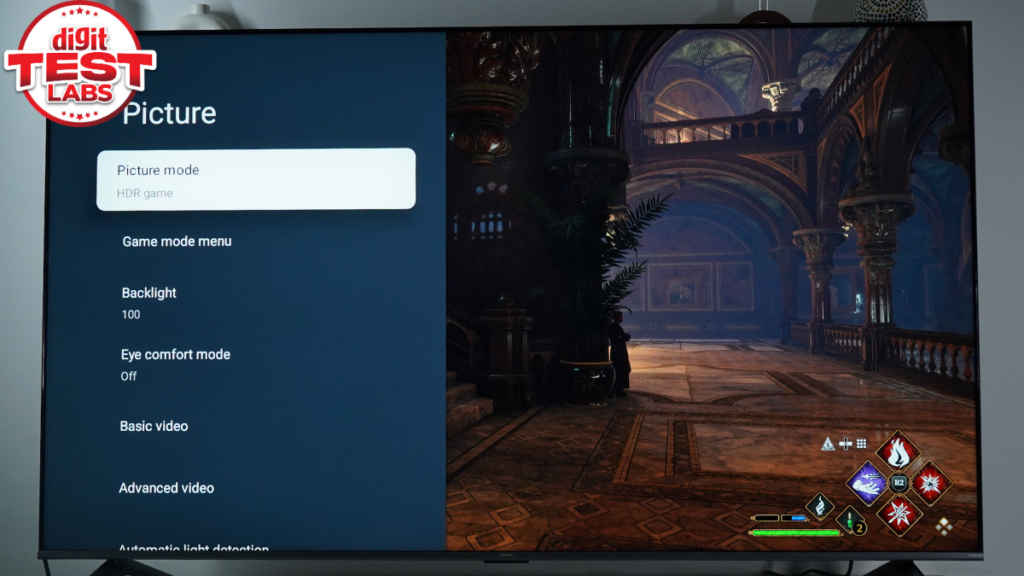
As for games, we played Hogwarts Legacy on a connected Sony PS5 Pro, and the experience was alright. Playing on the big screen was fun, but the Mini LED magic couldn’t be felt. We switched between different picture profiles and stuck with the HDR game preset.
Finally, the audio output is befitting the large visuals on screen. Be it gaming or the Top Gun Maverick dogfight, everything was loud and enjoyable on the Xiaomi S Mini LED 75.
Also Read: Vu Vibe DV review: A balanced QLED TV under Rs 35,000
Xiaomi TV S Mini LED 75: Design and connectivity
The Xiaomi S Mini LED 75 is massive but minimal. You see, the bezels are slim enough that they almost disappear once the content starts playing. This is largely because you are sitting in front of a 75-inch expanse that dominates your field of view.
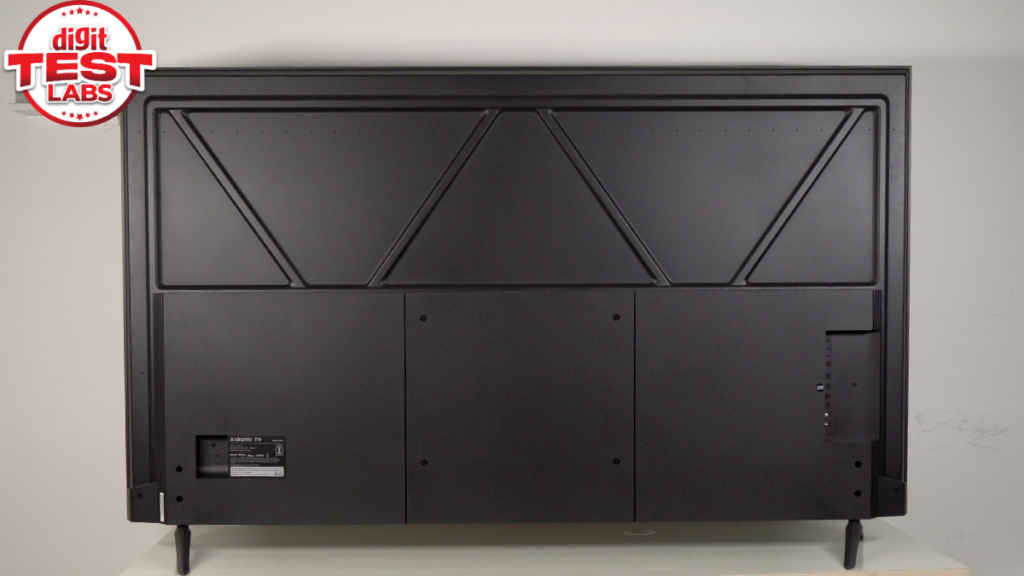
The screen is held firmly by a chassis of reassuring quality, and the tabletop stands. These stands can be positioned either near the edges or closer to the centre. While setting it up, one of my friends was confused about what the optional cavities were for. We chose the extreme edge ones, and there is no worrying creak or flex. The option is appreciated.
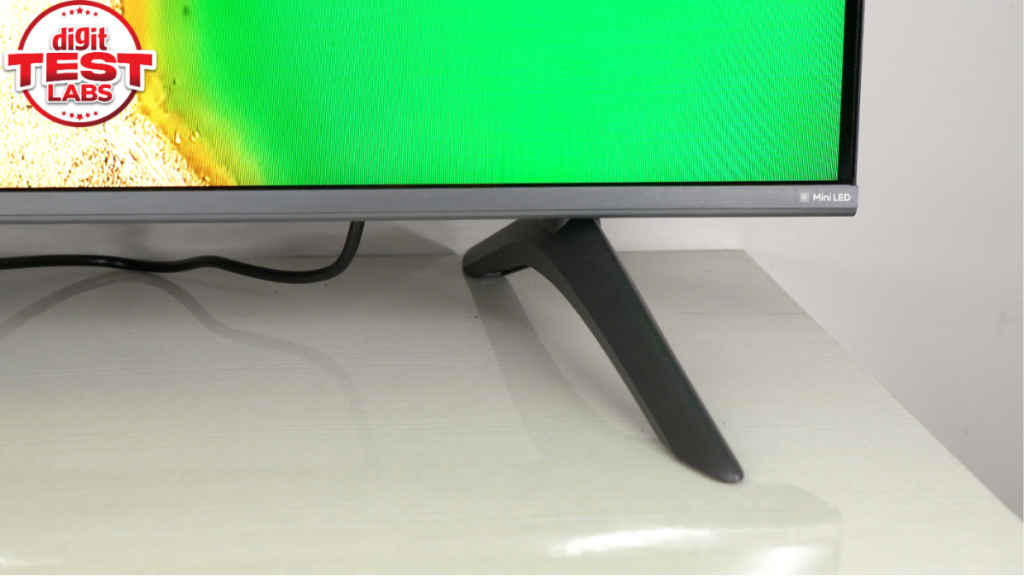
Wherever you mount it, or even for unboxing it, an extra pair of hands would be required, as it is a massive TV.
And if you choose to wall-mount, no kit is included in the box, and it will have to be bought from the brand. But if you do place it on the wall, the left-side-facing port array is easily reachable. The IO array includes 3 HDMI ports (one is HDMI 2.1 with eARC and ALLM support), 2 USB 2.0 ports, Ethernet, Optical audio, and wireless connectivity happens through Bluetooth 5.0 and Dual-band Wi-Fi.
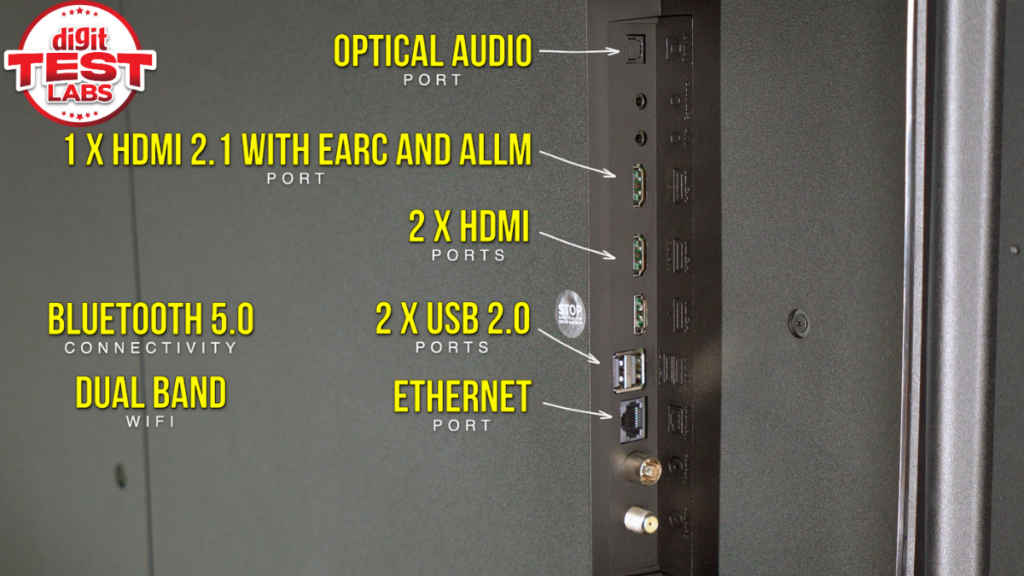
Note that the panel supports a 60Hz refresh rate only, and so you get 4K 60Hz natively, along with 120Hz DLG (Dual Line Gate) mode. This is a software-based upscaling that simulates a 120Hz refresh rate when you enable the Game Boost feature. Also, USB 3.0 would have been preferable as competing TVs have these specifications.
Rest, on the rear, towards the right, there is a power cable, but no routing channels are present. Well, a built-in cable routing solution would have been sweet for a seemingly showpiece of a TV like this.
Xiaomi appears to have chosen to go large on not just the screen: The bundled remote is also longer than usual remotes. It has the table stake buttons, includes the hotkeys for all popular OTT platforms and Google Assistant voice control. Nice.
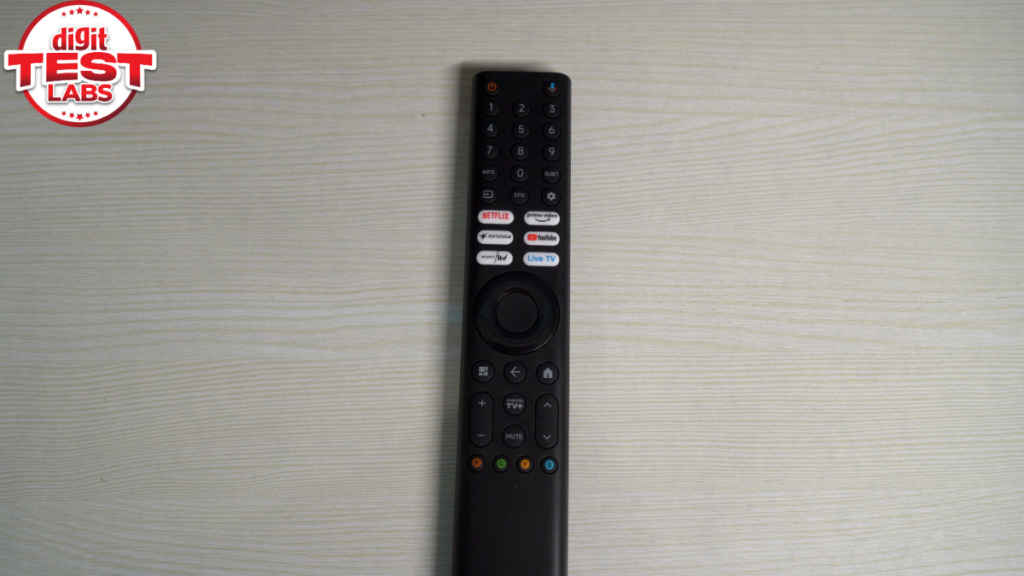
But the problem is that because of the length of the remote, you’ll have to do some finger gymnastics to reach certain buttons, especially the ones on the corners, like the Google Assistant button. Another personal gripe is with the location of the Patchwall UI button. I was accidentally triggering it several times, as many TVs have the back button there. But it is a matter of learning and habit. That’s all.
Xiaomi TV S Mini LED 75: Software and performance
The Xiaomi S Mini LED 75 runs Google TV based on Android 14 out of the box. And if you want a different UI, you can jump to Xiaomi’s PatchWall+ interface with a simple button click. PatchWall could help you discover regional content, and Google TV is also a reliable UI for content discovery. There is also Xiaomi TV+ for free ad-supported streaming channels. I appreciate the options on offer. You can cast content through Chromecast or AirPlay 2 and install other apps you like from the Google Play Store. The TV ships with 32GB of storage.
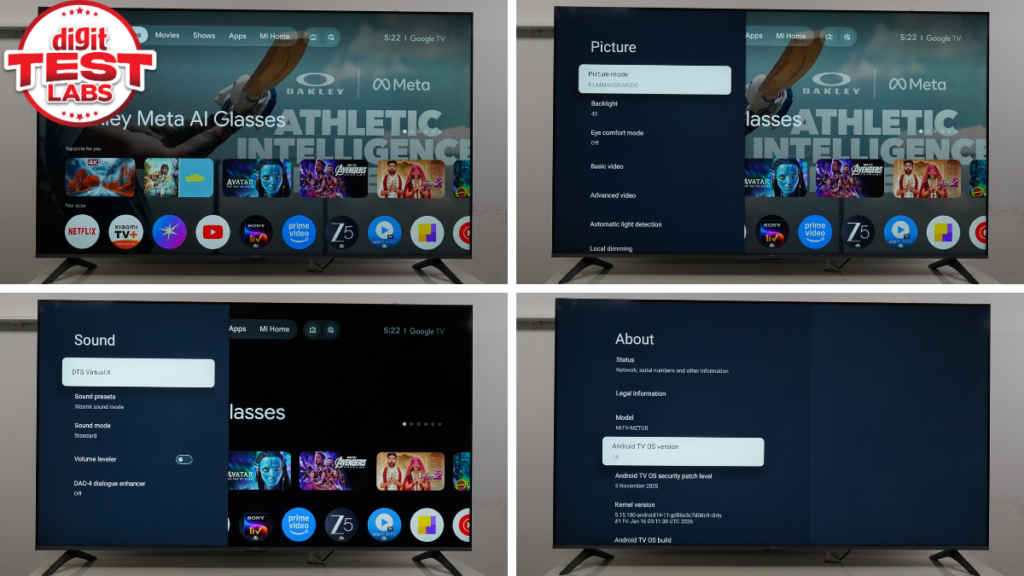
But there is a hardware limitation here. The quad-core ARM Cortex-A55 processor, coupled with just 2GB of RAM, shows the struggle when you switch between apps, open and close menus and load homescreen rows. This wasn’t right away noticeable. Only when I was juggling multiple apps and cycling between screens and settings did things start slowing down. I also observed occasional lags while navigating picture settings with content still playing in the background.
So, there are a lot of options and features, but sometimes the UI hesitates momentarily.
Should you buy Xiaomi TV S Mini LED 75 2026?
At Rs 99,999, Xiaomi has priced the S Mini LED 75 2026 TV similarly to comparably specced TVs from Hisense and TCL. And for the money, you are getting several good things like a massive 75-inch screen with rich colours and plenty of brightness, paired with loud enough speaker output, packed in a minimal design suited for modern living spaces. In the mix, the multi-UI choice of Android 14-based Google TV and PatchWall+ is nice to have, and the connectivity selection should be fine for basic use.
However, in regular use, you’d notice some of the compromises. The software experience is not always as fluid and responsive as some competing TVs in this broad competitive market. And sometimes, in certain scenes, you’d come across processing limitations like motion stutter, artefacts in darker backgrounds, or inconsistent HDR tuning. And while the connectivity options cover the essentials, specifications like USB 3.0 or a more capable HDMI implementation would have made the package feel more future-ready.
Still, despite these shortcomings, the Xiaomi S Mini LED 75 2026 edition makes sense for a particular kind of buyer. If your priority is a large-screen cinematic experience with vibrant visuals, strong brightness, and Mini LED contrast without spending flagship money, this TV delivers that experience rather convincingly. So, it is best suited for those who want an impressive screen presence in their living room or bedroom for casual viewing and some occasional gaming.
Keep reading Digit.in for similar stories.
Also Read: Amazon Fire TV Stick HD review: A smart upgrade for older TVs at just Rs 4,999


