
Xiaomi Pad 8 review: If it ain’t broke, make it thinner
 Follow Us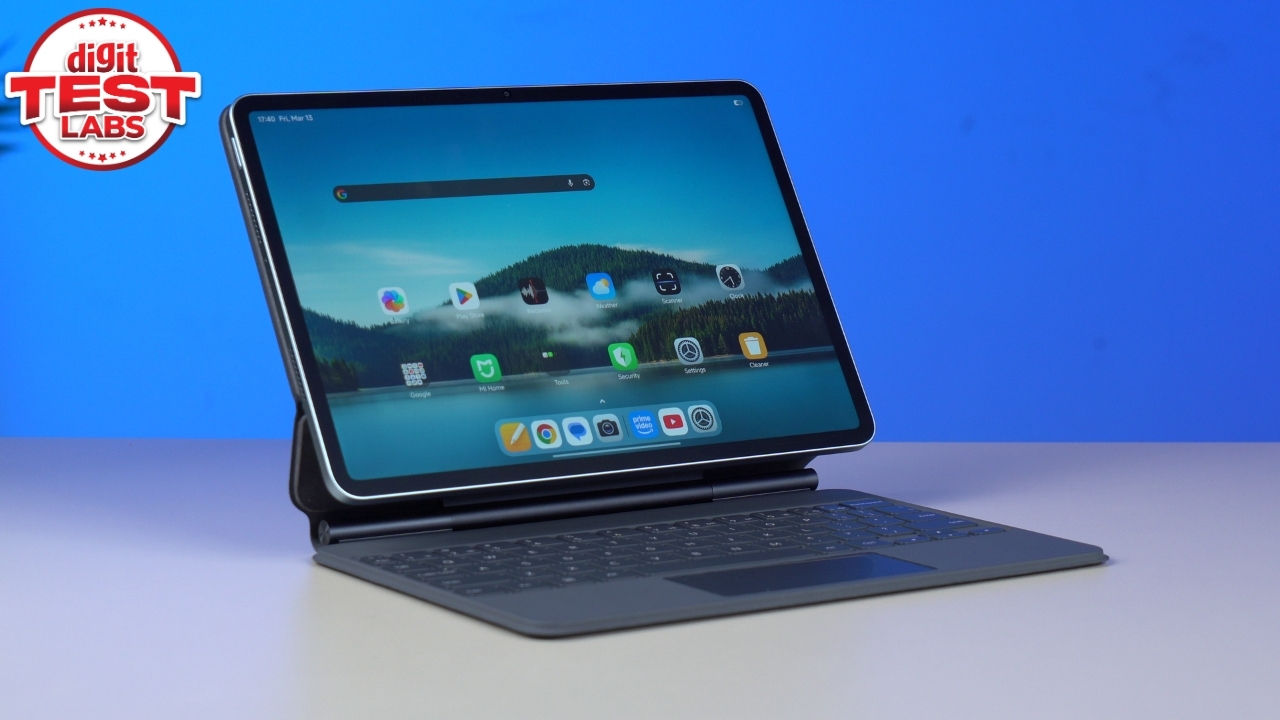

Android tablets, long treated as inadequate alternatives to the iPad, have matured considerably. In the first three months of 2026, the market has witnessed a 5% growth in comparison to 2025 even though the prices increased due to prevailing memory shortage, according to Counterpoint Research. The premium end is particularly active with tablets priced above Rs 20,000 recording a 71% surge in Q3 2025 and 11-inch devices accounting for 59% of all tablet sales. The Xiaomi Pad 7 captured 36% of premium tablet sales in Q1 2025, per CMR’s India Tablet PC Market Leaderboard. Xiaomi has played a crucial role in offering the right features-to-price ratio for buyers who want a serious Android tablet without crossing into iPad price territory. This year, the Xiaomi Pad 8 builds on that with some focused upgrades.
Place the Pad 7 (review) and Pad 8 side by side and you will not be able to discern the differences because Xiaomi isn’t here to fix what’s not broken. The Pad 8 has a slimmer, lighter chassis that houses a larger 9,200 mAh battery. The Snapdragon 7+ Gen 3 on the Pad 7 gives way to the Snapdragon 8s Gen 4 on the Pad 8 and HyperOS 3 ships out of the box on Android 16. The Focus Pen Pro has been redesigned from the ground up, replacing physical buttons with a haptics-based gesture system. After extended daily use as a media device and a portable work machine, the Pad 8 is an easy recommendation for the right buyer.
Xiaomi Pad 8 review: Design and display
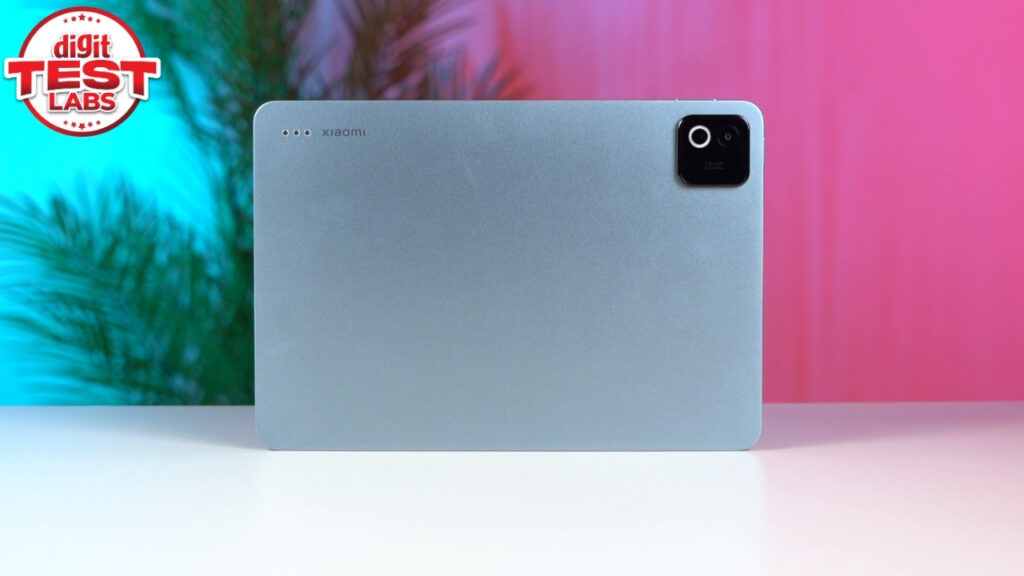
At 5.75 mm and 485 g, the Pad 8 is thinner and lighter than its predecessor. The flat-edge aluminium design retains the premium feel of the Pad 7 and the reduced weight is immediately apparent in hand. This is a tablet comfortable enough for extended reading sessions or for propping up on the kitchen counter while following a recipe, without the fatigue that heavier slates bring with sustained use.
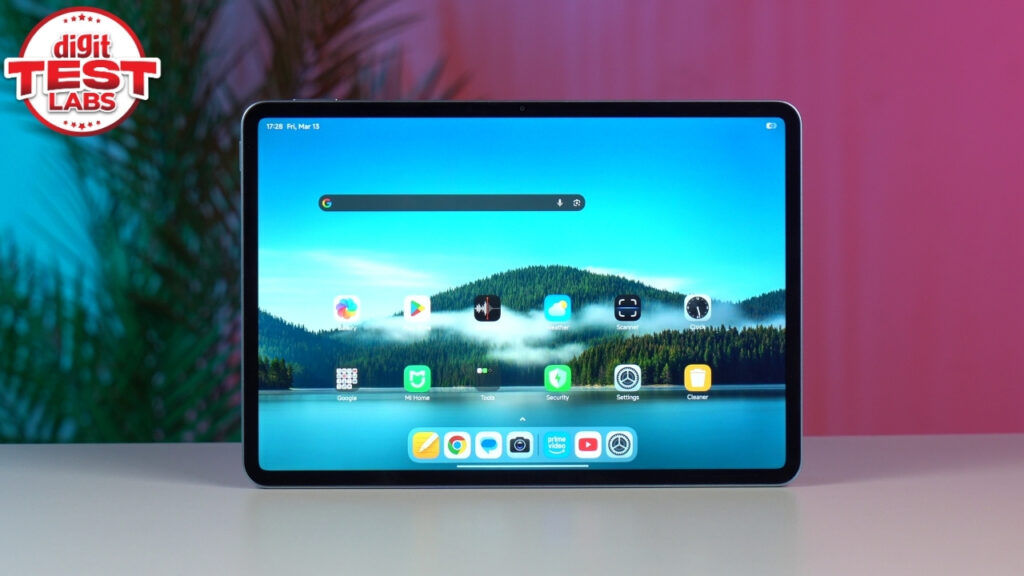
The 11.2-inch LCD panel carries over from the Pad 7. In our testing using the Portrait Displays’ Calman colour calibration tool, the display achieves a Delta E of 2.4 and covers 98.9% of the sRGB colour space. The brightness reaches 779 nits in manual mode and exceeds 1,000 nits in adaptive mode, which holds up well outdoors. The 3:2 aspect ratio continues to earn its keep: the additional vertical space benefits split-screen tasks and document reading that a wider 16:10 panel would not provide. At a maximum of 144 Hz, scrolling and animations are fluid throughout. In addition, a nano-texture variant is available at a premium for users who frequently work in high-glare environments.
Xiaomi Pad 8 review: Performance
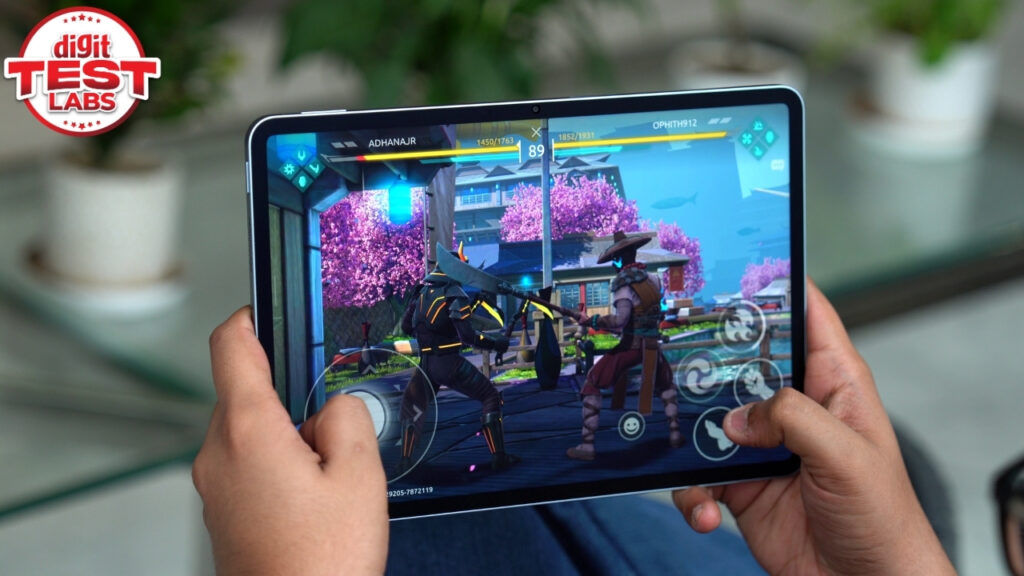
The Snapdragon 8s Gen 4, built on TSMC’s 4 nm process, is a significant step up from the Pad 7’s Snapdragon 7+ Gen 3. The Pad 8 scores approximately 2.4m in AnTuTu and the gains translate into real-world use: demanding games run well, multitasking is smooth and sustained workloads do not cause thermal issues on a device with this surface area.
HyperOS 3 on Android 16 brings meaningful refinements to the software experience. The UI and apps now feel naturally befitting of the larger screen estate rather than being retrofitted, however, some UI inconsistencies such as the File Manager app opening in portrait mode even if the tablet orientation is in landscape make it fall short of being called a perfect experience. The floating windows and a workstation mode supporting up to four simultaneous apps are well implemented. The AI suite, which covers AI Writing, AI Live Subtitles via Meeting Toolbox 4.0 and AI Recorder with transcription, provides practical tools for productivity users. Xiaomi’s cross-device interconnectivity now extends to the Apple ecosystem, allowing the Pad 8 to function as an extended display for Mac users.
However, one gap that stands out is that there is no fingerprint sensor. The face unlock relies on basic 2D recognition, which Android does not classify as a secure biometric. On a tablet at this price, positioned for productivity, that absence is a notable omission.
Xiaomi Pad 8 review: Battery
The 9,200 mAh battery is the standout specification, particularly given the 5.75 mm chassis. In use, the Pad 8 handles a full day of mixed streaming, productivity, and gaming without concern and extends comfortably into a second day on lighter loads. In the PCMark battery life test, the Pad 8 ran through 12 hours and 39 minutes of continuous use which is great considering the screen size. Users can get more battery life by keeping the brightness in check. Xiaomi includes a 67 W charger in the box, and a full charge from empty takes 1 hour and 19 minutes.
Xiaomi Pad 8 review: Audio
The quad-speaker setup with Dolby Atmos and a 200% volume boost mode delivers clear, room-filling sound. It holds up well at higher volumes without noticeable distortion. For media consumption, the Pad 8 performs as well as anything in the Android tablet segment at this price.
Xiaomi Pad 8 review: Cameras
The camera hardware is unchanged from the Pad 7: a 13 MP rear sensor and an 8 MP front camera. The rear camera handles document scanning capably and produces acceptable results in good light, but it is not a replacement for a smartphone camera. The front camera is adequate for video calls, with natural colour output and reasonable sharpness. The landscape-mode camera placement means you can just prop it up on a table and you don’t have to worry about your chin showing up in office meetings.
Xiaomi Pad 8 review: Accessories
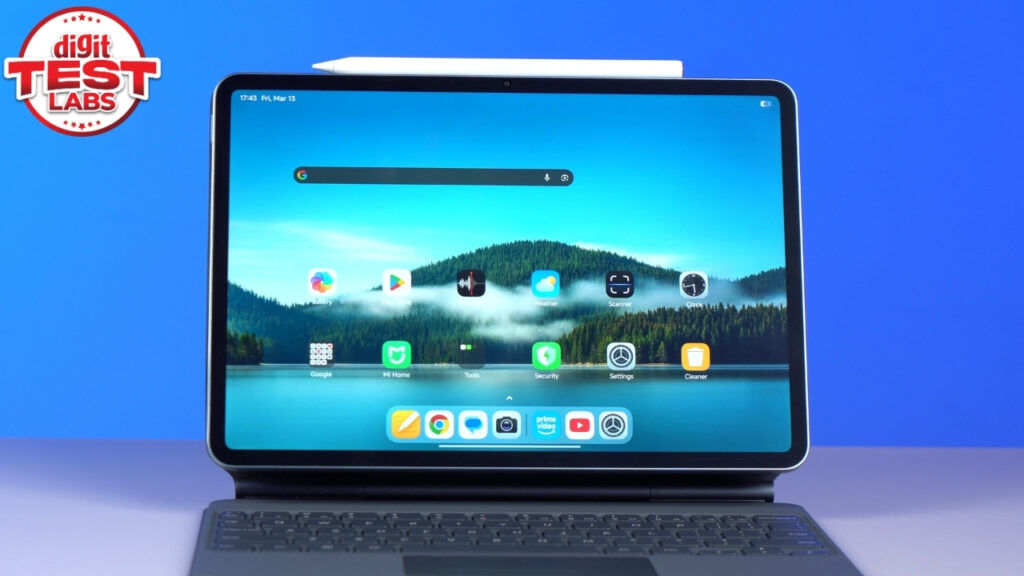
The Focus Pen Pro (Rs 5,999) gets the most notable redesign in the Pad 8 ecosystem. The physical buttons are replaced by haptic gestures: a double press, a pinch and a grip each trigger distinct functions. It is a cleaner design that feels more intuitive in use and the haptic feedback is precise enough to feel deliberate. For note-taking and sketching, the Focus Pen Pro is a meaningful step forward from its predecessor.
The Focus Keyboard Pro (Rs 8,999) is backlit with a base stable enough to use on the lap and the trackpad supports laptop-style gestures, so there’s no learning curve. It handles light writing and browsing without complaint. The combined weight is worth factoring in though: the tablet at 485 g and the keyboard at 325 g total 810 g, putting the full setup in lightweight laptop territory. The keyboard’s weight is necessary for stability, so this is an understood trade-off rather than a design flaw, but buyers should assess it against their portability needs before committing to the bundle.
Verdict
The Xiaomi Pad 8 improves on the Pad 7 in the areas that matter most. The Snapdragon 8s Gen 4 brings performance up to a flagship level, the battery is larger and charges quickly and the form factor is the most refined Xiaomi has shipped in this segment. The HyperOS 3, based on Android 16 is a polished, capable operating system and the AI tools adds great value for work users and even designers.
The gaps are real but not deal-breakers for most buyers. The combined weight of the tablet-plus-keyboard system approaches that of a lightweight laptop. And while Android’s app ecosystem has improved substantially, some third-party applications and UI inconsistencies still need to be addressed. That Xiaomi already includes a fingerprint sensor on the Pad 8 Pro makes the omission here a deliberate cost decision rather than a hardware limitation and a difficult one to justify at this price.
At the launch price of Rs 33,999 for the 8 GB + 128 GB variant and Rs 36,999 for the 12 GB + 256 GB, the Pad 8 is a strong recommendation for students, professionals who need a capable portable work device and anyone seeking the best Android tablet experience short of an iPad. The Focus Pen Pro and Focus Keyboard Pro are competitively priced for first-party accessories, but both are optional additions and should be evaluated against individual use cases.
Note: Xiaomi has increased the Pad 8 prices by Rs 2,000. The Pad 8 now retails starting at Rs 35,999.


