
Why Govt ordered Meta to stop WhatsApp usernames feature: Everything we know so far
 Follow Us
India's IT ministry has directed WhatsApp to pause the roll-out of its new usernames feature
The notice cites concerns that the feature could increase fraud, phishing, digital arrest scams and impersonation
WhatsApp has three days to explain the feature
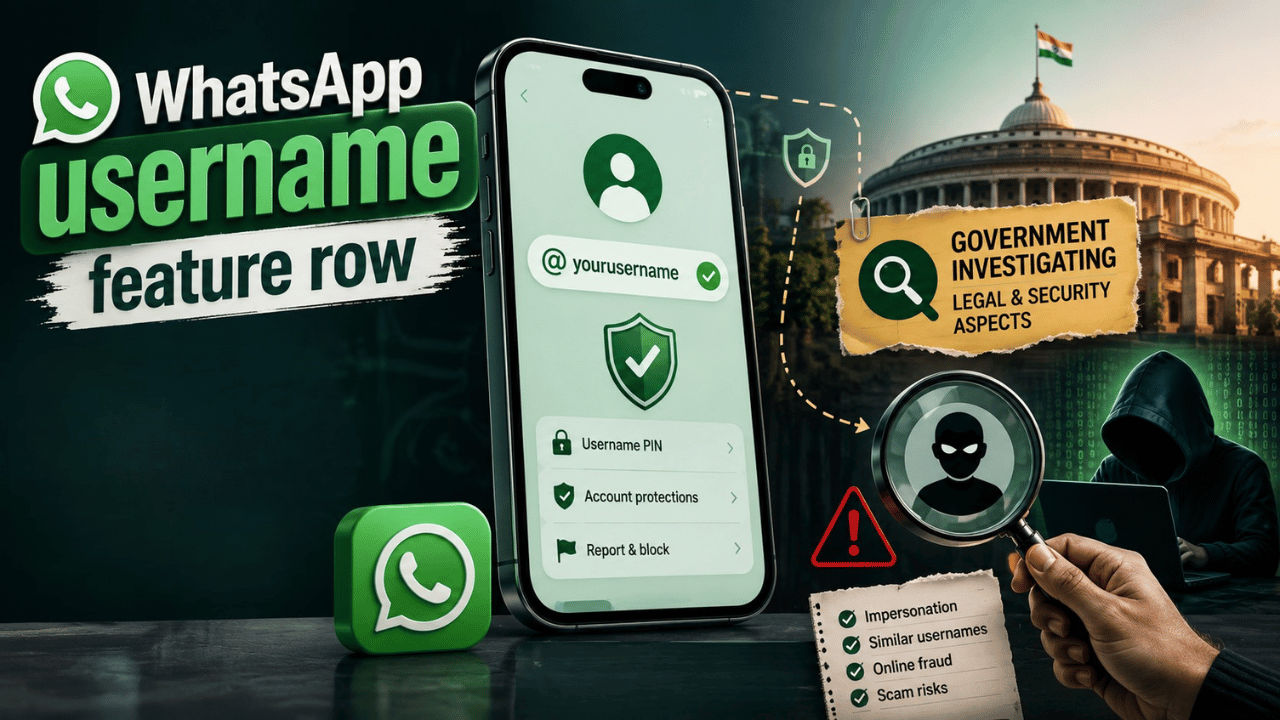

The Ministry of Electronics and Information Technology (MeitY) has sent a notice to WhatsApp directing the company to pause the roll-out of its new usernames feature in India until further consultation. The notice, addressed to WhatsApp’s chief compliance officer, references the company’s public announcement of a phased global roll-out of usernames, including in India, from 29 June 2026, and asks WhatsApp to explain within three days why regulatory action should not follow.
 Survey
WhatsApp’s usernames feature lets people reserve a unique handle and eventually message each other without exchanging phone numbers, with an optional ‘username key’ offering an added layer of privacy. MeitY’s notice acknowledges the intent but argues the feature may materially increase fraud, phishing, digital arrest scams and impersonation, since it removes the phone number as a fixed point of identity. It specifically flags the risk of usernames closely resembling those of real individuals, public authorities, financial institutions and government agencies.
MeitY has invoked Section 79 of the Information Technology Act, 2000, along with Rule 3(1)(b), Rule 3(2) and Rule 4 of the IT Rules, 2021, and Sections 66C and 66D dealing with identity theft and cheating by personation. WhatsApp has also been directed not to launch the feature in India until the government is satisfied with the consultation.
WhatsApp has previously said it has built in several safeguards: existing Instagram and Facebook usernames stay reserved for their owners, names resembling public figures, government entities and verified accounts are restricted, and automated systems monitor for suspicious activity. The optional username key and existing sender-context warnings are also meant to limit unsolicited contact.
Statement on MeitY's notice to WhatsApp over the "usernames" feature
— Internet Freedom Foundation (IFF) (@internetfreedom) July 1, 2026
The Ministry of Electronics and Information Technology (MeitY) has sent WhatsApp a notice about the usernames feature it announced on 29 June 2026. The notice asks the company to explain, within three days, why… pic.twitter.com/OZYfoIT1yE
Not everyone agrees MeitY has the legal standing for this order. The Internet Freedom Foundation has said the notice has no clear basis in law, arguing that Section 79 is a safe harbour provision governing platform liability, not a licensing power over what features a company may ship, and that Sections 66C and 66D target individuals who commit identity theft, not platforms whose tools are misused by others. The group has asked MeitY to state the exact legal provision behind the order and pointed to a similar directive MeitY issued to AI companies in March 2024, requiring prior permission before deploying under-tested models, which was withdrawn within a fortnight after similar criticism.
Nitin Pai, Director of The Takshashila Institution, posted on X saying, “My instinctive reaction to GOI intervening in WhatsApp’s usernames was that it is unwarranted. Upon reflection, I think there are grounds. WhatsApp has the character of public infrastructure & usernames can create downstream problems at scale.”
For now, WhatsApp’s username reservations remain live in India, though the feature itself cannot go live for messaging until the government’s concerns are addressed.


