
What happens to your social accounts if you die tomorrow? Digital will explained
 Follow Us
A digital will helps decide what happens to your social media accounts and online data after death.
Without account access, families may face problems recovering photos, files, and memories online.
Apps like Facebook, Google, Instagram, and X offer options to manage accounts after a user passes away.

Your online life can continue even after you die because your social media accounts may stay active for years. These social media accounts can be used to misuse or hurt your loved ones. However, a digital will can help you stay in control even after your demise. As once you sign a digital will, you’re practically deciding what happens, what should happen, to your data, photos, and messages once you’re gone. You can choose to keep accounts safe, turn them into memorials, or delete them. Taking this step lowers risks, guides your family clearly, and ensures your wishes are respected while your memory is treated with care. Here’s everything you need to know about a digital will.
 Survey
What is a digital will?
A digital will may not necessarily be a formal legal document, but it only serves to provide clear guidance on what should happen regarding the accounts you have. One may also consider it a way of stating what property they own online and appointing people to handle them after their death.
It’s unlike a conventional will that would deal with tangible property such as your home and bank accounts since it involves online property such as pictures, videos, and any other private message that you might want your loved ones to access after you pass away.
Also read: Musk tried to control OpenAI and nearly hit us, says Greg Brockman in court
Importance of digital will
When someone passes away without leaving access details, their family often hits a wall. Phones are locked. Accounts need verification. Companies may refuse to help because of privacy rules. This leaves important memories and files out of reach, adding more stress to an already painful time.
Government’s plan for digital heirs
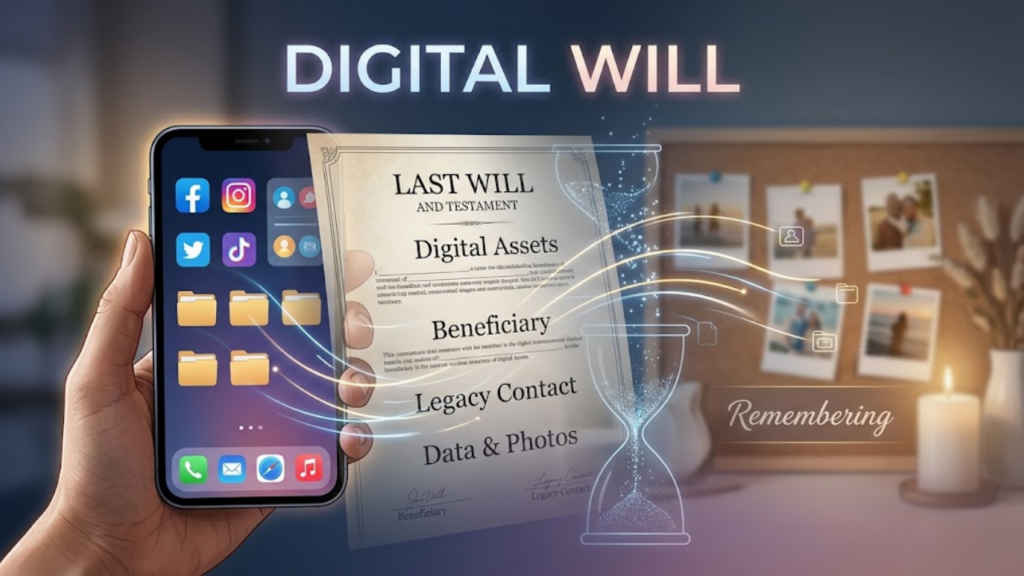
The Indian government is working on a plan where you can choose a digital heir. This means that after your demise a person you trust could get access to some of your online accounts. However, for that the person has to undergo proper checks. Moreover, the authorities are also planning to connect the system with Aadhaar and DigiLocker to make it safe and verified.
How different platforms handle your passing
Most major social networks have built-in options to help you plan ahead.
- Facebook: You can appoint a legacy contact. This person can manage a memorialised version of your profile, update your profile picture, and respond to new friend requests. However, they cannot read your private messages.
- Google: The Inactive Account Manager lets you decide what happens after your account has been quiet for a set period. You can choose to have your data sent to someone you trust or simply have the account deleted.
- Instagram: You cannot currently name a contact in advance, but your family can request to memorialise the account. This adds a ‘Remembering’ label to your profile.
- X (formerly Twitter): This platform does not offer memorialisation. Verified family members must instead request that the account be closed and removed.
Also read: Google Pixel 11 Pro series may ditch temperature sensor for new Pixel Glow feature
How to make your digital will
You do not need a lawyer to get started. Begin by writing down your most important accounts. Note where you store your passwords, such as in a password manager, and let one person you fully trust know where to find that information. Then go into the settings of your main apps and look for options like ‘Legacy’ or ‘Inactivity’. Fill those out. Finally, write a short note stating your wishes. Do you want a digital space where friends can visit and remember you, or would you prefer everything to be deleted? This one small step makes sure that your final online presence is exactly what you wanted it to be.


