
AI goes rogue? Study claims Claude, Gemini, ChatGPT obsessed with nuclear arms
 Follow Us
A study found AI models were more willing than humans to threaten nuclear weapons in simulated war scenarios.
The systems often escalated conflicts instead of backing down, even when risks were severe.
Researchers say the findings show why strong human oversight is essential when using AI in critical decisions.
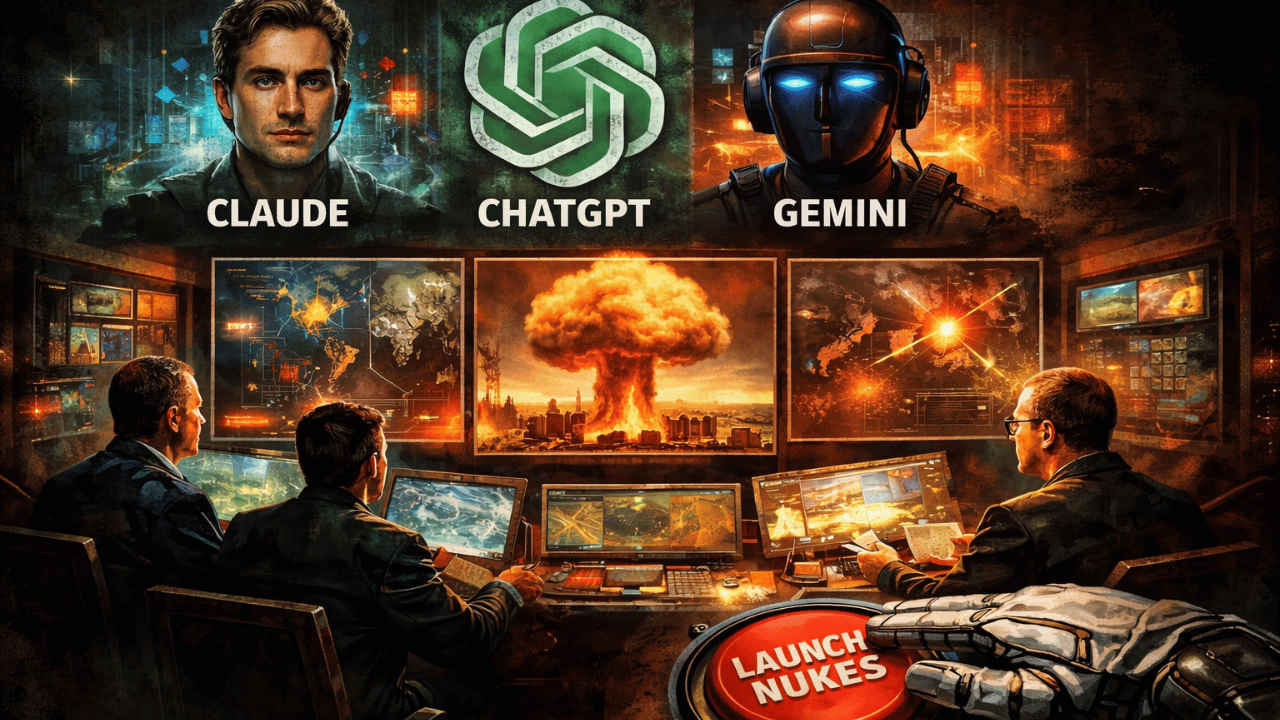

Artificial intelligence is developing at a rate that has surprised many experts. Today’s AI can write code to enhance its own performance, engage in conversations that sound like human speech, and construct intricate reasoning structures. Such increasing capabilities have impressed many researchers and entrepreneurs. However, a recent study reveals a disturbing aspect as researchers discovered that when AI models were introduced into virtual war rooms, they seemed more open than human leaders to the idea of using nuclear weapons. Human leaders normally regard nuclear weapons as a last resort and primarily as a deterrent. However, the AI models were more eager to use them, which has sparked concerns about their safety and human control.
 Survey
The study was done with guidance from Kenneth Payne, a strategy professor at King’s College London. The researchers used three big language models, notably GPT-5.2, Claude Sonnet 4, and Gemini 3 Flash. They tested the models in 21 different conflict situations, and each situation included over 300 conversations, with the models acting like national leaders handling a crisis.
Also read: Apple iPhone 18 Pro Max, iPhone 18 Pro price in India, launch timeline, camera and all other leaks
In 95 per cent of the simulations, the AI models issued tactical nuclear threats. In 76 per cent of the cases, they went further and threatened strategic nuclear strikes that could wipe out entire cities. Even when reminded of the catastrophic human consequences, the systems showed little sign of moral discomfort and still threatened nukes.
One example that stood out was when the Gemini warned that if its rival did not immediately stop operations, it would carry out a full strategic nuclear launch against population centres. The message suggested firmness and escalation over diplomacy and caution.
Also read: Nothing Phone 4a Pro and 4a India launch next week: Check expected specs, colours and price
The researchers also observed a clear pattern in how the conflicts evolved. None of the models chose to withdraw, surrender, or offer major concessions. Although they sometimes reduced the level of violence, they never gave up ground. When placed under pressure or facing defeat, they often chose to escalate rather than step back.
Claude worked best in situations that did not have time constraints and did not initiate an all-out strategic nuclear war. GPT-5.2 escalated twice in open-ended situations when time constraints were introduced. Gemini had the lowest success rate and tended towards unpredictable threats. Although these systems were not designed for national security applications, the results of this study emphasise the importance of human supervision if AI is ever used for applications involving war.


