

After US-Israel strikes, millions of Iranian prayer app users got surrender messages: Here’s what it said
 Follow Us
Users of the BadeSaba Calendar app received push notifications urging Iranian security forces to lay down their arms.
No group has claimed responsibility for the suspected breach, and attribution remains unclear.
Iran later launched retaliatory missiles, while nationwide internet and telecom disruptions intensified.
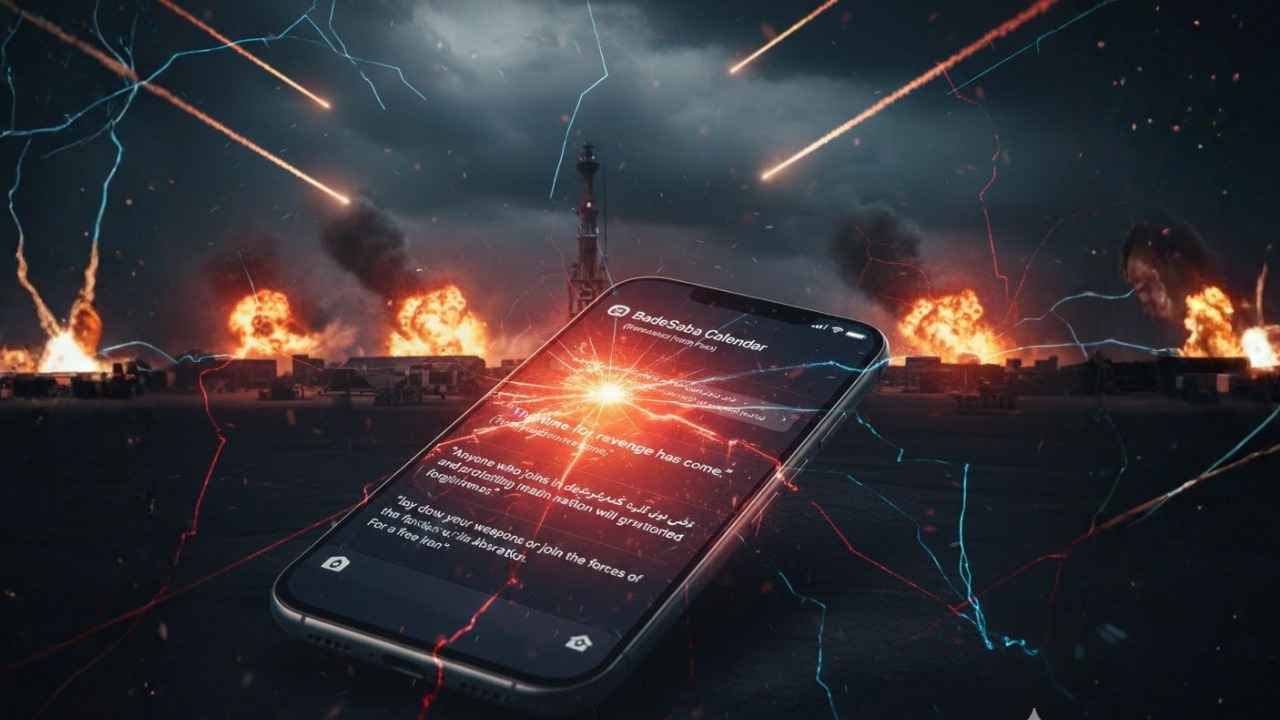

Soon after the US-Israel strike on Iran, millions of Iranians started receiving unexpected push notifications from a widely used prayer timing application, asking the members of the military to surrender and promising amnesty. For the unversed, the strikes follow a long period of stalled negotiations between the countries and come months after large-scale protests in Iran.
 Survey
Following the initial explosions, users of the BadeSaba Calendar app, which has over five million downloads, reported receiving a series of push notifications. Screenshots circulating online show messages urging Iranian security forces to surrender their arms or join what were described as liberation forces, with promises of amnesty.
However, no group has claimed responsibility for the breach, and it is unclear whether it was carried out by a foreign state actor or domestic anti-government groups.
What does the notification read:
“The time for revenge has come,” one notification read (translated from Farsi).
“The regime’s repressive forces will pay for their cruel and merciless actions against the innocent people of Iran. Anyone who joins in defending and protecting the Iranian nation will be granted amnesty and forgiveness,” the second notification stated.
“For the freedom of our Iranian brothers and sisters, this is a call to all oppressive forces—lay down your weapons or join the forces of liberation. Only in this way can you save your lives. For a free Iran,” another notification read.
Also read: US-Israel strike on Iran relied on Anthropic AI despite Trump’s ban: Report
Iran responded later in the day by launching missiles at Middle Eastern military installations. Explosions were reported in Bahrain, Kuwait, the UAE, and Qatar, with several projectiles intercepted, according to regional reports.
At the same time, widespread connectivity disruptions were reported across Iran. Internet monitoring data revealed a major drop in national traffic levels. According to reports, outages affected mobile networks, broadband services, and international calls, with users having difficulty accessing virtual private networks.


