
Xiaomi wants to capture the real world, not generate it
 Follow Us

In a market drunk on AI, one of India’s biggest smartphone brands is doubling down on physics. I sat down with Sandeep Singh Arora, Chief Business Officer and Anuj Sharma, Chief Marketing Officer at Xiaomi India, on the sidelines of the Xiaomi 17 series launch, to talk about optical engineering, the harsh economic realities of buying a flagship today and why your next smartphone purchase might just force you to choose between artificial intelligence and reality.
 Survey
What is a photograph?
As someone who’s perpetually on the internet, it is becoming increasingly difficult to discern whether a picture or a video is real or AI-generated. Xiaomi is leaning heavily into its deep partnership with Leica and the 17 Ultra.


“Everyone else is doing this [heavy digital processing], right? I think it’s a very different philosophy,” says Anuj Sharma. “What is a photograph? A photograph is a capture of time for your memory. It always should mean something. If it’s been created by AI, it wasn’t exactly that moment of time.”
He pushes the point further. “AI creation for images is great for WhatsApp forwards. It’s probably great for a profile pic. But is it really a memory if you’re creating it out of thin air?”
Arora backs it up saying, “Everybody is going one way. They’re trying to do digital processing, more and more. There was a YouTuber talking about how a night picture will have multiple shots pieced together. But it’ll lose the realism. It’ll lose the details.” He pauses. “We are going down a different path.”
The one-inch holdout
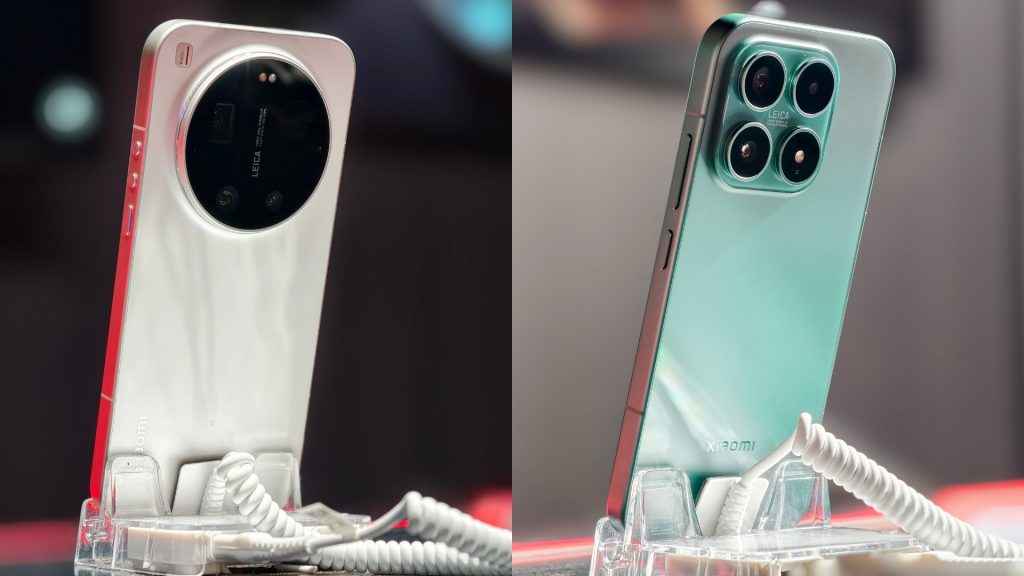
The Xiaomi 17 Ultra carries the company’s first 1-inch-type LOFIC sensor. LOFIC stands for Lateral Overflow Integration Capacitor, if you want the full mouthful. It is imaging engineering that dramatically increases a sensor’s dynamic range by expanding full-well capacity. The result is a single frame that can simultaneously hold blinding highlights and deep shadows without sacrificing either. Internally, Sharma tells me, the project had a code name: Night God.
“In daylight, it does not clip at the highest end,” Anuj Sharma explains. “And in the same single frame, it is able to take both extremely bright elements and dark ones. And retains all that information which nobody else can do.”
“If you’re in a club,” he says, “you’ve got harsh lighting coming in. But you’re not there to take the club’s photograph. You’re there to take your friend’s photograph. So how do you capture your friend and that entire scene? That’s incredibly hard to do.”
Because what everybody else is doing, broadly, is AI compositing by stitching multiple exposures, filling in gaps algorithmically, essentially constructing a photograph rather than capturing one. Sometimes it’s effective, sometimes it’s spectacular, but Xiaomi’s position is that it’s not photography.
With LOFIC, the dynamic range number that Sharma quotes is worth stopping at: 108 dB in daylight and 90 dB at night. He draws a comparison to the human eye which operates at roughly 100 dB and frames the gap that’s now been closed. “That becomes a 600% jump versus previous generation phones,” he says.
“This is perhaps the most advanced camera sensor that’s ever been put in a smartphone,” Sharma says. “Unfortunately it’s also the most expensive and complicated to manufacture sensor that’s ever been put in a smartphone.”
The Leica legacy
That different path also involves what might be the most quietly impressive spec to come out of the Xiaomi-Leica partnership, now in its fourth year: a 200MP telephoto with a mechanical optical zoom range of 75mm to 100mm.
“Last year we had four lenses,” Sharma says. “This year we have only three. So it must have been cheaper, right?” He laughs before answering his own rhetorical question. “But no.”
The telephoto module uses a high-resolution sensor combined with a variable focal system, allowing photographers to move between portrait focal lengths without sacrificing detail.
“It’s probably a first where we’ve taken the 200MP, added a stepless zoom that goes from 75mm to 100mm,” Sharma says. “I might like 75mm, you might like 85mm. You get the best portraiture. And then from there, you start punching into subjects: 100, 200, 400mm. At 400mm, it’s still not optical, but it feels optical quality, which is absolutely incredible.”
“Optimizations are expected,” Sharma says, in a tone that suggests he’s tired of that being the benchmark. “The continuous zoom is the effort of two teams who sit together, dedicated R&D teams who are only working on this now co-creation aspect. It wouldn’t have existed if the teams weren’t sitting together and getting that done.”
Arora makes a pointed observation about the co-creation aspect. “It’s not just a partnership where there is a stamp. It’s not a partnership where we are just sourcing something. It is genuinely where there is collaboration, where the boundaries of imaging on mobiles are being defined.”
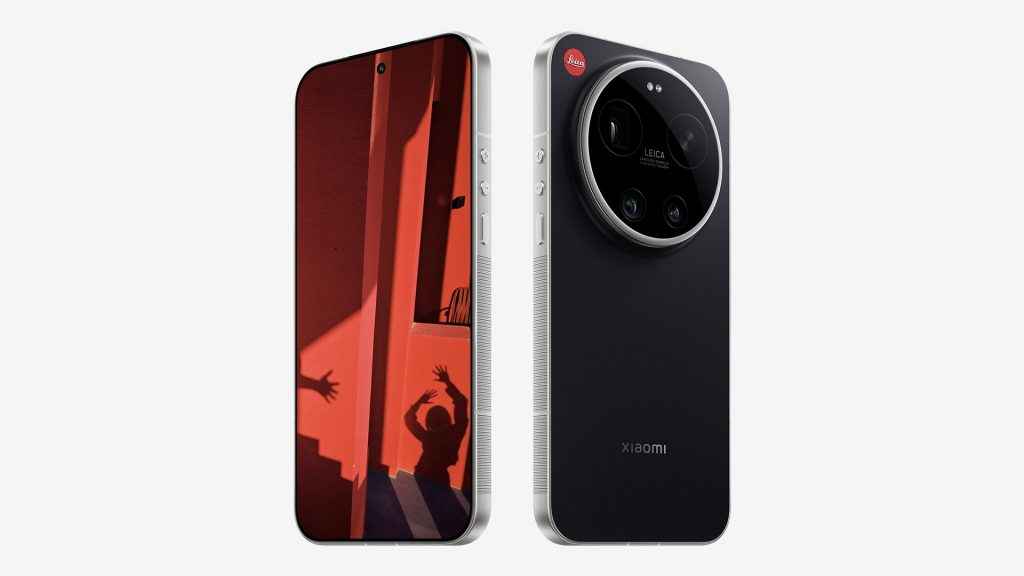
And then, separate from the 17 Ultra entirely, there is the Leica Leitzphone powered by Xiaomi, a device that, outside of China, Leica itself is leading in very select markets. It’s a striking piece of hardware aimed at purists, complete with a physical, knurled camera ring to mimic a real zoom lens. As Arora puts it, “It is the first device where they’ve actually put a Leica logo.”
Whether that trickles down to the mid-range is the obvious follow-up and Sharma is honest about the friction. “R&D costs a lot of money. Most of the other phones might not be able to justify that aspect. In the cost of the one-inch LOFIC sensor, I’d probably be able to buy a mid-range.” But Arora takes a longer view — a flagship from 2022 runs on what is now a mid-range chipset and hardware learnings travel down the portfolio even when specific components don’t. “There will be learnings on hardware and software which will find their way,” he says.
The compact flagship strikes back
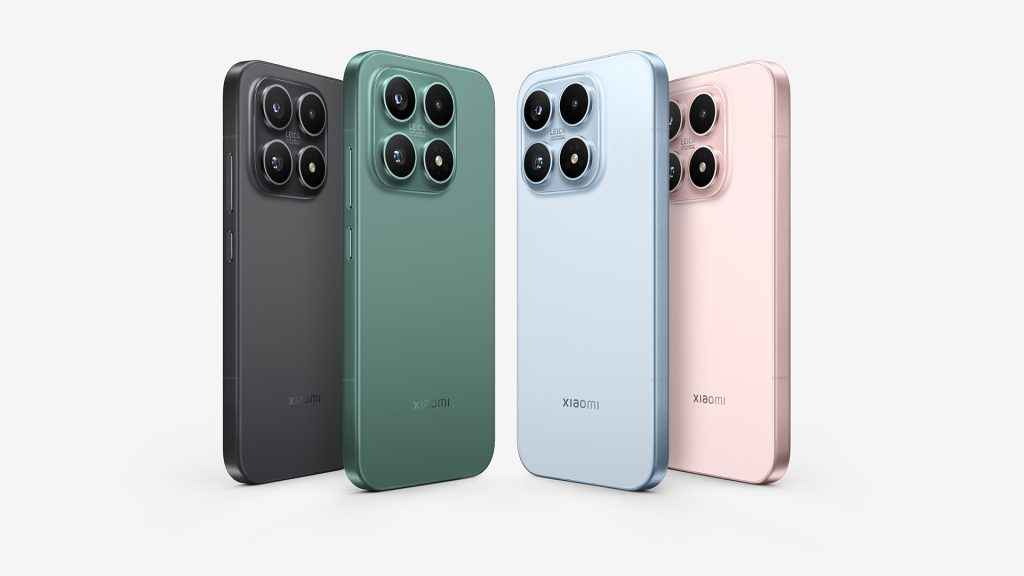
If the Ultra is the headline, the Xiaomi 17 might be the more consequential product. Compact flagship phones have been making a comeback recently, but historically, they’ve always involved trade-offs.
“I would like to believe there’s at least half the population who was forced to move up to a larger device because smaller devices were always compromises,” Sharma says. “The fact that you’ve been able to remove all those compromises, you don’t give up on camera, you don’t give up on performance, you don’t give up on battery, I think that’s like a first.”
“For the base 17,” Sharma says, “the entire solve was how to make it that compact but also increase the battery. And keep it powerful.”
“To get every millimetre down on the motherboard so that you can extend the battery is incredibly hard. In fact, the 17 has a slightly bigger battery than the 17 Ultra,” he notes.
The compact smartphone segment has a complicated history. Every year, someone makes the case for it and every year, consumers vote with their wallets for the larger screen.
Sharma, however, points to something specific happening with the 14 and 15 series and believes the 17 is the inflection point. “I think this time it’s probably a much bigger leap than the specs show it to be,” he says.
Arora is more direct. “To me, this is without doubt the best compact flagship ever.”
The ecosystem hedge
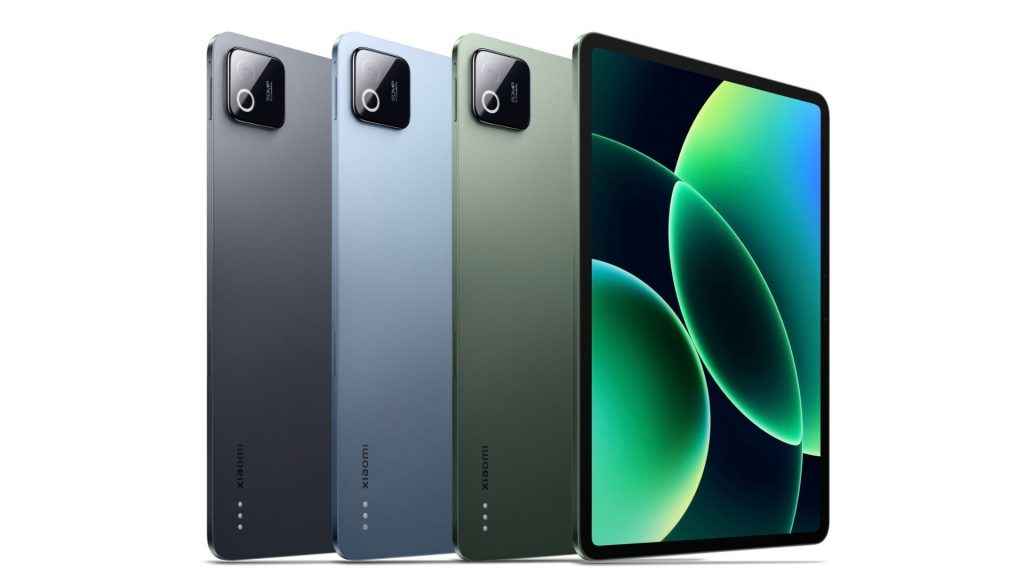
The third product in the lineup, the Pad 8, is part of a broader conversation about how Xiaomi thinks about ecosystems. Apple’s approach is well-documented. It’s an airtight, almost coercive integration of devices that rewards loyalty and punishes deviation. Xiaomi is doing the inverse.
“Our idea is not to create a lock-in,” Sharma says. “Our idea is for a better experience overall. By putting all of this together, can we simplify how people use devices? Does it make it easier for people to just go about their lives?”
He points to HyperOS 3 as the infrastructure that extends to home devices, audio products and AIoT, but also, crucially, plays well with competitors. The Pad 8 can serve as an extended display for a Mac. But unlike an iPad in the same scenario, it doesn’t just become a monitor. The pad becomes a second input device, simultaneously. “It’s almost like having two individual input mechanisms that can work simultaneously,” Sharma explains.
It’s an inclusive argument and one that Xiaomi has to make convincingly because it doesn’t have Apple or Samsung’s brand pull at the premium end and competing purely on ecosystem lock-in is a fight it can’t win.
The elephant in the room: RAM, ROM and rising prices
Of course, none of this cutting-edge hardware comes cheap. IDC is projecting a 15% market contraction this year. RAM and ROM prices have climbed sharply and both executives acknowledge it, Sharma somewhat mordantly. “For AI,” he says, “I just want my RAM-ROM prices to go back. Please stop this.” Arora confirms that channel partners initially hoped the price increases were temporary.
“With the memory price increases there was first resistance from channel partners who believed it would be temporary,” he says. “Then soon they realised that price increases are going to continue for some time. We got feedback from these partners that walk-ins were happening but conversions were down.”
Launching your most expensive device into a softening market is either brave or tone-deaf, depending on how it plays out. Arora’s answer is pragmatic: Xiaomi has approximately 120 million users in its Redmi and Xiaomi ecosystem who are due for an upgrade. The 17 series, combined with EMI options and the natural upgrade cycle, is the funnel. “Devices like the Note 15 Pro Plus, the Xiaomi 17 and the Ultra are opportunities for us to upgrade users and also bring in new ones,” he says.
Whether consumers will absorb price increases and still reach for a flagship is a question the market hasn’t fully answered yet. But Xiaomi, at least, is making the case that if you’re going to spend more, the hardware justification should be real — not generated.
Xiaomi is clearly in a phase where it wants to show that its ecosystem and its flagship ambitions are evolving at the same time.
Sharma believes the journey is only beginning. The goal, he suggests, is still much bigger than beating other smartphones. “Till we’re able to beat a full-frame camera with a smartphone,” he says rather ambitiously, “the job is not done.”


