

Tata Power-Salesforce want to install solar power units on 25 crore Indian rooftops
 Follow Us
Tata Power installs 20,000 rooftop solar systems a month in India
Tata Power taps Salesforce AI platform to accelerate rooftop solar adoption
India has 24-25 crore rooftops and Tata Power wants to solarise them all
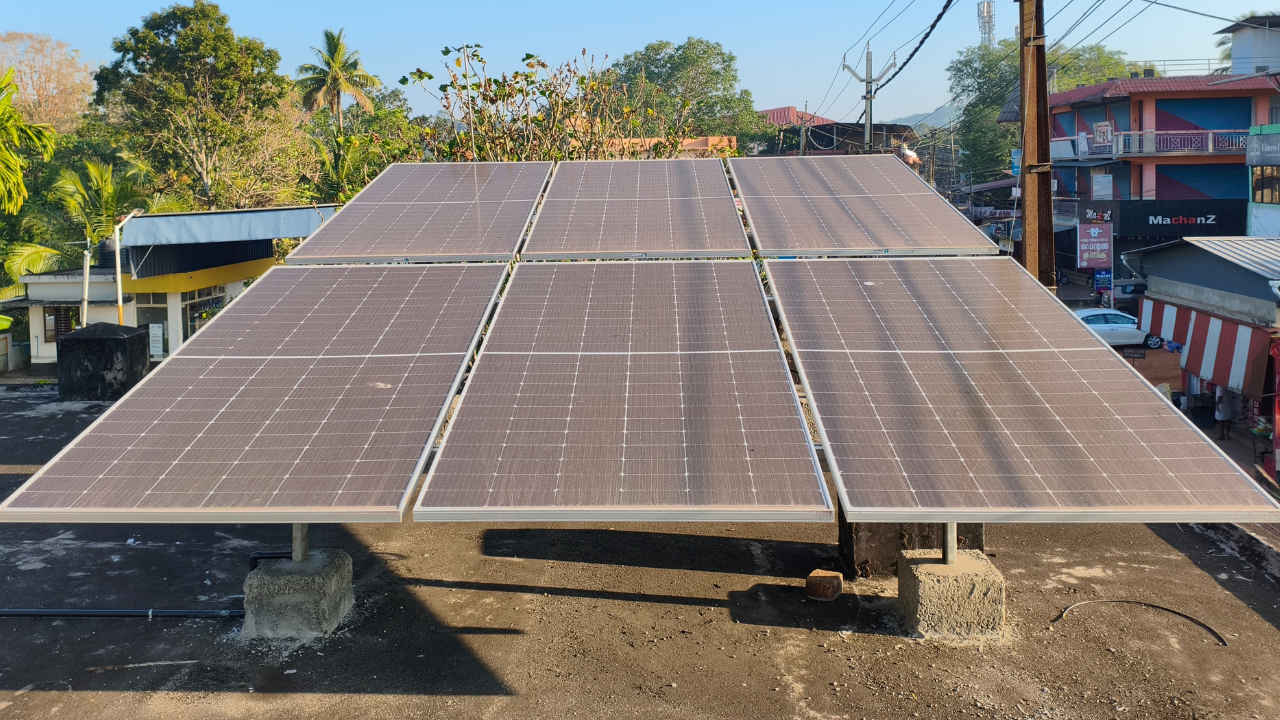

India’s rooftop solar story has long been framed as a story of untapped potential. The rooftops exist, and so does the sunlight. What has been missing is the digital infrastructure required to reach millions of households efficiently. A new collaboration of Tata Power and Salesforce is attempting to bridge that gap.
 Survey
Announced recently, the partnership will see Tata Power deploy Salesforce’s AI-driven Agentforce platform across its renewable energy businesses, including rooftop solar, EV charging and smart home energy solutions. Their jointly stated goal is to digitise the entire customer journey, from discovery and installation to service and performance monitoring, while enabling Tata Power to scale its clean-energy footprint nationwide.
At its core, the collaboration is about transforming what has historically been a slow-moving sector.
“The power sector historically has been slow to adopt technology,” admitted Dr. Praveer Sinha, CEO and MD of Tata Power, speaking to reporters following the announcement. “But with digital interventions and business process re-engineering, we have been able to significantly simplify how customers access electricity and energy services.”

Also read: Google wants to take AI to space with solar-powered data centres
For Sinha, the scale of India’s rooftop solar opportunity is staggering. “In India we have around 24 crore houses, which means there is an opportunity for 24–25 crore rooftops,” he said. “Today we have reached only about 25 lakh installations, while the Prime Minister’s programme itself targets 1 crore homes. In my view, at some stage the plan should increase to 5 crore homes – that’s the real opportunity India has.”
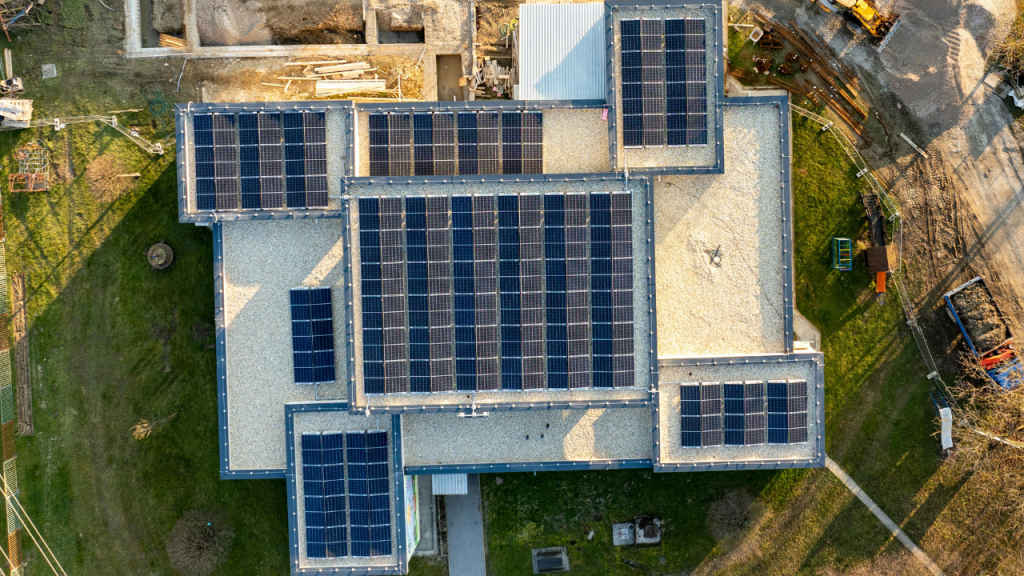
The partnership aims to create the digital backbone necessary to make that scale achievable. Tata Power has deployed Agentforce Sales, Service and Marketing solutions within Tata Power Renewable Energy Limited (TPREL). This allows the company to manage lead generation, installation work, inventory and after-sales service through a single AI-driven platform.
The company has also built a proprietary deep-learning layer on top of Salesforce to automate on-site quality checks and generate warranties automatically – a step designed to reduce friction in rooftop solar installations.
“We are doing 20,000 installations per month,” he said. “Our total rooftop solar customer base is nearly 4 lakh, and we are among the largest in the country. The demand has been phenomenal – every alternate month we see the numbers going up.”
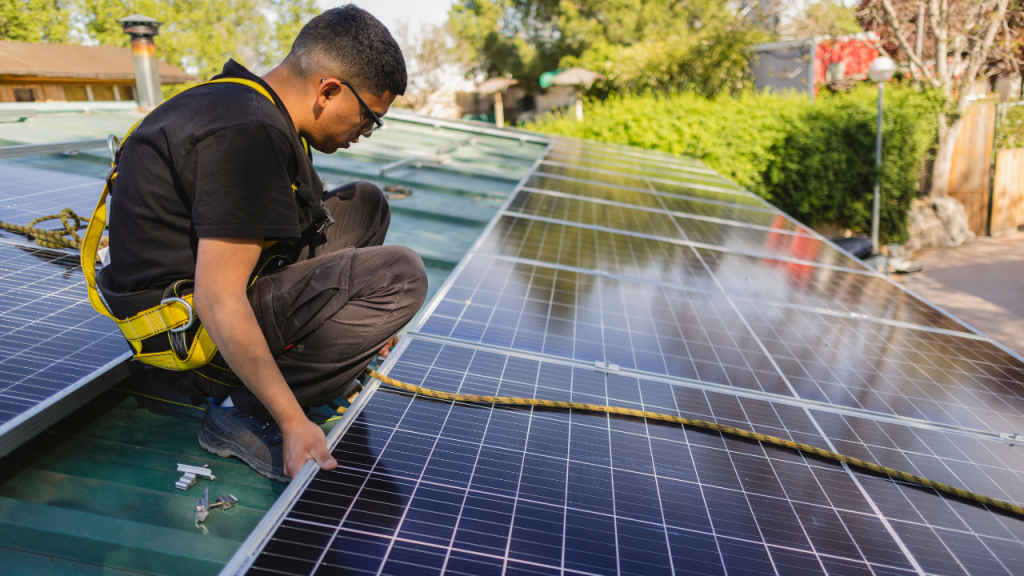
Solar demand, Sinha says, is already accelerating rapidly. Part of the reason is simple economics.
“Once the payback period is over – whether that is one year, two years, three years or four years – the electricity effectively becomes free,” Sinha explained. “Rooftop systems can operate for 25 to 30 years, so for most of that time you are generating electricity without paying for it.”
And India’s geography helps. “You don’t pay for sunlight,” he added. “In many Indian cities you can generate power for more than 300–330 days a year, which makes rooftop solar extremely attractive.”
For Salesforce, the partnership reflects a broader belief that digital platforms will play a central role in scaling clean energy adoption across emerging economies.
“What the Salesforce platform does is reduce the time it takes to identify customers and onboard them,” said Arundhati Bhattacharya, President and CEO of Salesforce South Asia. “It gives full transparency to both the company and the customer – you can see what your system is producing, what it is consuming and how it is performing.”
Also read: Salesforce layoff: Around 1,000 employees loses their jobs to AI agents
Bhattacharya also emphasised the logistical challenge of energy access in a country as vast as India.
“India has around 600,000 villages, and reaching all of them through traditional brick-and-mortar infrastructure is extremely difficult,” she said. “Digital platforms allow companies to reach customers, diagnose service issues remotely and respond far more efficiently.”
In many ways, the transition to rooftop solar is not just about energy but about economic empowerment.
“When households get 24×7 electricity at very low cost, they can use it not just for personal consumption but for economic activity,” Bhattacharya said. “After the initial investment is recovered, people could be enjoying 15–20 years of essentially free electricity, which can significantly improve livelihoods.”


