
Sora 2 vs Veo 3: How OpenAI and Google’s AI video tools compare
 Follow Us
Sora 2 vs Veo 3: cinematic AI video tools compared
OpenAI Sora 2 launch delivers creative, social, remix-friendly video
Google Veo 3 excels in scalable, fast, integrated video creation

AI video has been Google’s playground for months, thanks to its Veo 3 model quietly spreading across Gemini, YouTube, and Workspace. But with the September 2025 launch of Sora 2, OpenAI has finally caught up to Google in AI video generation and it has done so with a splash. Sora 2 arrives not just as a technical model but as a social app, signaling OpenAI’s intent to compete head-on for creators’ attention.
 Survey
Both Sora 2 and Veo 3 showcase state-of-the-art capabilities, yet they take different routes: one chasing cinematic artistry and social creativity, the other emphasizing scale, consistency, and ecosystem integration. The choice for users isn’t about which tool is “better” in absolute terms, but which approach fits their goals.
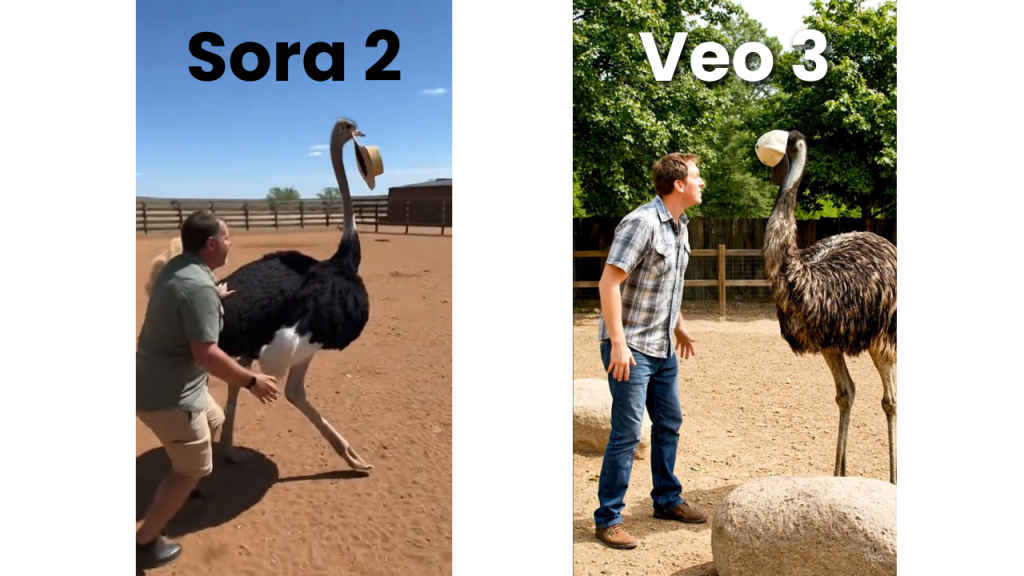
OpenAI’s big leap: Sora 2 launches
On September 30, 2025, OpenAI introduced Sora 2 alongside a standalone iOS app. Users can now generate 10-second clips, remix others’ videos, and even insert themselves or friends into content via cameo features (with consent controls built in).
Under the hood, Sora 2 brings:
- High realism with sharper details, better physics, and more natural motion.
- Audio-video sync, generating dialogue, sound effects, and ambience that match what’s on screen.
- Creative steerability, letting prompts control camera movement, mood, or cinematic tone.
- Safety and identity protections, including moderation filters and verification systems.
By packaging Sora 2 as both a model and an app, OpenAI has transformed AI video from an R&D showcase into a consumer-facing product designed to spread fast.
Also read: OpenAI plans to launch a social app for AI videos: Here’s how it may work
Google’s steady integration: Veo 3
In contrast, Google’s Veo 3 has been steadily integrated into its ecosystem since early 2025. It now powers text-to-video in Gemini, appears in Google Vids for Workspace, and is on track to fuel video generation for YouTube Shorts.
Its core strengths include:
- Prompt fidelity: Veo 3 is reliable at following structured instructions making it well suited for educational, explainer, or marketing content.
- Built-in audio: Dialogue, effects, and ambient noise are synchronized to visuals in one pass.
- Speed and scalability: With “Veo 3 Fast” tuned for cost and low latency, creators can produce clips at volume.
- Vertical video support: Recently updated to output 9:16 clips at 1080p, perfect for TikTok and Reels.
- Ecosystem power: Tight integration with Workspace and YouTube makes it a natural choice for users already in Google’s orbit.
For creators producing content in bulk, Veo 3 feels less like an experiment and more like infrastructure.
Where they differ most
Sora 2 and Veo 3 differ most in their focus and use cases: Sora 2 is an artist’s tool – expressive, cinematic, and social – ideal for creating short films, offering creative control, and remix-friendly social features, though it may face growing pains as a new launch, including usage caps, moderation filters, and heavier compute demands. Veo 3, by contrast, is a publisher’s tool – efficient, consistent, and deeply embedded in distribution platforms – best for fast, reliable, scalable video content within the Google workflow, though it remains limited to short clips of around eight seconds and doesn’t yet match Sora’s cinematic flair.
By finally matching Google’s AI video capabilities, OpenAI has turned the competition into a direct face-off. Sora 2 brings artistry and social buzz; Veo 3 brings reliability and scale. The next chapter in AI video won’t be about whether it can be done – it’s about who creators will trust, and which ecosystem they’ll choose.
Also read: The Era of Effortless Vision: Google Veo and the Death of Boundaries


