
Pompeii AI reconstruction: What a Vesuvius victim looked like nearly 2,000 years ago
 Follow Us

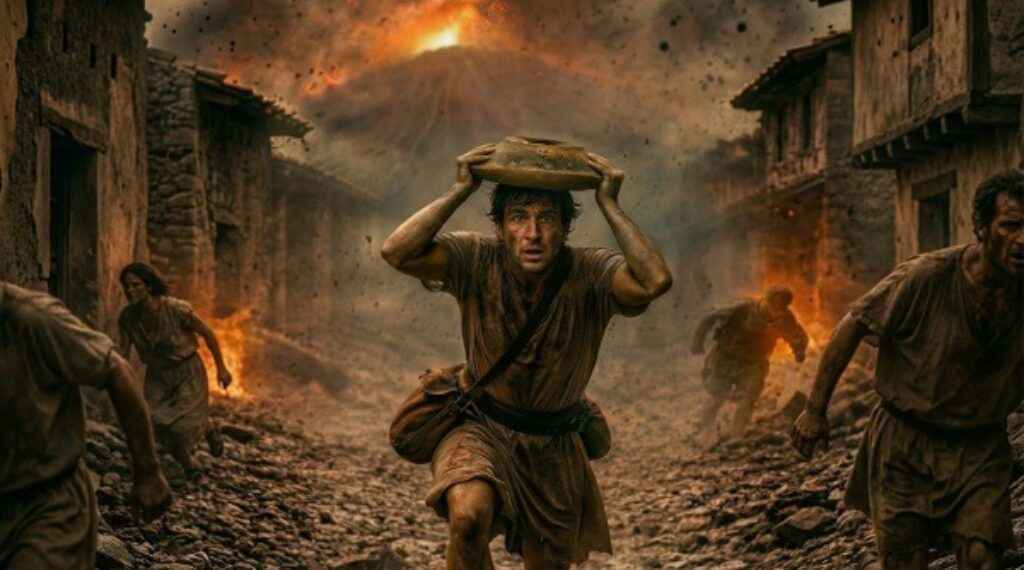
Can you picture your final act on Earth being running with a salad bowl held high above your head? Well, that is essentially what some guy from Pompeii did when Mount Vesuvius decided to have its worst day ever in Roman history. Almost 2,000 years later, thanks to the wonders of modern technology, particularly AI, we finally know how that guy looked during those fateful moments.
 Survey
Also read: Microsoft’s Sovereign AI cloud push and its India significance explained
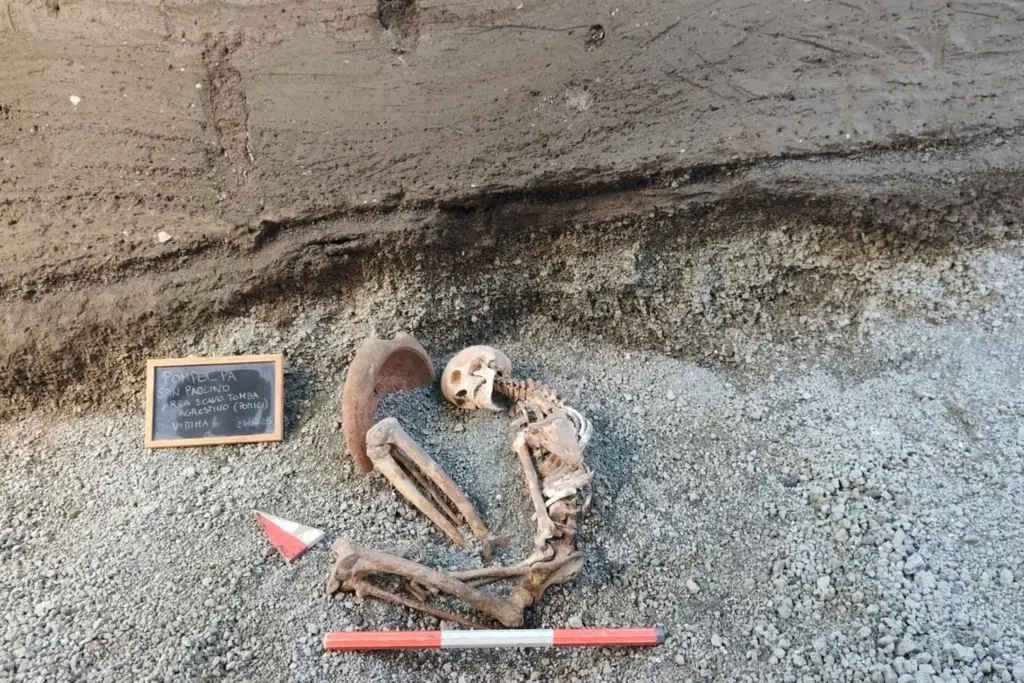
Researchers from the Pompeii Archaeological Park, along with help from the University of Padua, have used artificial intelligence to virtually recreate the face of one of the victims of Vesuvius. Turns out, he was an older guy, desperately running away from the city as he clutches onto a terracotta mortar held high above his head to protect himself from lapilli falling from the sky.
Also read: AI coding agent nuked a company’s entire database in 9 seconds, and took the backups with it
The remains were unearthed during excavations near the Porta Stabia necropolis, just outside Pompeii’s ancient city walls. He wasn’t alone, a younger man was found nearby, believed to have been killed by a pyroclastic surge, the superheated wall of gas and ash that moves faster than most things alive. The older man likely died earlier, during the initial debris fall. Researchers also found him carrying an oil lamp, an iron ring, and ten bronze coins. He was going somewhere. He just never got there.
What makes the reconstruction eemarkable isn’t just the technology, it’s the intent behind it. The Pompeii park director Gabriel Zuchtriegel put it well, “The vastness of archaeological data is now such that only with the help of AI will we be able to adequately protect and enhance them.” Pompeii generates more historical data than any team of humans can process at human speed. AI isn’t replacing the archaeologists here; it’s keeping up with the site.
As seen in the AI-generated image, the man is running through the debris-filled road holding the bowl high above his head, while Vesuvius is erupting in the background. It almost looks like a frame from a movie. But it was actually somebody’s life.
In 2025, Pompeii was the most popular UNESOCO destination in Italy, having recorded more than four million tourists to the historic place. Obviously, people just cannot get enough of a city in its worst state. And now that one of these tragic moments comes alive in a face looking straight into yours, it becomes somewhat harder to stop looking.
Also read: OpenAI Symphony explained: How the open-source Codex orchestrator works


