
OpenAI Symphony explained: How the open-source Codex orchestrator works
 Follow Us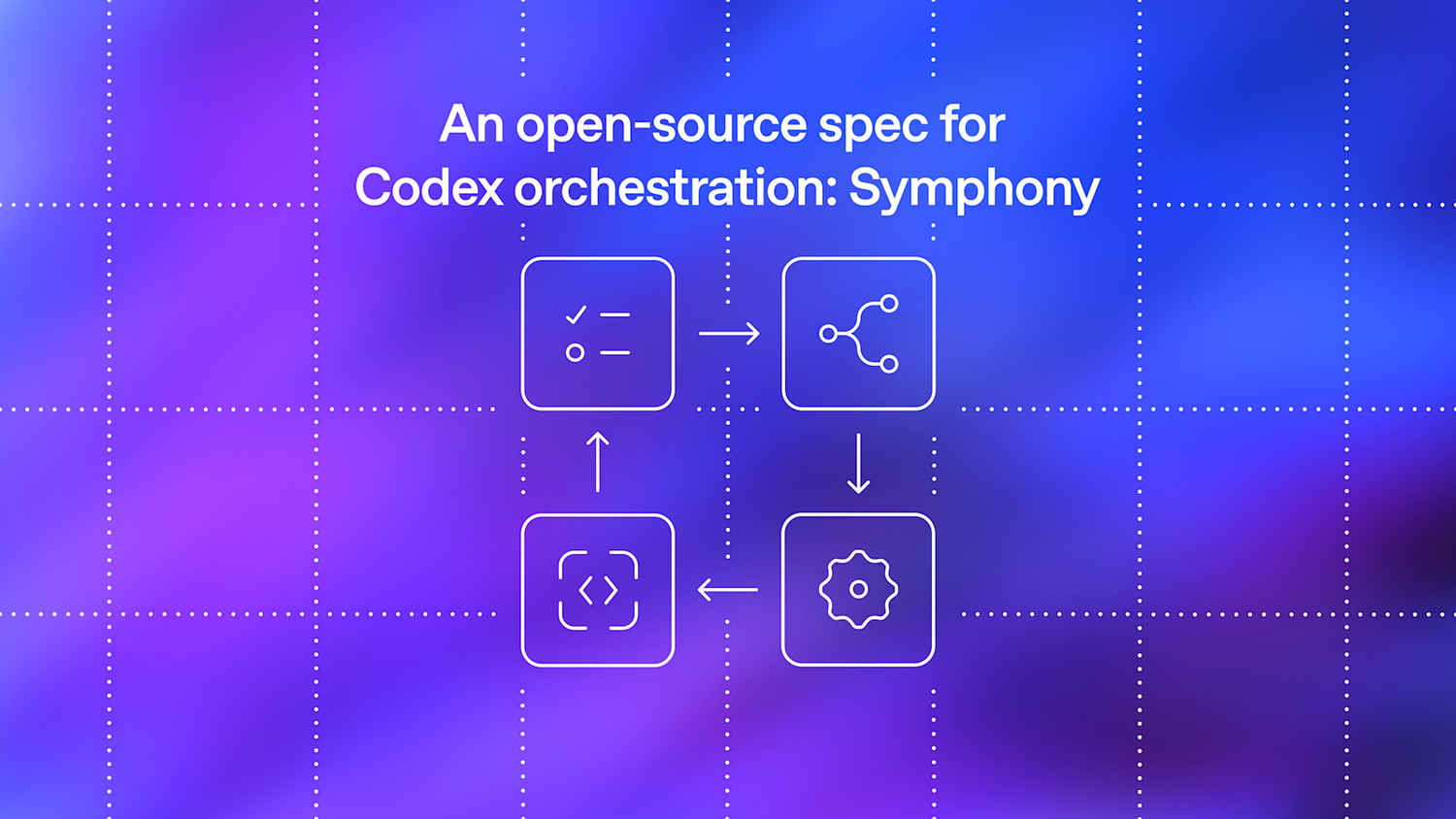

Symphony, OpenAI’s newly open-sourced agent orchestrator, watches your project management board, picks up every open task, assigns a Codex agent to it, and doesn’t stop until there’s a pull request ready for review. That’s right. It does all that without any prompting, tab switch, or babysitting by you.
 Survey
Also read: OpenAI accuses Elon Musk of harassment, smear campaign over lawsuit
The story behind this product sounds quite provocative. A small group at OpenAI wanted to design their own productivity booster with one hard restraint – none of it could be written by humans; everything needed to be programmed by Codex. To make it happen, they had to rethink their approach to engineering workflows and build “harness engineering” which included Codex-friendly repositories, extensive automated tests, and some restrictions for safe operation.
Mission accomplished but there was still the problem of context switching between numerous Codex agents working on various tasks. So they built Symphony to solve it.
Also read: Sam Altman’s 5 AGI principles vs his track record: Does it add up?
The concept at its core is a state machine. Symphony continuously polls a Linear board, maps every open issue to a dedicated agent workspace, and keeps agents running until the work is done. If an agent crashes, Symphony restarts it. If new tickets appear, Symphony picks them up. The issue tracker becomes the control plane – not just for humans, but for the agents themselves. One engineer on the team reportedly made three significant code changes from the Linear app on his phone from a cabin with spotty Wi-Fi. The agents handled the rest.
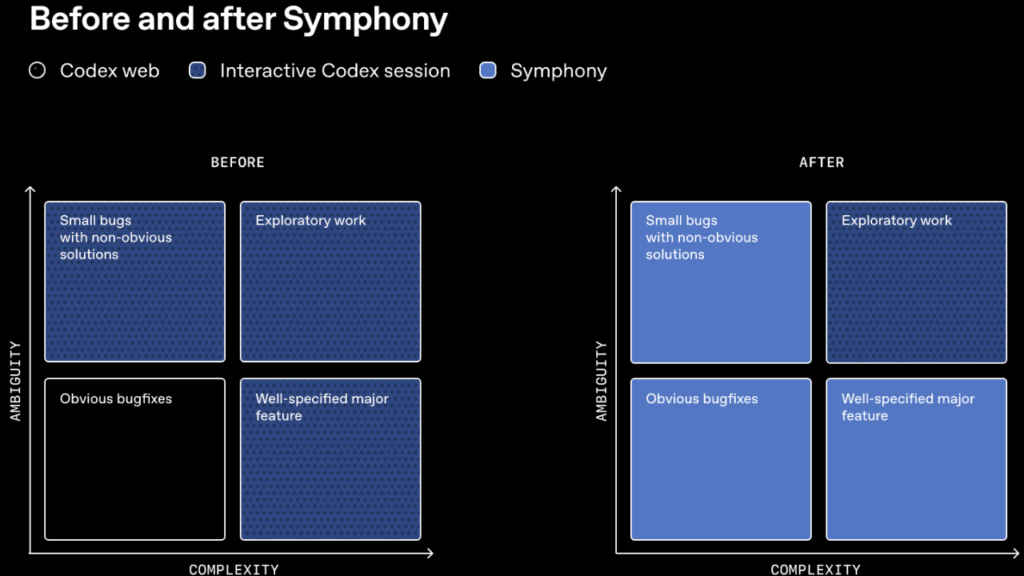
The results inside OpenAI were striking. Some teams saw landed pull requests jump 500% in the first three weeks. But the more interesting shift was cognitive. When engineers stopped supervising individual Codex sessions, the perceived cost of each code change dropped dramatically, making it economically viable to fix things that previously weren’t worth the human effort.
Symphony is openly described as a “low-key engineering preview for trusted environments,” it’s early, it’s Linear-only for now, and it works best in codebases already set up for harness engineering. The reference implementation is built in Elixir, though OpenAI is inviting developers to reimplement it in any language using the published spec.
The bigger idea Symphony is selling isn’t a tool. It’s a philosophy: stop managing agents, start managing work.
Also read: DeepSeek V4 just dropped: 3 things you should know about it


