
OpenAI hack explained: Should ChatGPT users be worried?
 Follow Us
Mixpanel breach exposes limited OpenAI data, but ChatGPT conversations stay safe
Third-party hack raises questions, yet no ChatGPT messages or keys leaked
OpenAI clarifies users unaffected; biggest risk now is phishing-based scams

When news broke that a third-party analytics platform used by OpenAI had suffered a security breach, the immediate reaction across the tech world was a familiar mix of concern and confusion. The words “OpenAI” and “hack” appearing together were enough to trigger fears of compromised chats, leaked API keys or exposed personal data. The reality, as the company now details, is both more contained and more nuanced.
 Survey
Also read: OpenAI confirms millions affected in Mixpanel-linked data leak: Here’s what it means
A breach that happened outside OpenAI’s walls
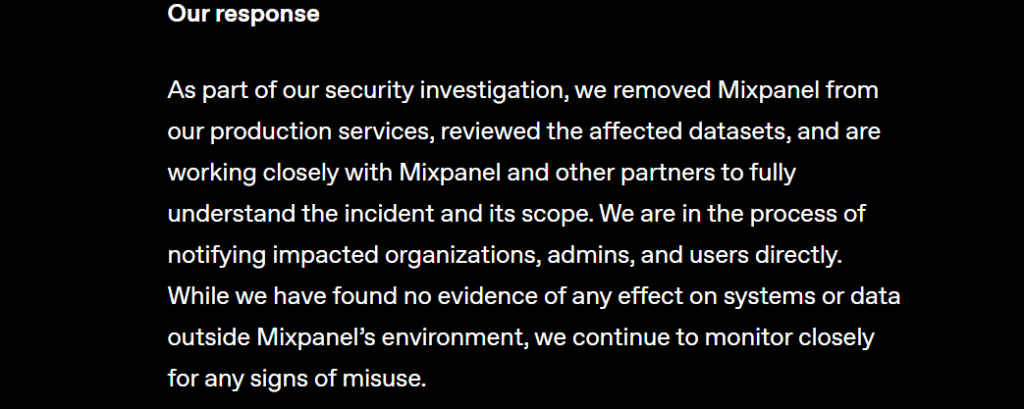
The incident stemmed from Mixpanel, a widely used analytics service that OpenAI relied on for usage insights on its API-related pages. In early November, Mixpanel detected unauthorized access to part of its systems, and an attacker exported a dataset linked to OpenAI’s use of the platform. Crucially, this was not a breach of OpenAI’s own servers. No one broke into ChatGPT’s infrastructure or OpenAI’s backend. The compromise occurred entirely within Mixpanel’s environment.
Once Mixpanel confirmed the issue and handed over the affected dataset, OpenAI began notifying impacted users and removed Mixpanel from its production systems. The company is also conducting a deeper review of how third-party analytics tools are used across its services.
What data was exposed
The dataset taken from Mixpanel contained analytics-style information. That includes basic account identifiers, names, email addresses, coarse location (such as city or country), browser and operating system details, referring web pages and some organisation or user IDs associated with API accounts.
This is the kind of data typically collected for product analytics and interface refinement. It does not include sensitive security credentials. But it is still personal information, and in the wrong hands it introduces a heightened risk of phishing or targeted social-engineering attempts.
What was not affected
The breach did not involve chat histories, messages, prompts or outputs, API keys, payment information, passwords, identity documents, iInternal logs from the ChatGPT app or website and users who do not use OpenAI’s API and only interact with ChatGPT
OpenAI has been explicit that ChatGPT users who are not part of the API ecosystem are unaffected. Even among API users, the exposed information is limited to analytics metadata rather than anything that would grant access to accounts or proprietary data.
Should ChatGPT users be worried?
For most people, the answer is no. The breach does not reveal what anyone typed into ChatGPT, nor does it compromise stored chat histories or provide attackers with access to OpenAI accounts.
That said, any exposure of personal information increases the potential for scams. An attacker armed with names and email addresses could craft believable phishing emails pretending to be OpenAI, warning about “account verification” or “API issues” and urging users to click a link. That is the most realistic risk here, and one that OpenAI itself highlights.
The situation is best compared to a leak of basic profile information from a third-party service rather than a direct intrusion into a core AI system. In the world of cybersecurity, the distinction matters.
What users should do now
OpenAI advises standard precautions that remain sensible for anyone working in tech:
- Enable multi-factor authentication on accounts
- Be skeptical of emails claiming to be from OpenAI, especially if they ask for credentials
- Avoid clicking links in unsolicited messages
- Monitor unusual activity, particularly if you manage API access for a team or company
If you are not an API user and only use ChatGPT through its main app or website, there is no action required.
The takeaway for users is simple, this was not a breach inside ChatGPT, nor does it compromise your conversations. The most practical threat is phishing, not data theft. Caution is smart, panic is not.
Also read: Apple challenges Indian law that could let regulators fine 10 pct of its global revenue


