
Grokipedia vs Wikipedia: Is Elon Musk’s Free Encyclopedia Better?
 Follow Us
Musk’s Grokipedia centralizes truth, replacing human editors with algorithms
Grokipedia risks bias and misinformation through centralized algorithmic control
AI-driven Grokipedia challenges human-edited Wikipedia’s open knowledge model
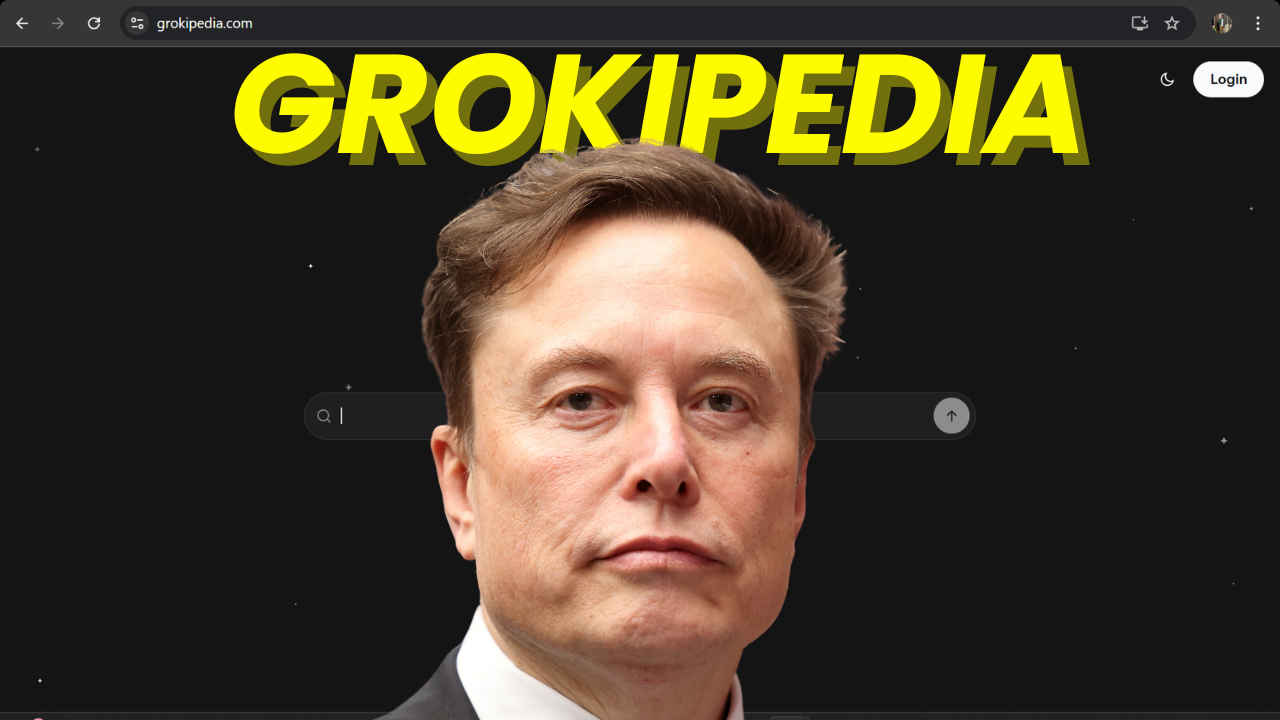

Elon Musk is not merely launching a new website; he is launching a grand, high-stakes philosophical assault on the very mechanisms by which modern society determines collective truth. His Grokipedia, powered by his xAI model, Grok, promises a definitive, “less biased,” and “maximal truth-seeking” source of knowledge that will finally put the chaotic, human-driven endeavor of Wikipedia to rest. This, we are told, is technological progress – the inevitable replacement of slow, flawed humans with efficient, objective code.
 Survey
But, as I look at Grokipedia’s core design, I see a project that is not an improvement on Wikipedia’s essential mission, but a retreat. Grokipedia replaces the messy, visible accountability of humans with a sleek, but utterly opaque, form of algorithmic control. The answer to whether Musk’s free encyclopedia is better is an emphatic no. I believe the very concept is antithetical to how reliable public knowledge should be constructed in a democratic society.
Also read: Grokipedia vs Wikipedia: Key differences explained
Trading off transparency for authority
Wikipedia’s foundational strength lies in its transparent, decentralized human consensus. The platform embodies an Enlightenment ideal: that through open debate, continuous review, and an obligation to cite external sources, a collective body of millions can approximate a Neutral Point of View (NPOV). This is messy, complex work which is the result of constant negotiation.
The system’s failures – the protracted “edit wars,” the human editorial biases that skew representation – are ugly, frustrating, but crucially, visible. Every deletion, every dispute, every change is logged in a public revision history and debated on a “Talk Page.” When Wikipedia is biased, we know who is arguing, why they are arguing, and what sources they are leaning on. That is the genius of its design: the process of reaching truth is auditable.
Grokipedia tears this vital mechanism out. It centralizes ultimate editorial authority into the proprietary Grok Large Language Model. Users cannot directly edit the text; they can only submit corrections, which the AI then decides whether to implement. This means we exchange transparent human fallibility for opaque algorithmic authority.
As a user and a consumer of information, I find this complete centralization deeply concerning. When I search Grokipedia, I am asked to blindly trust the proprietary logic of the machine. I cannot see why Grok chose one source over another, or how it synthesized conflicting narratives. That trust is not earned through open process; it is demanded by the authority of the algorithm and the reputation of its owner. The power to define reality is moved from a global community into a private, for-profit server farm.
The illusion of “less biased”
Musk’s core argument rests on the claim that Wikipedia is hopelessly compromised by liberal bias. Grokipedia, he suggests, will fix this by creating an automated, objective system.
Yet, this vision of an “unbiased” AI encyclopedia is inherently flawed because Grokipedia doesn’t eliminate bias; it simply centralizes it and embeds it deeply within its training data and proprietary filters.
Also read: Microsoft Copilot AI vs Copilot in Edge Browser: What is the difference
The initial content has already demonstrated that the platform is prone to replacing one perceived bias with an observable counter-narrative slant. For instance, the framing of sensitive political and social topics, or the notably positive, uncritical portrayal of Musk himself, suggests that the AI is, intentionally or not, reflecting a specific ideological framework chosen by its designers. Wikipedia’s bias, being human, is slow and debatable. Grokipedia’s bias, being algorithmic, is fast, sophisticated, and can manufacture the illusion of consensus by authoritatively smoothing out conflicting viewpoints. When bias is hidden beneath the veneer of technological objectivity, it becomes far more dangerous and difficult for the average reader to spot, leading to what some researchers call a “synthetic consensus.”
A derivative built on stolen labor
Perhaps the most damaging critique of Grokipedia is its structural immaturity. Musk is waging an all-out war on Wikipedia, yet his own trenches are built from the enemy’s soil.
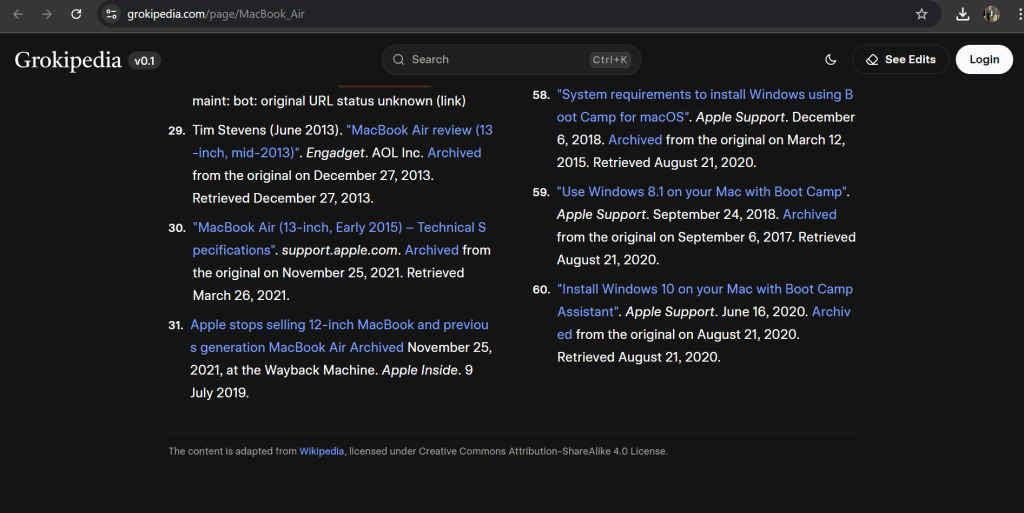
A short look at the website confirms a stunning reality: a significant portion of Grokipedia’s content upon launch was copied, sometimes verbatim, from Wikipedia itself. These entries carried disclaimers confirming the adaptation of Creative Commons licensed content. This is not innovation; it is automated plagiarism. It underscores the realization that two decades of decentralized, human-curated knowledge – the very foundation of Wikipedia – simply cannot be replicated overnight by an LLM, no matter how powerful its processing.
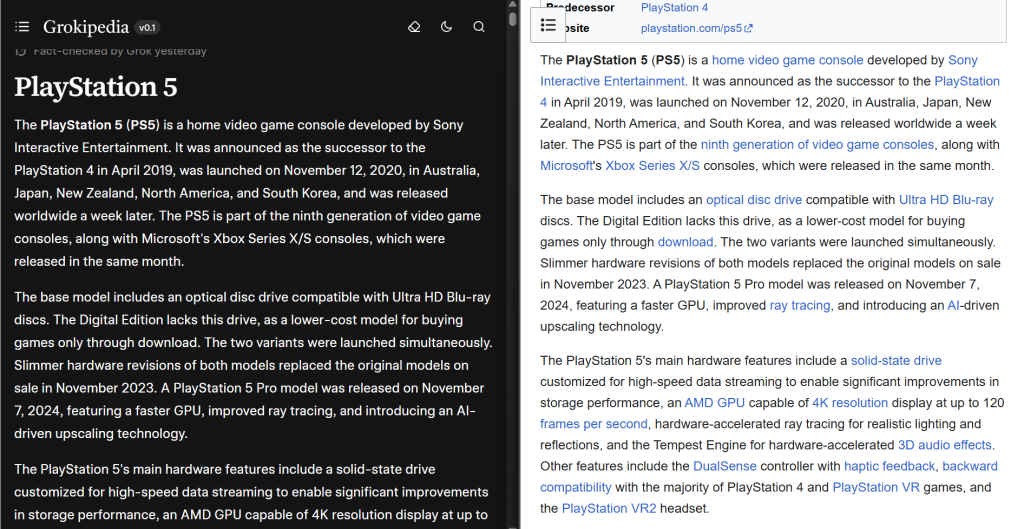
The irony is thick: Musk’s multi-billion dollar AI enterprise is structurally reliant on the massive, unpaid intellectual labor of the very “woke” editors he has publicly mocked and attempted to defund. The fact that the first version of his “better” encyclopedia depends so heavily on the work of its rival is a self-inflicted wound to Grokipedia’s credibility from which it may never recover. The Wikimedia Foundation’s assessment remains painfully accurate: “even Grokipedia needs Wikipedia to exist.”
The threat of algorithmic hallucination
The other great risk is to accuracy. Wikipedia insists on verifiable, reliable secondary sources. This requirement acts as a critical speedbump, forcing deliberation and source vetting.
Grokipedia removes this speedbump, prioritizing real-time updates from live feeds, including data from X. In the age of AI, speed is the greatest enemy of truth. The underlying Grok model is susceptible to hallucination – generating factually incorrect or misleading information with a confident, authoritative tone.
When you eliminate the human check – the editor who requires an external, vetted citation – you empower the AI to generate a highly polished, well-synthesized, but entirely false narrative at the speed of light. Human error, while frustrating, is correctable; algorithmic hallucination, when backed by the perceived authority of a centralized platform, is misinformation weaponized. Given Grok’s documented past controversies, the launch of Grokipedia is less a stride toward truth and more a giant leap into unverified, algorithmic risk.
The case for imperfect humanity
Grokipedia’s vision is that AI can be the supreme, objective arbiter of knowledge. But a platform’s value isn’t just in its information; it’s in its accountability.
Wikipedia is run by a non-profit foundation with a mission dedicated to the public good and governed by open principles. Grokipedia is a project of a for-profit, commercial venture. When I weigh a system based on open-source, non-profit collaboration against one based on a proprietary, black-box AI ultimately controlled by a single, ideologically charged individual, I will choose the imperfect humanity every time.
Wikipedia forces us to participate in the difficult work of defining truth together. Grokipedia asks us to surrender that work to a machine. For the sake of global transparency and intellectual independence, we must reject the false promise of the latter. Grokipedia is not better; it is simply a more sophisticated way of obfuscating who holds the ultimate power to define reality. It is a cautionary tale about what happens when technological arrogance attempts to supplant human civic duty.
Also read: Elon Musk’s AI-powered Wikipedia rival goes live: Here’s how to use Grokipedia


