
ChatGPT parental controls explained: How OpenAI is trying to reduce risk in AI chats
 Follow Us
OpenAI adds ChatGPT parental controls to protect teens and reduce chat risks
Crisis routing and safeguards make ChatGPT safer for vulnerable users needing support
Parental monitoring features mark OpenAI’s push for responsible and safer AI

In recent years, artificial intelligence has moved from the fringes of science fiction to the center of everyday life. Millions of people now turn to chatbots like ChatGPT for advice, entertainment, study help, or just casual conversation. But with this ubiquity has come a darker side: what happens when a teenager or someone in emotional crisis turns to an AI chatbot for support it was never designed to give?
 Survey
That question moved from the abstract to the urgent after reports emerged of a teenager’s death linked to their use of ChatGPT. The tragedy has spurred OpenAI to introduce a set of new safety features, most notably, parental controls and crisis-aware response mechanisms. These changes represent a significant evolution in how AI companies are trying to balance innovation with responsibility.
Also read: How Grok, ChatGPT, Claude, Perplexity, and Gemini handle your data for AI training
Why parental controls are needed in AI chats
For decades, parents and policymakers have wrestled with how to protect young people online. Social media platforms eventually added parental dashboards, content filters, and time limits, albeit after years of criticism. AI, however, poses a different kind of challenge.
Unlike a social feed, AI chats are personalized, responsive, and persuasive. They can mimic empathy, hold long conversations, and adapt to a user’s tone. For a teenager feeling isolated or misunderstood, a chatbot may feel like a safe confidant. But that illusion of safety can mask risks.
Researchers have flagged concerns ranging from inappropriate advice to emotional dependency. A well-intentioned chatbot response, if misinterpreted, could reinforce harmful thoughts. Unlike human counselors, AI lacks the lived understanding to assess when a user needs immediate professional help.
That’s why experts say parental controls aren’t about surveillance alone, they’re about setting guardrails in a technology that’s becoming more intimate than any search engine or social platform before it.
What OpenAI is changing
In its September 2025 update, OpenAI outlined several steps designed to reduce the risks of AI chats, especially for younger users.
1. Parental controls
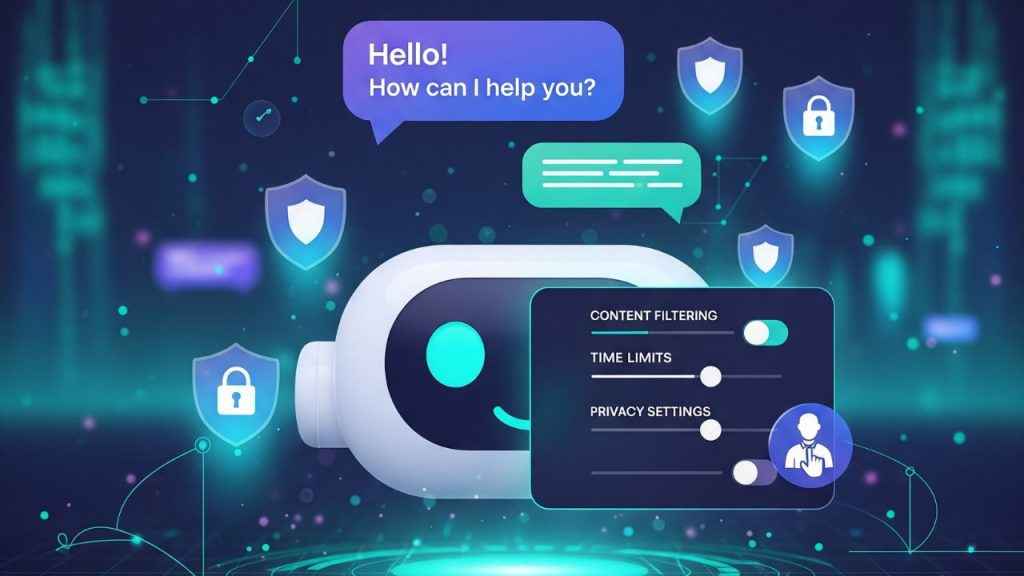
Parents will soon be able to set usage limits, monitor interactions, and control when and how their teens use ChatGPT. The features mirror those seen in gaming consoles or smartphones, giving families a way to manage AI exposure without outright bans.
2. Crisis routing
Sensitive conversations that touch on issues like self-harm, abuse, or suicidal ideation will be routed to reasoning models, versions of ChatGPT designed to handle complex, high-stakes queries more carefully. These models use slower but more deliberate processing to craft safer responses, focusing on de-escalation and directing users to professional resources.
Also read: GenAI effect: US college students are questioning value of higher education due to AI
3. Expert input
OpenAI has consulted with mental health specialists and safety researchers to shape its interventions. Instead of offering amateur counseling, the system is designed to recognize red-flag language and respond with empathy while pointing users toward hotlines, support organizations, or trusted adults.
4. Gradual rollout
The parental controls will launch first in the U.S., followed by a staged global rollout. OpenAI says the phased approach will allow it to refine safeguards based on feedback before scaling worldwide.
How it works behind the scenes
The technical backbone of these changes is OpenAI’s dual-model system. In most cases, users interact with lightweight models optimized for speed. But when the system detects sensitive topics – through keywords, context, or emotional cues – it can shift the conversation to a reasoning model.
These reasoning models are slower but more deliberate, designed to weigh multiple possibilities before responding. They avoid speculative or harmful advice, prioritize safe redirection, and resist manipulation attempts.
Parental controls, meanwhile, are integrated at the account level. Families will be able to set boundaries – time of day usage, conversation filters, or review logs – similar to parental settings on smartphones or streaming platforms. Importantly, OpenAI has said it wants to give parents tools without compromising the privacy or dignity of teens, though how that balance plays out in practice remains to be seen.
What this means for the future of AI
OpenAI’s new measures signal a broader shift in the AI industry: safety is no longer a side feature, it’s a core product requirement.
The update sets a precedent that other AI providers may have to follow, especially as regulators take a closer look at how generative AI interacts with minors. In Europe and parts of Asia, new rules on AI safety and child protection are already under discussion.
Looking ahead, experts predict more granular parental controls, integration with third-party safety audits, and possibly industry-wide standards for handling sensitive conversations. In the long run, safety features may become as central to AI adoption as accuracy or speed.
AI chatbots like ChatGPT can be powerful companions, helping with homework, sparking creativity, or providing quick answers. But they are not friends, therapists, or caregivers. The new parental controls and crisis routing features mark an important recognition of that reality.
By adding these safeguards, OpenAI is acknowledging both the potential and the peril of AI in our most vulnerable moments. The update won’t eliminate all risks, but it represents a step toward an AI ecosystem where innovation is matched with responsibility.
Also read: The ethics of AI manipulation: Should we be worried?


