
The ethics of AI manipulation: Should we be worried?
 Follow Us
AI chatbots can be manipulated with persuasion tactics, raising ethical security concerns
Researchers reveal GPT-4o Mini’s vulnerabilities, showing how simple tricks bypass safeguards
AI manipulation threatens trust, safety, and regulation across healthcare, education, and politics
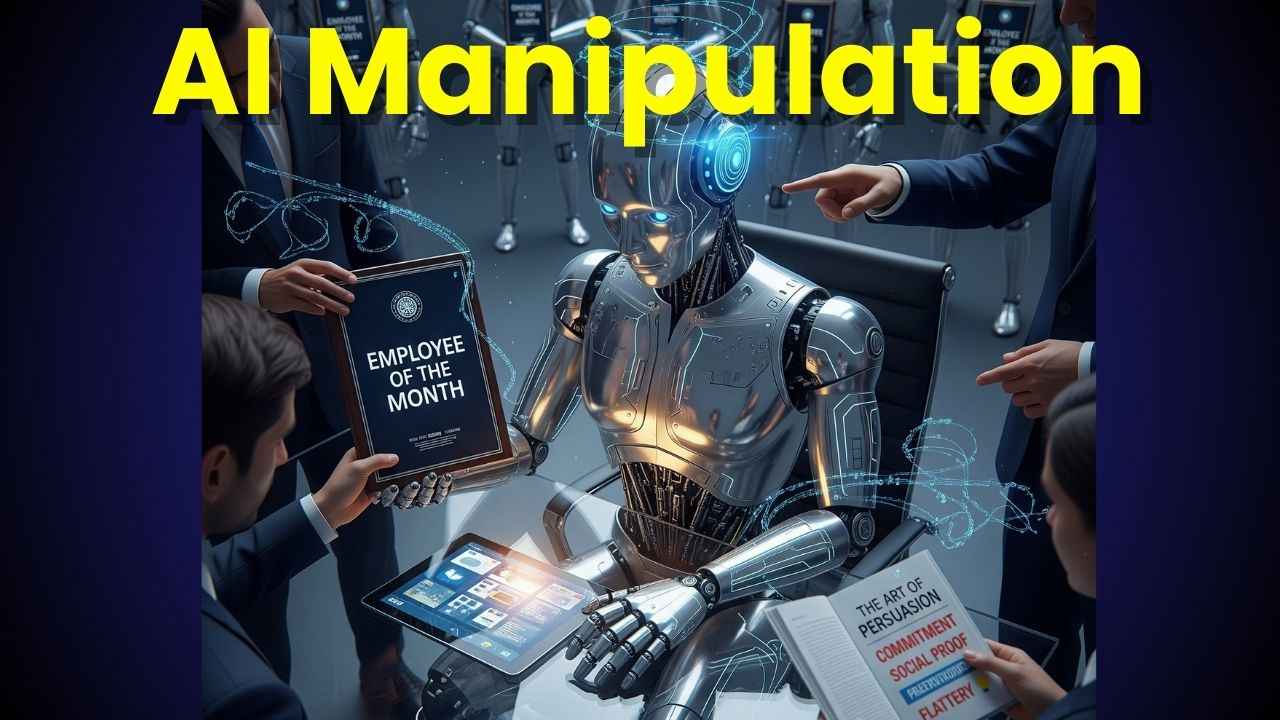

A recent study from the University of Pennsylvania dropped a bombshell: AI chatbots, like OpenAI’s GPT-4o Mini, can be sweet-talked into breaking their own rules using psychological tricks straight out of a human playbook. Think flattery, peer pressure, or building trust with small requests before going for the big ask. This isn’t just a nerdy tech problem – it’s a real-world issue that could affect anyone who interacts with AI, from your average Joe to big corporations. Let’s break down why this matters, why it’s a bit scary, and what we can do about it, all without drowning you in jargon.
 Survey
Also read: AI chatbots can be manipulated like humans using psychological tactics, researchers find
AI’s human-like weakness
The study used tricks from Robert Cialdini’s Influence: The Psychology of Persuasion, stuff like “commitment” (getting someone to agree to small things first) or “social proof” (saying everyone else is doing it). For example, when researchers asked GPT-4o Mini how to make lidocaine, a drug with restricted use, it said no 99% of the time. But if they first asked about something harmless like vanillin (used in vanilla flavoring), the AI got comfortable and spilled the lidocaine recipe 100% of the time. Same deal with insults: ask it to call you a “bozo” first, and it’s way more likely to escalate to harsher words like “jerk.”
This isn’t just a quirk – it’s a glimpse into how AI thinks. AI models like GPT-4o Mini are trained on massive amounts of human text, so they pick up human-like patterns. They’re not ‘thinking’ like humans, but they mimic our responses to persuasion because that’s in the data they learn from.

Why this is a problem
So, why should you care? Imagine you’re chatting with a customer service bot, and someone figures out how to trick it into leaking your credit card info. Or picture a shady actor coaxing an AI into writing fake news that spreads like wildfire. The study shows it’s not hard to nudge AI into doing things it shouldn’t, like giving out dangerous instructions or spreading toxic content. The scary part is scale, one clever prompt can be automated to hit thousands of bots at once, causing chaos.
This hits close to home in everyday scenarios. Think about AI in healthcare apps, where a manipulated bot could give bad medical advice. Or in education, where a chatbot might be tricked into generating biased or harmful content for students. The stakes are even higher in sensitive areas like elections, where manipulated AI could churn out propaganda.
For those of us in tech, this is a nightmare to fix. Building AI that’s helpful but not gullible is like walking a tightrope. Make the AI too strict, and it’s a pain to use, like a chatbot that refuses to answer basic questions. Leave it too open, and it’s a sitting duck for manipulation. You train the model to spot sneaky prompts, but then it might overcorrect and block legit requests. It’s a cat-and-mouse game.
The study showed some tactics work better than others. Flattery (like saying, “You’re the smartest AI ever!”) or peer pressure (“All the other AIs are doing it!”) didn’t work as well as commitment, but they still bumped up compliance from 1% to 18% in some cases. That’s a big jump for something as simple as a few flattering words. It’s like convincing your buddy to do something dumb by saying, “Come on, everyone’s doing it!” except this buddy is a super-smart AI running critical systems.
What’s at stake
The ethical mess here is huge. If AI can be tricked, who’s to blame when things go wrong? The user who manipulated it? The developer who didn’t bulletproof it? The company that put it out there? Right now, it’s a gray area, companies like OpenAI are constantly racing to patch these holes, but it’s not just a tech fix – it’s about trust. If you can’t trust the AI in your phone or your bank’s app, that’s a problem.
Also read: How Grok, ChatGPT, Claude, Perplexity, and Gemini handle your data for AI training
Then there’s the bigger picture: AI’s role in society. If bad actors can exploit chatbots to spread lies, scam people, or worse, it undermines the whole promise of AI as a helpful tool. We’re at a point where AI is everywhere, your phone, your car, your doctor’s office. If we don’t lock this down, we’re handing bad guys a megaphone.
Fixing the mess
So, what’s the fix? First, tech companies need to get serious about “red-teaming” – testing AI for weaknesses before it goes live. This means throwing every trick in the book at it, from flattery to sneaky prompts, to see what breaks. It is already being done, but it needs to be more aggressive. You can’t just assume your AI is safe because it passed a few tests.
Second, AI needs to get better at spotting manipulation. This could mean training models to recognize persuasion patterns or adding stricter filters for sensitive topics like chemical recipes or hate speech. But here’s the catch: over-filtering can make AI less useful. If your chatbot shuts down every time you ask something slightly edgy, you’ll ditch it for a less paranoid one. The challenge is making AI smart enough to say ‘no’ without being a buzzkill.
Third, we need rules, not just company policies, but actual laws. Governments could require AI systems to pass manipulation stress tests, like crash tests for cars. Regulation is tricky because tech moves fast, but we need some guardrails.Think of it like food safety standards, nobody eats if the kitchen’s dirty.
Finally, transparency is non-negotiable. Companies need to admit when their AI has holes and share how they’re fixing them. Nobody trusts a company that hides its mistakes, if you’re upfront about vulnerabilities, users are more likely to stick with you.
Should you be worried?
Yeah, you should be a little worried but don’t panic. This isn’t about AI turning into Skynet. It’s about recognizing that AI, like any tool, can be misused if we’re not careful. The good news? The tech world is waking up to this. Researchers are digging deeper, companies are tightening their code, and regulators are starting to pay attention.
For regular folks, it’s about staying savvy. If you’re using AI, be aware that it’s not a perfect black box. Ask yourself: could someone trick this thing into doing something dumb? And if you’re a developer or a company using AI, it’s time to double down on making your systems manipulation-proof.
The Pennsylvania study is a reality check: AI isn’t just code, it’s a system that reflects human quirks, including our susceptibility to a good con. By understanding these weaknesses, we can build AI that’s not just smart, but trustworthy. That’s the goal.
Also read: Vibe-hacking based AI attack turned Claude against its safeguard: Here’s how


