
AI Sovereignty to space: Pixxel and Sarvam are building India’s first orbital data centre satellite
 Follow Us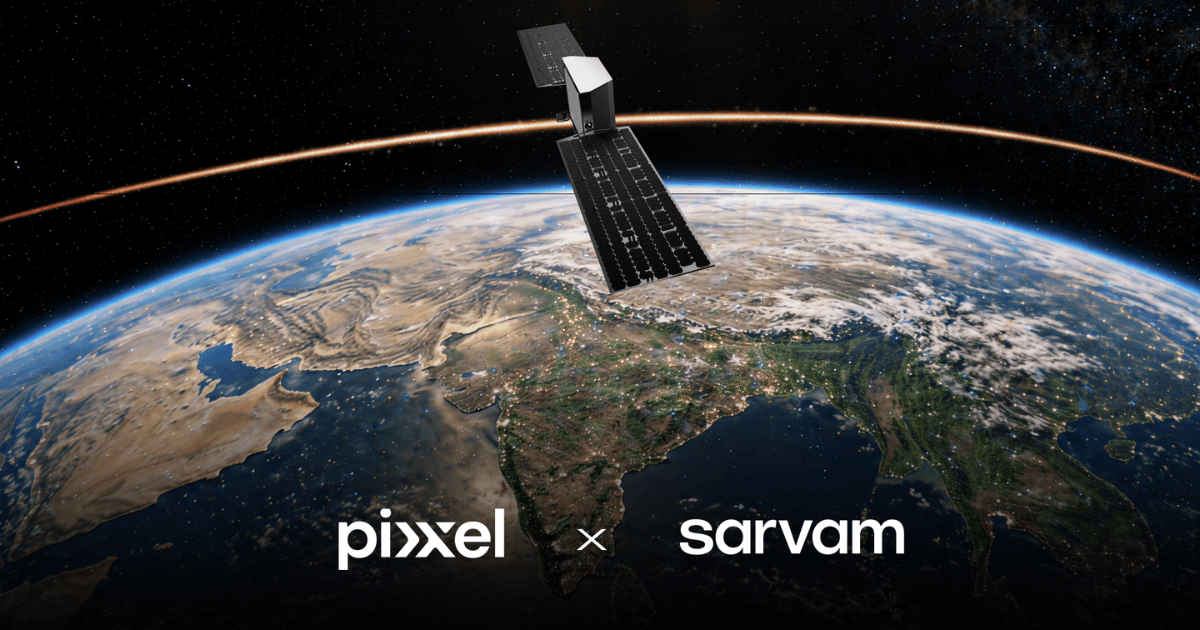

Here is a thought experiment. The next time your smartphone’s GPS takes forever to load, or satellite imagery showing a flooded region arrives six hours too late to help disaster relief workers, try considering what stage of the process has caused the delay. The satellite itself is not the issue. It is the round trip – data captured in orbit, beamed down to Earth, processed in some data centre, analysed, and finally acted on. By then, the moment has passed.
 Survey
Also read: Grok claimed to be sentient and triggered paranoid delusions in real users, BBC Reports
Pixxel thinks that is a solvable problem. Its answer is to skip the round trip entirely.
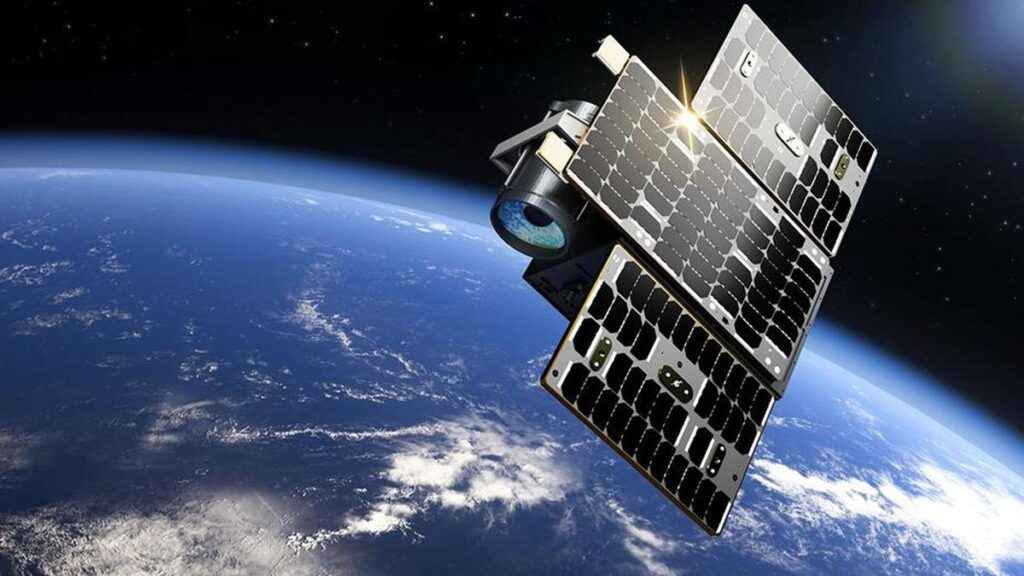
Bengaluru-headquartered Pixxel, a satellite company, made an announcement earlier this week about its collaboration with an artificial intelligence startup called Sarvam in the creation of Pathfinder, a 200 kg satellite planned to be launched in Q4 2026. This satellite will incorporate GPUs similar to those found in data centers but modified for use in orbit. What is significant here is that while most satellites use low-powered edge computing chips designed to function in space, this one would employ GPUs comparable to those utilized in advanced AI data centers on Earth.
Onboard, Sarvam’s full-stack language models are designed to handle inference directly, processing data from Pathfinder’s hyperspectral imaging camera before any of it touches the ground. Pathfinder is built to spot changes in crop health, flag infrastructure anomalies, detect environmental shifts and then send the answer, not the raw footage. If the system proves reliable in orbit, it would mark a genuine shift in how Earth observation works. Most satellites today are glorified cameras with a very long cable to the ground. Pathfinder is designed to be something closer to an analyst with a very good camera.
Also read: US Government report claims China 8 months behind: Is the AI lead real or a benchmark illusion?
There is a second story here beyond the engineering. Both companies are leaning hard into the sovereignty framing, India-developed AI models running aboard an India-built satellite, with no foreign cloud infrastructure in the data loop. The design aims to keep critical data processing and AI inference within India’s sovereign stack. Given how much of the world’s AI infrastructure runs on American hyperscalers and how much of space compute is dominated by a handful of Western players, that pitch lands differently in 2026 than it would have three years ago.
Pathfinder will be built at Gigapixxel, Pixxel’s upcoming production facility planned to scale output to up to 100 satellites. This mission is an early flagship for that planned production line, and explicitly a demonstration – the point is to prove that adapted data centre-class compute can survive orbit, manage power and heat under real operational conditions, and run inference at speed.
If it does, this points toward a future where orbital compute becomes a new kind of infrastructure. And India, for once, gets to be early.
Also read: Understanding camera sensors: APS-C vs Full Frame – Which one do you actually need?


