

Apple may reduce reliance on TSMC, eyes Intel and Samsung Electronics for chip production
 Follow Us
Early-stage talks underway, with Apple assessing if rivals can match TSMC’s scale and advanced 3nm capabilities.
Move driven by AI-led chip demand surge and growing pressure on global semiconductor supply chains.
Internal restructuring under Johny Srouji aims to strengthen Apple’s silicon strategy.
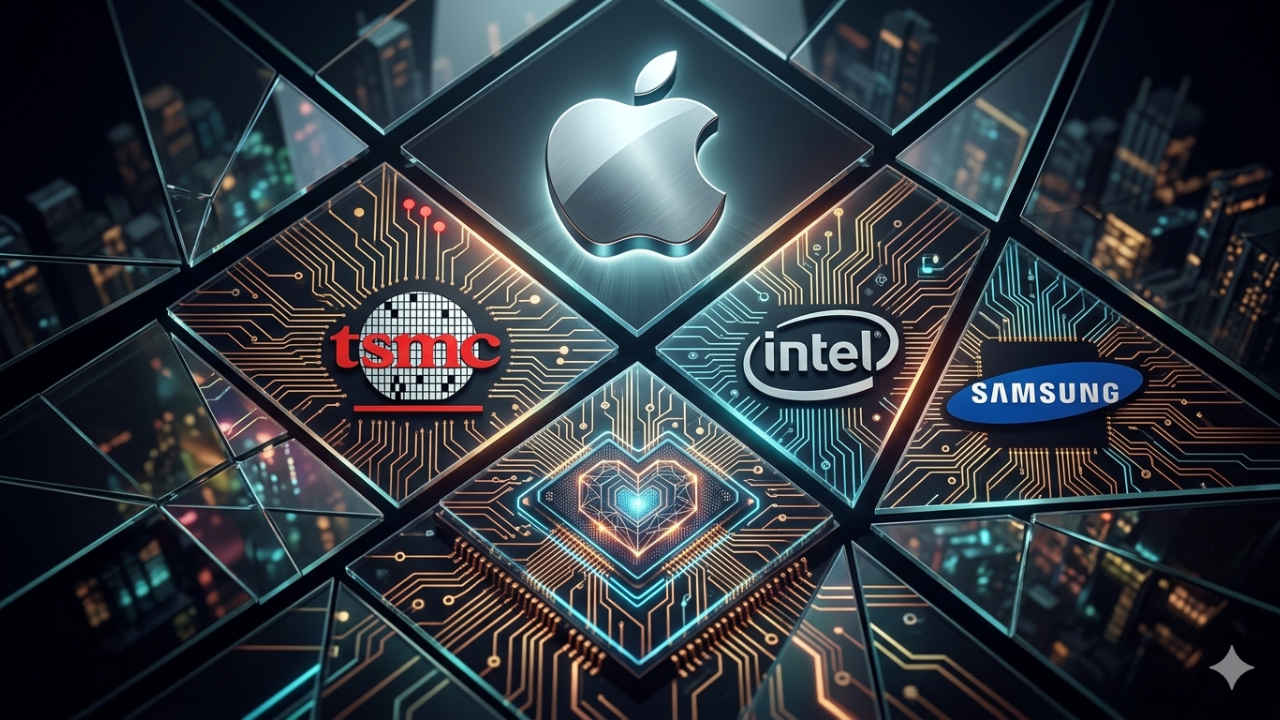

Apple has reportedly started exploring options to diversify its chip manufacturing strategy, with early-stage discussions involving Intel and site evaluations at Samsung Electronics facilities. As per a recent Bloomberg report, this will help Apple in reducing the long-standing dependence on TSMC, which has been its primary chip manufacturing partner for over a decade.
 Survey
According to reports, the discussions are still in their early stages, with no formal production agreements in place. Apple is rumoured to be evaluating whether other vendors can match TSMC’s scale, consistency, and sophisticated fabrication capabilities. The Taiwanese chipmaker has been essential to Apple’s silicon strategy, delivering custom-designed chips on cutting-edge nodes such as the current 3nm process.
This comes as global semiconductor supply chains face increased pressure, owing in part to rising demand for AI infrastructure and devices capable of running AI workloads locally. Apple, despite its size, has not been immune to these limits, pushing the corporation to look into other production partners to maintain long-term stability.
Also read: GTA 6 will not be coming to PC on launch day: Take Two CEO answers
According to the report, Apple has also restructured its hardware teams, bringing silicon development under more unified supervision, led by Chief Hardware Officer Johny Srouji. This attempts to streamline innovation while strengthening oversight of crucial components, such as in-house processors.

Securing Apple as a client would be a major milestone in Intel’s efforts to expand its foundry business, as well as renewing connections with the iPhone maker that extend back to the mid-2000s. Meanwhile, Samsung might improve its position in advanced chip production, where it still trails TSMC despite its present capabilities.
Geopolitical factors may have already influenced Apple’s strategy. And, because TSMC’s operations are centred in Taiwan, diversifying production can help offset risks associated with regional tensions, while also coinciding with attempts to develop semiconductor manufacturing in the US.
However, Apple is allegedly wary about departing from TSMC’s proven techniques, and it is uncertain whether these preliminary discussions would lead to real cooperation. For the time being, the company appears to be weighing its choices as it navigates an increasingly complex and competitive semiconductor market.


