
Adidas Trionda: Meet the smart football used at the FIFA World Cup
 Follow Us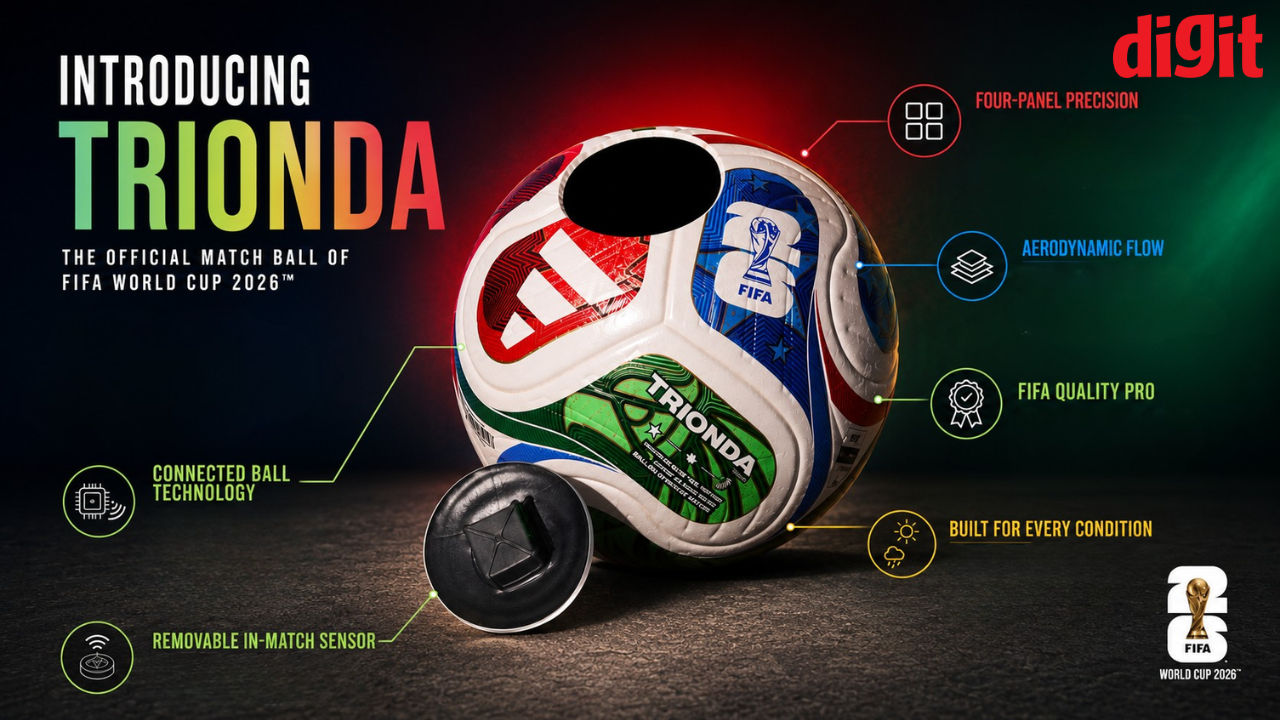

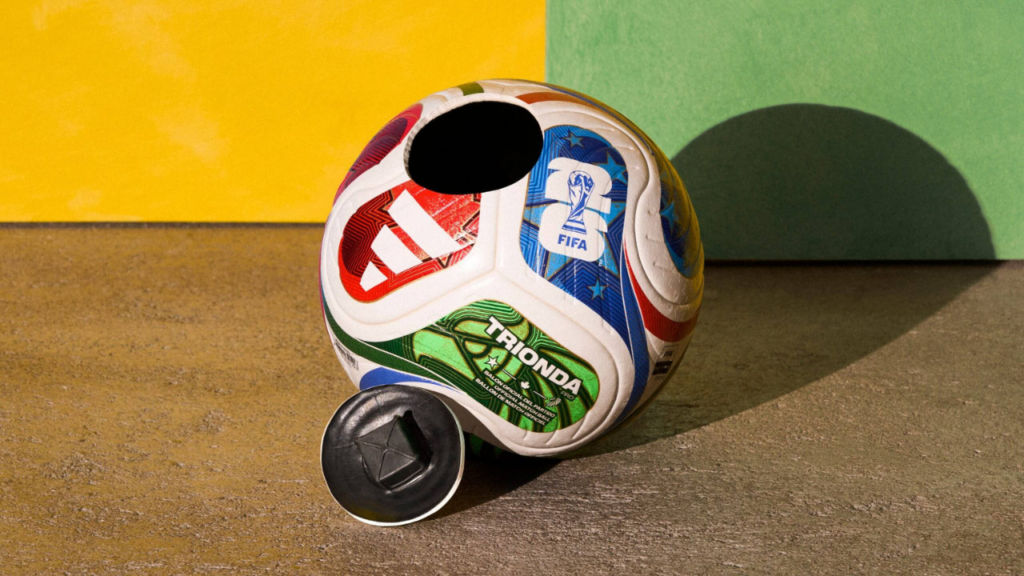
Before every FIFA World Cup match, there’s one piece of tech that needs to be plugged into a charger. If you’re thinking about the referee’s communication device, or his POV camera or the VAR equipment, well no, it’s not that. If you haven’t guessed it, it’s the match ball itself. The official ball of the FIFA World Cup, Adidas Trionda, is the first thing many fans notice because of its design. But what really makes it different is what’s hidden inside the football. Inside its outer layer, there’s a tiny sensor that sits underneath, weighing around 14 grams, that constantly sends data to FIFA’s Video Assistant Referee throughout the game.
 Survey
Fun fact, this sensor has already reversed major decisions during the tournament, including one that ended Croatia’s dream to win the FIFA World Cup and sent Cristiano Ronaldo to the Round of 16.
Here’s a breakdown of the science behind the Adidas Trionda and why FIFA charges the match football before every game. Let’s dive in.
Why does the Adidas Trionda need charging?
The Adidas Trionda is not your regular football. It comes with a rechargeable inertial measurement unit (IMU) sensor. This sensor runs on a battery that lasts roughly six hours on a full charge, which is why officials charge the ball before every match. The battery gives power to the sensor throughout the game, allowing it to send information to the stadium’s tracking system in real time. Once the match is over, the ball has to be recharged before its next use.
What’s inside the football?
At the heart of the Adidas Trionda is its 500Hz motion sensor. What this sensor does is that it records information 500 times every second in real time. Every kick, header, deflection, or touch, even if it’s a hair touch, is recorded instantly.
For the information, here is everything that this motion sensor can track:
- The exact moment when a player touches the ball
- Ball speed
- Spin rate
- Direction of travel
- Acceleration
- Three-dimensional movement
The Trionda data is very useful, but at the same time, FIFA combines it with another layer of technology to make it even more effective.
Cameras + Ball sensor
Every World Cup stadium has multiple tracking cameras positioned around the ground. These cameras continually monitor every player’s position on the pitch, while the Trionda tracks the ball. Artificial Intelligence combines both data streams to create a live 3D model of the players.
Now this model allows the VAR team to know:
- Exactly when a pass was made
- Which player touched the ball
- Player positions at that precise moment
- Whether a player was onside or offside
- Whether a handball occurred during gameplay
- Whether the ball crossed the goal line
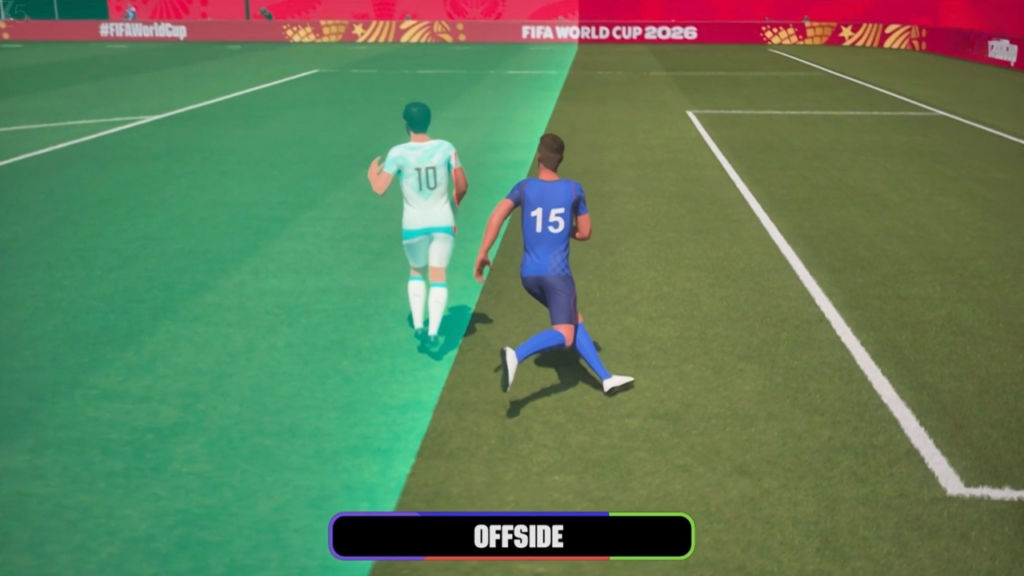
The technology is so good that they don’t have to rely only on video replays. Match officials receive data from the ball and the cameras themselves.
The Portugal vs Croatia incident that everyone was talking about
One of the biggest decisions reversed came during Portugal’s 2026 FIFA World Cup knockout match against Croatia.
During the match, there was a moment where it looked like Croatia had found the goal that would bring them level and Luka Modric’s World Cup dream was still alive. But everything changed because of one tiny touch that only the ball technology could detect. Instead of Croatia forcing the game back level, Portugal held on, and Cristiano Ronaldo’s journey continued.
In extra time, at the 102nd minute, Croatia thought they had scored an equaliser. If you look at the replay, you won’t see any touch from Igor Matanovic’s head, but VAR took another look. The Trionda sensor detected a slight touch from Croatian forward Igor Matanovic. That minimal contact with the ball from his head or even his hair put Mario Pasalic in an offside position. The graphic showed a small bump at the exact moment his head made contact with the ball. As a result, the goal was ruled out, and Portugal qualified for the Round of 16.
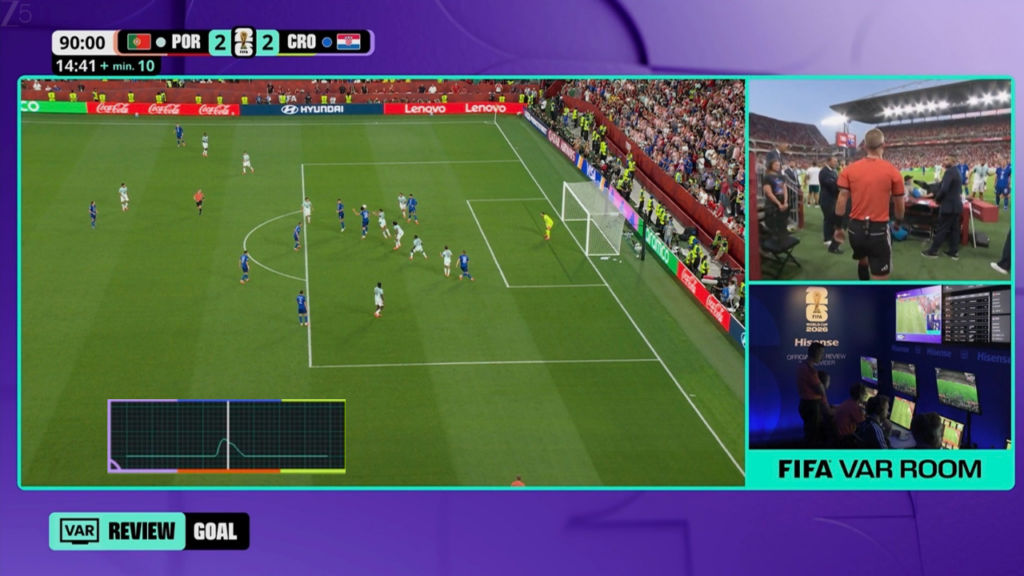
Without this technology, there is no way a referee could tell from the video footage that it was offside.
This decision sparked so much controversy and debate among fans because the contact wasn’t visible on the video replay. However, FIFA explained that the ball’s sensor clearly registered the touch.
This technology didn’t start in 2026
Connected-ball technology first appeared at the FIFA World Cup 2022 in Qatar with the Adidas Al Rihla. That ball also featured a motion sensor that worked alongside FIFA’s semi-automated offside system. The 2026 Trionda builds on that idea with an updated sensor placement and improved integration with FIFA’s latest tracking system.
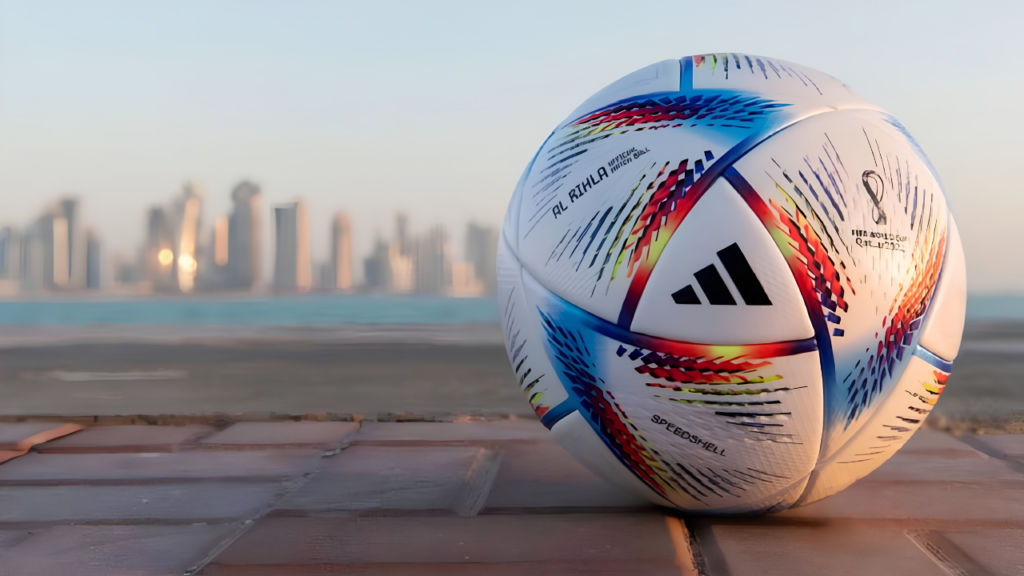
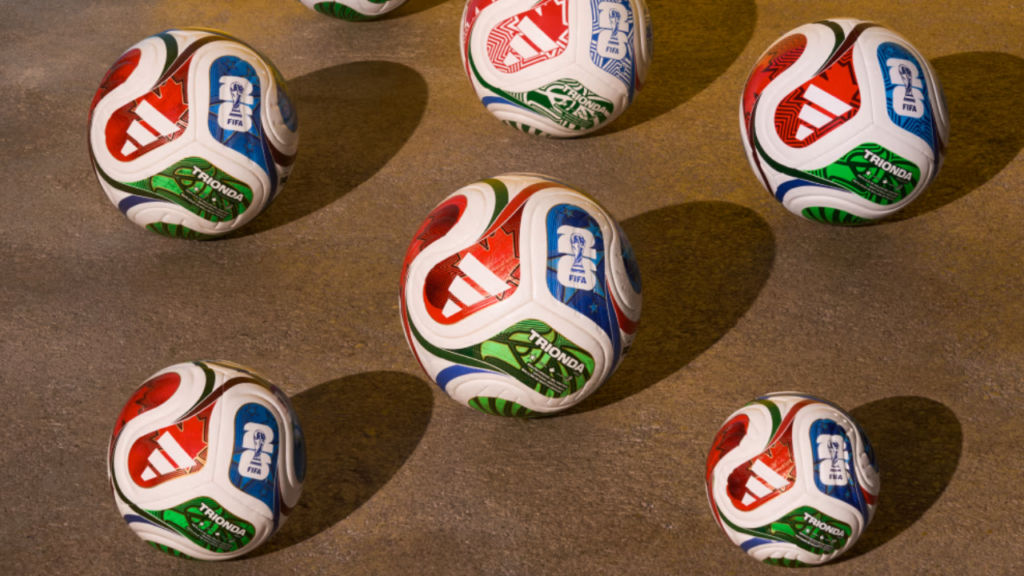
The Adidas Trionda uses only four thermally bonded panels, the fewest ever used on a FIFA World Cup match ball. It is designed in such a way that its textured surface will help the ball improve grip, flight stability and consistency while reducing water absorption during wet conditions.
According to researchers studying Trionda’s aerodynamics, these changes also influence how the ball behaves in the air, particularly during corners, crosses and free-kicks.
Adidas Trionda: More than just a football
From the outside, the Adidas Trionda looks like any other World Cup football. However, it is only once the match begins, that it becomes part of a much larger technology network operating around the stadium.
Every touch of the ball is recorded, matched with player-tracking data, and made available to match officials so they can review key incidents. The referee still makes the final decision, but they now have access to information that wasn’t available just a few years ago.
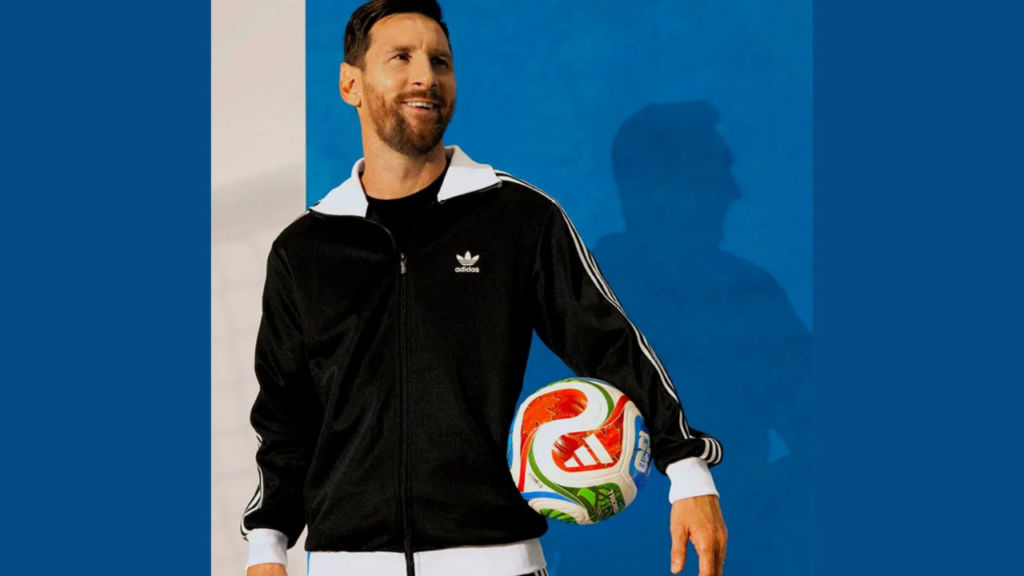
So, to answer the question mentioned at the start, this is why the official match football now needs to be charged before every FIFA World Cup match. And this isn’t because football has become high-tech. It’s because the technology inside the ball has become another tool helping officials make more crucial decisions.


