
Death Stranding 2: On the Beach PC performance Review
 Follow Us

We originally reviewed Death Stranding 2: On the Beach at launch on PlayStation, and that piece focused on the game itself whereas here we’re exploring how well the game runs on the PC. The Death Stranding franchise has established quite the fan following for its rather outlandish concept, and it does come quite well optimised to begin with, but with AAA-titles such as this one, they do tend to make the most of your hardware. So we were curious to see what the devs have done with the PC release. Check out the original review to see if you’re interested in the game itself. We’re not going to repeat ourselves here, and instead we’ll stick to showing you how the game performs on PC, based on testing carried out on a system powered by an AMD Ryzen 7 9800X3D, NVIDIA GeForce RTX 5090, and 48 GB of DDR5 memory.
 Survey
Death Stranding 2 is a polished port with serious overhead
Even before getting into numbers, the first thing that stands out about Death Stranding 2: On the Beach on PC is just how comfortable it feels on high-end hardware. This is not a game that appears to be struggling under the weight of its own ambition. Kojima Productions’ art direction, environmental density, and cinematic framing remain intact, but the PC version adds the one thing enthusiasts always want from a technically demanding title: flexibility.

The Decima engine already proved itself as one of the most visually capable engines of the last generation, and that translates neatly here. Australia’s rugged terrain, Mexico’s sunlit expanses, the game’s shifting weather systems, and the eerie texture of BT encounters all come through with the kind of crispness and responsiveness that a premium PC can exploit far better than a fixed console platform. The visual identity is unchanged, but the feel of traversal, camera motion, and combat response benefits significantly from the extra headroom.
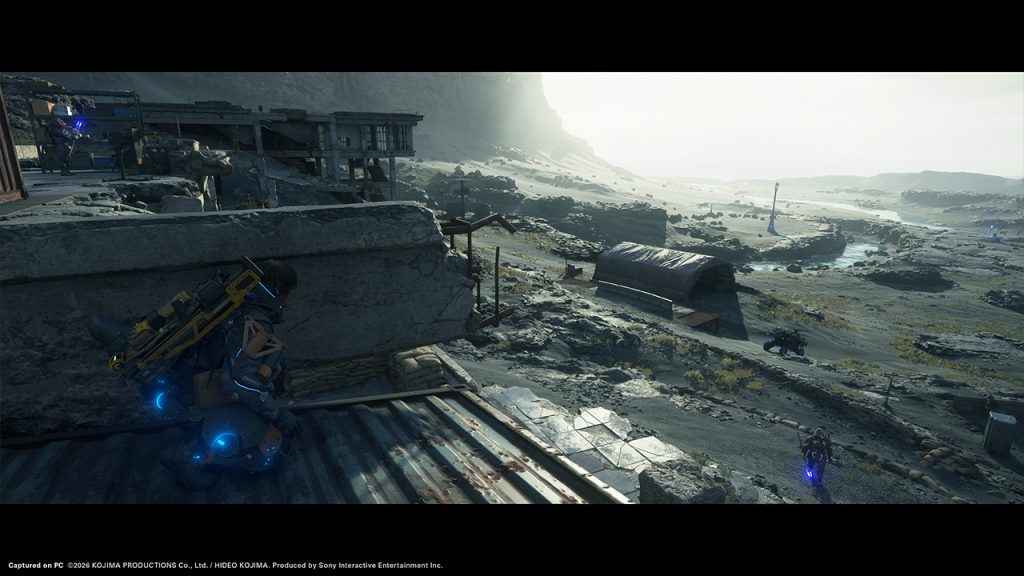
On a machine built around the Ryzen 7 9800X3D and RTX 5090, the game frolics about with its ridiculous performance overhead, in fact, it is lavishly performant. Even at demanding settings, the baseline is already high enough to make the experience feel fluid and stable. That makes a huge difference in a game like Death Stranding 2, where movement across uneven terrain, precise cargo balancing, and environmental awareness are central to the play experience. A smoother frame rate makes the game look better, and it makes traversing its world feel more natural.
Frame generation scales hard, and actually feels useful
The standout numbers in our tests come from frame generation benchmark runs. Running without frame generation, the game delivers 126.34 FPS, with 1% lows at 88.29 FPS. That is already a strong result for such a visually rich game, and it means the base experience on top-end hardware is more than comfortable.
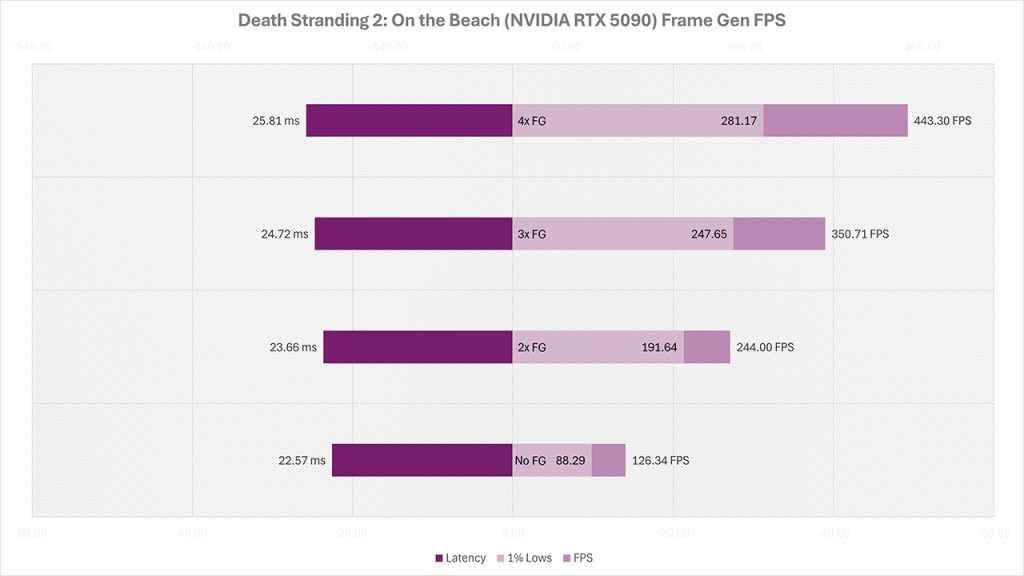
Turning on 2x frame generation lifts performance to 244.00 FPS, with 1% lows of 191.64 FPS. Step up to 3x frame generation and the game reaches 350.71 FPS, with 1% lows at 247.65 FPS. At 4x frame generation, performance stretches all the way to 443.30 FPS, while 1% lows still sit at an impressive 281.17 FPS. And this is all on an RTX 5090, with cards lower down the stack, you should expect similarly bountiful gains making the game very playable on DLSS 4.5 capable hardware.
Those numbers are absurd in the best possible way, but what makes them relevant is that Death Stranding 2 is a good candidate for frame generation in the first place. This is not a twitch arena shooter where every frame of latency becomes a competitive talking point. It is a slower, more deliberate game, one built around traversal, route planning, atmosphere, and intermittent bursts of action. That means the uplift from frame generation is easier to appreciate than the drawbacks.
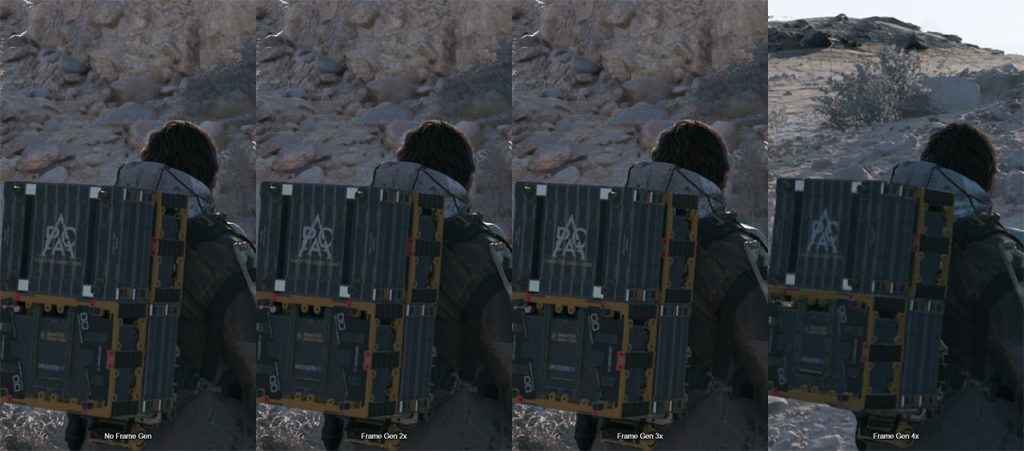
There are visual aberrations as frame generation levels rise, and that is important to acknowledge. The higher the generated frame count, the more the occasional artefact begins to show around motion, fine edge detail, or complex transitions in the image. But in practice, these issues do not come across as immersion-breaking. They are visible if one goes looking for them, especially in side-by-side comparisons, but they are not so aggressive that they derail the experience.
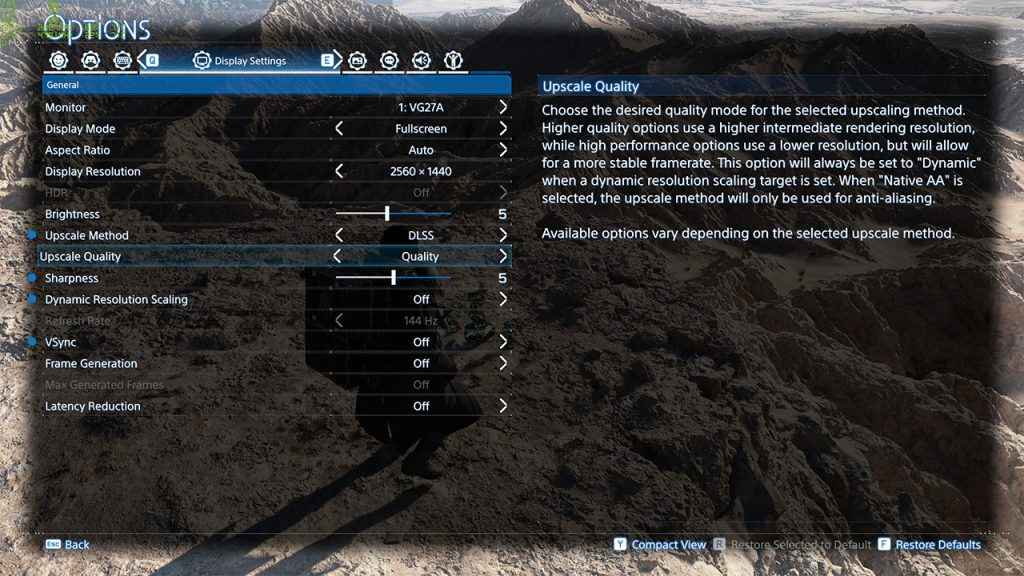
That makes 2x frame generation the obvious sweet spot for most players with compatible hardware. It almost doubles performance over the no-frame-generation baseline while keeping the image stable enough to preserve the atmosphere that makes the game work. The 3x and 4x modes are technically impressive and undeniably smooth, but they also push further into the territory where image anomalies can become more noticeable. They are useful demonstrations of how much overhead the engine can exploit, but they feel more like luxury options than default recommendations.
DLSS profiles show an unusually tight spread
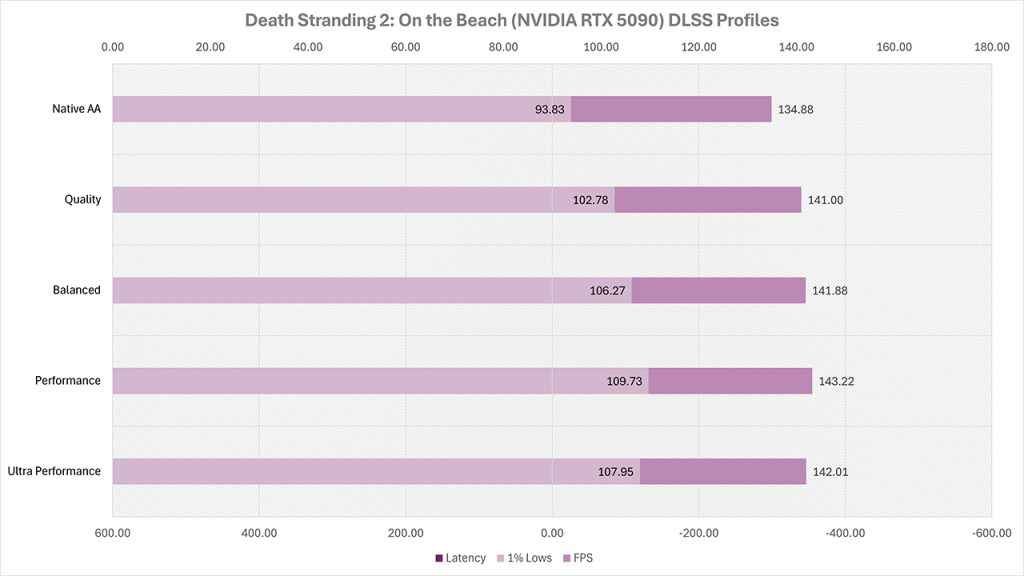
The DLSS data is interesting for a different reason. Often, one expects a more dramatic spread between aggressive upscaling modes and the more conservative presets. Here, the differences are surprisingly narrow. Ultra Performance lands at 142.01 FPS with 1% lows of 107.95 FPS. Performance mode delivers 143.22 FPS with 1% lows of 109.73 FPS. Balanced comes in at 141.88 FPS and 106.27 FPS for 1% lows. Quality manages 141.00 FPS with 102.78 FPS lows. Even Native AA, which avoids DLSS upscaling, still posts 134.88 FPS with 1% lows of 93.83 FPS.
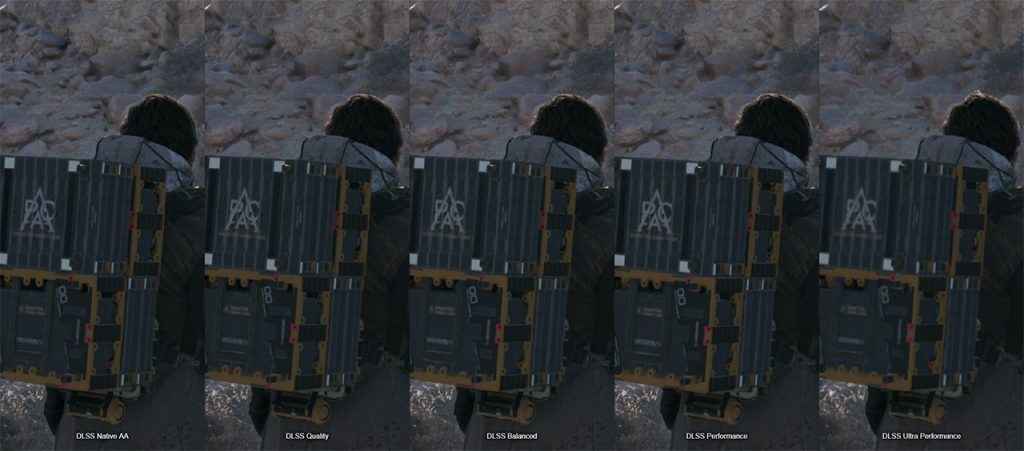
That tells us two things. First, the game is already running from a position of strength on this hardware. Second, the visual trade-off between these presets matters more than the raw frame rate delta. When the spread between Quality and Performance is barely meaningful in practical terms, the choice should come down to image stability and clarity rather than chasing a few extra frames.
That is especially relevant in a game with landscapes this broad and detailed. Distant terrain, weather effects, rocky surfaces, and subtle texture work across clothing and cargo all benefit from cleaner reconstruction. Native AA remains the purest image path in theory, but the performance gap between Native AA and DLSS Quality is not severe enough to create an obvious winner on feel alone. If anything, DLSS Quality looks like the most sensible day-to-day choice here, because it preserves most of the visual integrity while still keeping performance high.
Balanced and Performance modes are perfectly viable, especially for those targeting very high refresh rate displays, but they are best viewed as options for preference rather than necessity. Ultra Performance, meanwhile, exists, but the numbers suggest there is little practical reason to lean on it at this class of hardware unless one is simply experimenting.
Visual fidelity remains intact, within reason
We also included direct visual comparisons across frame generation levels and PICO comparisons across Native AA, Quality, Balanced, and Performance modes. The key takeaway is a reassuring one: the image does degrade as settings become more aggressive, but it’s barely noticeable in most scenes.
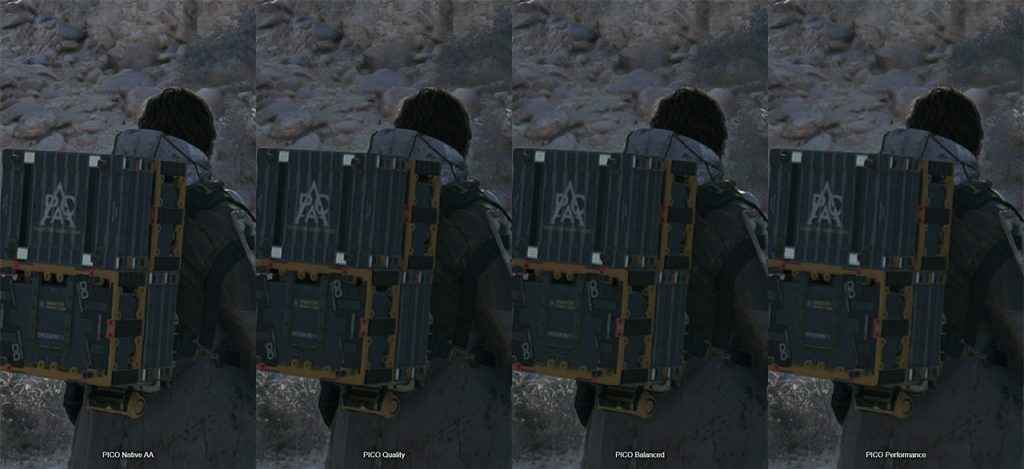
Does it matter? Well, Death Stranding 2 lives and dies by atmosphere so yeah, one could say that it does matter. Its appeal is tied to stillness, scale, lighting, and environmental mood as much as to mechanics. If boosting performance came at the cost of making the game look synthetic or unstable, that would undercut a core strength of the experience. Fortunately, that does not seem to be the case. The artefacts that do appear at higher frame rate profiles are present, but they do not overwhelm the image or sabotage the game’s cinematic presentation.
That leaves the PC version in a good place. It allows players to push far beyond console frame rates, experiment with aggressive frame generation, and still maintain the visual identity that made the game striking in the first place.
Verdict – Death Stranding 2: On the Beach
Death Stranding 2: On the Beach is a great–performing and great-looking game on PC. On a Ryzen 7 9800X3D and RTX 5090, the game delivers an excellent baseline experience and scales aggressively with frame generation, reaching frame rates that would have sounded excessive a few years ago. DLSS support is similarly well-judged, with only modest performance differences between presets, which lets players prioritise image quality without feeling penalised.

More importantly, the compromises are sensible. Yes, visual aberrations begin to surface as frame generation climbs, and yes, more aggressive image reconstruction modes do soften the presentation to varying degrees. But the trade-offs are rarely severe enough to break immersion. For a game so dependent on atmosphere and visual tone, that is the most important result of all.
This is the kind of PC version that complements the original game rather than merely replicating it. It does not transform Death Stranding 2 into something fundamentally different, but it does let the game breathe more freely. And for a world this strange, lonely, and visually arresting, that extra fluidity goes a long way.


