
DailyObjects Node Wireless Charging Ecosystem review: The closest thing to Apple’s AirPower dream?
 Follow Us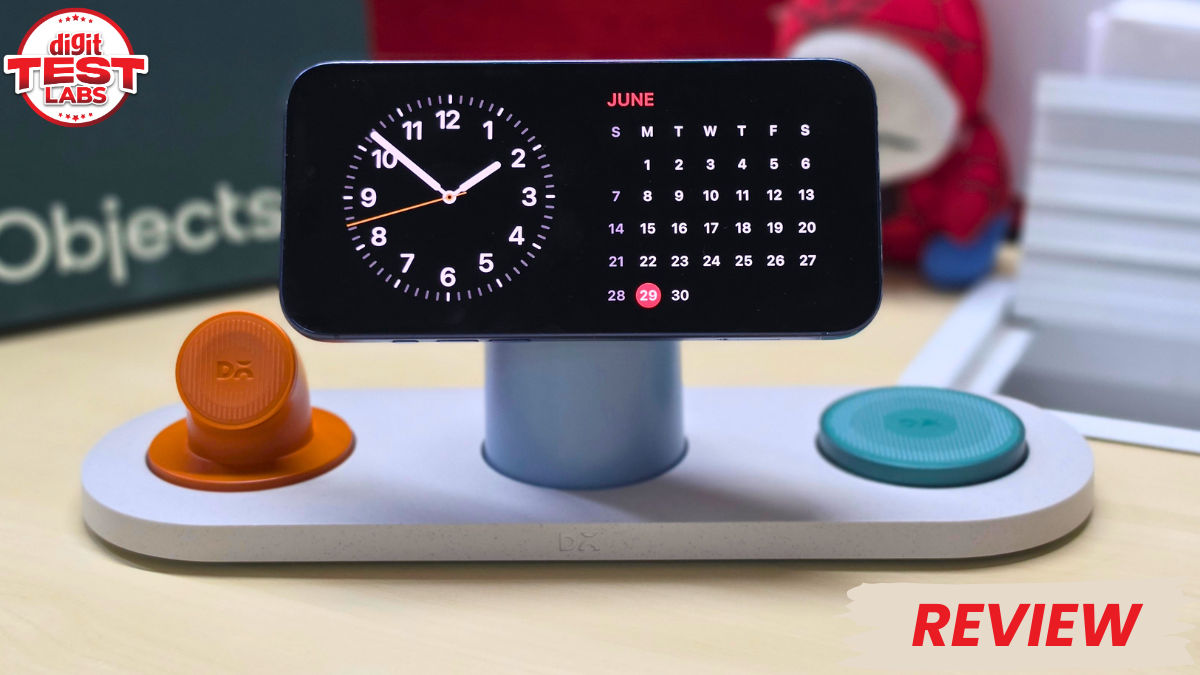

Almost nine years ago, in late 2017, Apple showcased what could have been the future of wireless charging. It was called AirPower, and it promised a single charging mat that could power an iPhone, Apple Watch and AirPods simultaneously, no matter where they were placed. It was an ambitious idea that never saw the light of day, eventually getting cancelled in 2019 because Apple couldn’t overcome the engineering challenges behind it. Since then, we’ve seen plenty of wireless chargers for individual devices, but very few companies have attempted to build an actual charging ecosystem. DailyObjects has now taken a shot at that idea with its new Node Wireless Charging Ecosystem. And, don’t get it wrong, it isn’t Apple’s AirPower reborn, nor is it trying to be. Instead, what I feel is that it offers something arguably more practical: a modular wireless charging system that works across brands and devices while keeping your workspace clean, organised and surprisingly elegant.

I’ve been using the DailyObjects Node Wireless Charging Ecosystem every day. Here’s my experience and everything you need to know before deciding whether it’s worth buying.
Also read: iPhone 17 Pro Max review: Brilliance at a price
What exactly is the DailyObjects Node Wireless Charging Ecosystem?
The first thing to understand is that the Node Wireless Charging Ecosystem isn’t a single product. Think of it as a modular platform where you build your own charging setup depending on the devices you own. It starts with the charging dock. You can choose between a 2-in-1 Dock priced at Rs 2,999 or a 3-in-1 Dock that costs Rs 3,499. Once you’ve picked the dock, you can add whichever modules make the most sense for your setup.
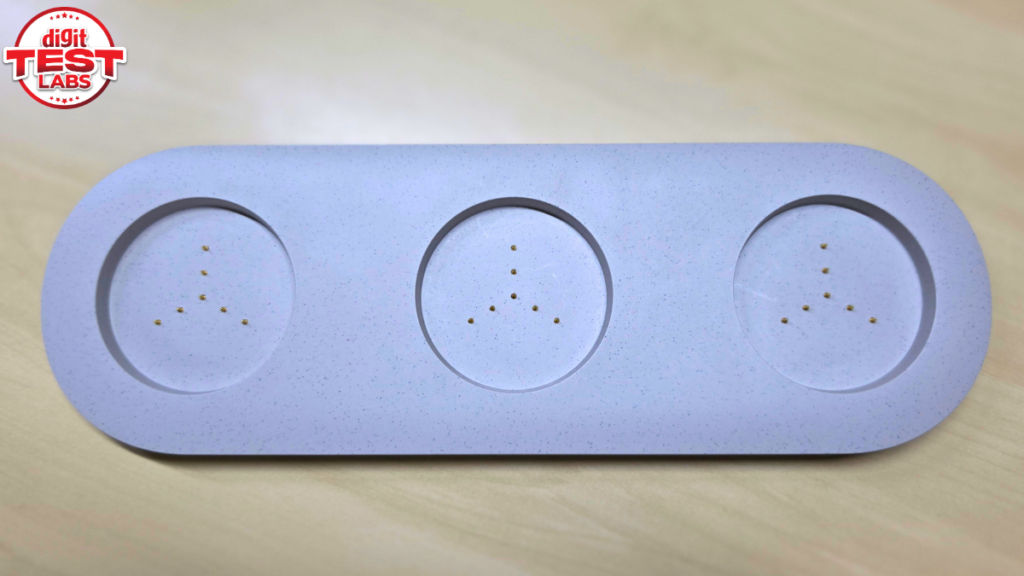
The review unit sent to me by DailyObjects includes the 3-in-1 Dock along with four modules: the Wireless Charging Phone Stand (Rs 6,499), the Wireless Charging Disk (Rs 3,499), the Apple Watch Charging Stand (Rs 2,999) and the Portable Lamp (Rs 4,499). Put together, the complete setup costs a whopping Rs 20,995, which is certainly not cheap! In fact, it is probably the first thing you’ll notice about the Node ecosystem. But unlike conventional wireless chargers that perform just one function, every module here is designed to do more than simply sit on your desk.
For instance, the Phone Stand supports Qi 2.2 certified 25W wireless charging and doubles as a portable power bank thanks to its built-in 7,800mAh battery. Lift it off the dock, and you have a battery pack ready to charge your MagSafe phone on another desk or even while travelling. Likewise, the Wireless Charging Disk can also be detached and used independently via its USB Type-C port, making it much more versatile than a permanently fixed charging puck. More on it in a bit.
All these charging modules support magnets, so they work extremely well with Apple devices, like the iPhone and the Apple Watch. And speaking of the watch, the Apple Watch Charging Stand offers 5W wireless charging, securely holds the watch in place and neatly integrates with the rest of the system.
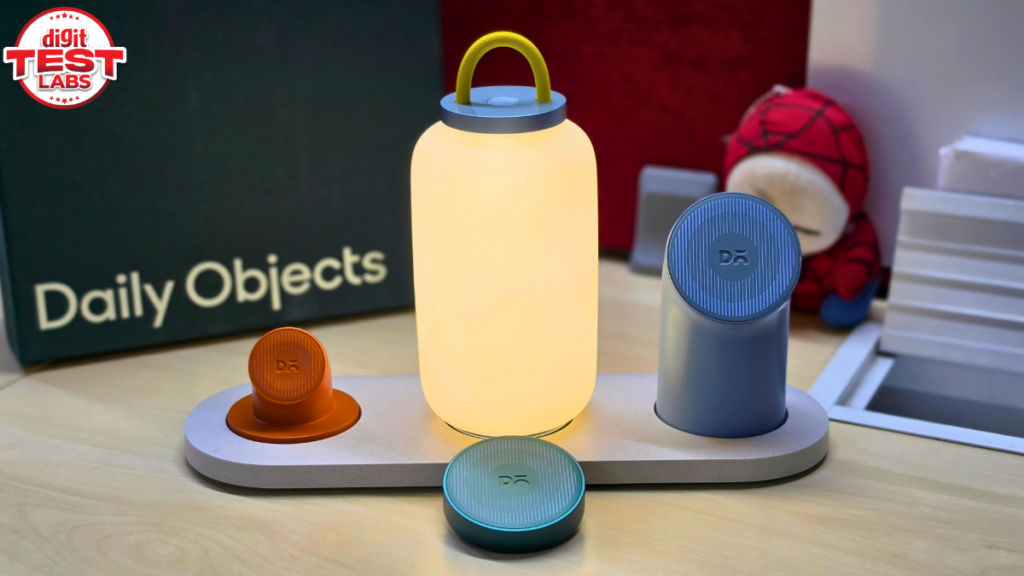
Last but not least, there is the Portable Lamp, which may initially feel like an odd addition to a charging ecosystem, but I used it for a while, and it made sense on my bedside.
Living with the Node ecosystem every day
I’ve been using the Node ecosystem every single day, and it has become a permanent fixture on my work desk. My iPhone almost always sits on the Wireless Charging Phone Stand throughout the workday. The elevated design keeps the display easily visible in iPhone’s Standby Mode. I’m easily able to check notifications or glance at incoming calls. The magnetic alignment is also reassuringly strong, and portrait and landscape orientations work equally well.
Also read: Samsung Galaxy S26 Ultra review: King of the hill
The Wireless Charging Disk usually takes care of my TWS earbuds, but every now and then, I place my Galaxy S26 Ultra on it as well. Since it supports Qi2-compatible devices, switching between brands isn’t really a problem, which is perhaps one of the biggest strengths of this ecosystem. You’re not locked into Apple products.
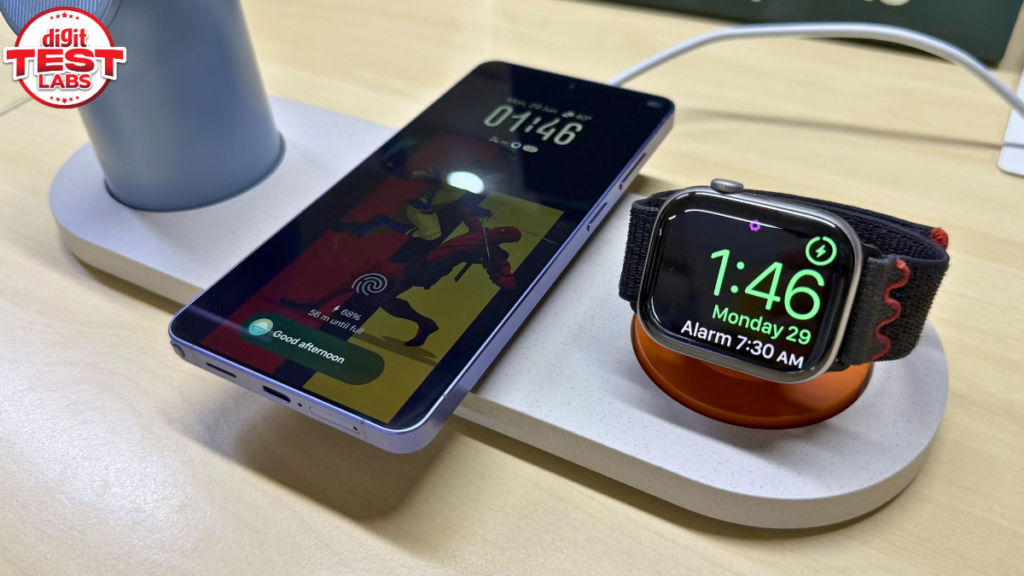
The Apple Watch Charging Stand completes the trio. Instead of having three separate charging cables running across my desk, everything sits neatly on a single dock. In the process, my workspace feels cleaner, and surprisingly, that has been one of my favourite aspects of using Node. You don’t realise how much cable clutter affects your desk until it disappears.
Another thoughtful touch is that every module docks magnetically through pogo-pin connectors. There’s no plugging and unplugging individual cables every time you want to use one independently. Lift it off, use it elsewhere, and simply place it back when you’re done.
More than just a wireless charger
The module that surprised me the most wasn’t actually a charger. It was the Portable Lamp. After unboxing, I initially thought it would be an extra accessory bundled into the ecosystem to make it feel more premium. But after taking the Node setup home for a few days, I found myself using the lamp every evening. I placed it on my bedside table, and it instantly became both a functional light and a nice piece of decor. The warm lighting feels quite pleasant, making it ideal for winding down before bed. There are three brightness levels depending on your preference, while the built-in 2,600mAh battery is claimed to deliver enough runtime that even if it is undocked, it should be able to run for 2-3 evenings on a single charge, before you sleep.
But yes, just like the rest of the Node modules, it docks onto the charging station when needed and can also be charged independently through its USB Type-C port. You read that right. Even if you skip the charging dock altogether and simply want to buy individual modules for your desk because they look aesthetically pleasing, you can. Just plug them into a charging brick using a USB Type-C cable, and you’re good to go.
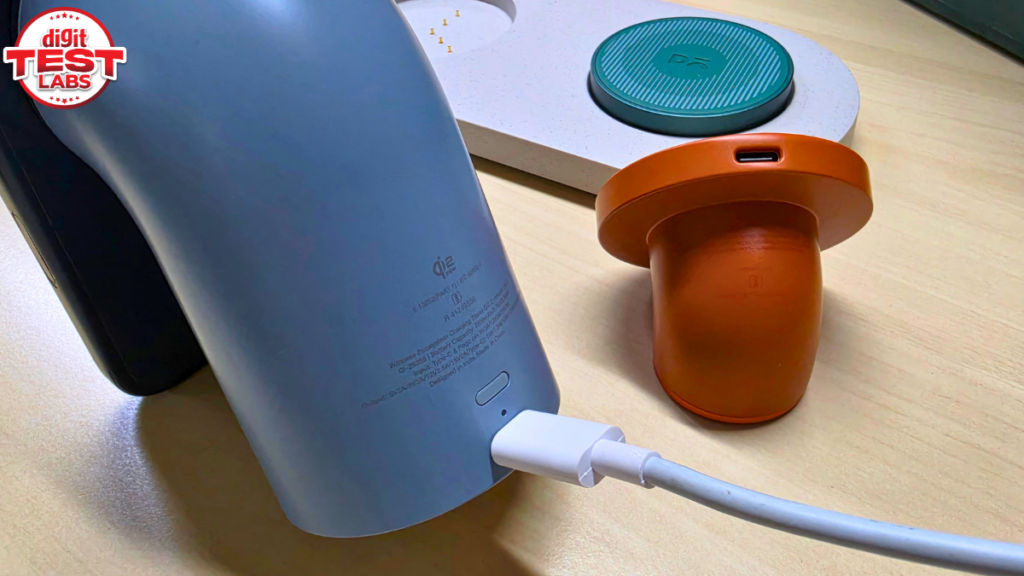
That sums up the Node ecosystem rather well. Every module feels like it has been intentionally designed with utility in mind. The overall build quality also deserves praise. The aluminium construction, soft-touch finishes and magnetic docking mechanism all feel premium. The modules snap into place with satisfying precision, and everything feels sturdy enough to withstand daily use.
Of course, this is clearly a design-first product, but thankfully, it doesn’t sacrifice practicality in pursuit of aesthetics.
Then there is the price…
As much as I’ve enjoyed using the Node ecosystem, recommending it comes with one major caveat: the price. As I already mentioned, the setup I have costs Rs 20,995, which is a considerable amount to spend on charging accessories. For that money, many people would rather upgrade their earbuds, or maybe buy a smartwatch or put it towards a new smartphone altogether.
Even if you choose fewer modules, this is still positioned as a premium accessory rather than an impulse purchase. And that’s not necessarily a criticism because I don’t think DailyObjects is targeting everyone here. The Node ecosystem is aimed at people who appreciate well-designed desk setups, own multiple wireless charging devices and are willing to pay for convenience and aesthetics.

If you’re someone who charges just one phone every night, this probably isn’t the product for you. A regular Qi charger costing a fraction of the price will do the job just fine. But if your desk usually has an iPhone, a pair of wireless earbuds, a smartwatch and perhaps another Qi-compatible phone lying around, then the Node makes a lot of sense. I know it does for me. The convenience of having everything neatly organised in one place, while also being able to detach individual modules whenever required, is actually useful.
Daily Object Node Wireless Charging Ecosystem: Verdict
The DailyObjects Node Wireless Charging Ecosystem is probably the closest we’ve come to a mainstream wireless charging ecosystem since Apple abandoned the AirPower dream. It doesn’t solve the same engineering challenge faced by Apple, nor does it charge multiple gadgets on a single mat. Instead, it takes a modular approach, and that’s a much more practical solution.
Is it expensive? Absolutely. Is it essential? Not really. But that’s also not what DailyObjects is trying to build. The Node ecosystem is a premium lifestyle accessory that happens to charge your devices exceptionally well while keeping your workspace organised. If you’re already invested in multiple wireless devices and care about having a clean, clutter-free desk without compromising on design, the Node ecosystem is easy to appreciate. It is not for everyone, but for the right audience, it is one of the most thoughtfully designed charging systems currently available.


