

Your AC can blast this summer if you do not maintain these things
 Follow Us
Dirty AC, gas leaks, or bad wiring can make it overheat and become risky.
Using AC for too long and voltage issues can damage the machine.
Regular service, proper setup, and noticing warning signs can keep you safe.

The summer heat in India is rapidly increasing, and many people rely on air conditioners for relief from heat. It seems that the only safe zone in summer is the room in which we have installed our air conditioner. However, it may become dangerous if you don’t maintain it well. Recently a tragic incident happened in the Vivek Vihar area of New Delhi where nine lives were lost because of a blast caused by their AC unit. The initial reports indicated that it was because of the short circuit in the machine. Here are some of the reasons that can cause your AC to blast and how you can stay safe.
 Survey
Reasons behind AC blasts
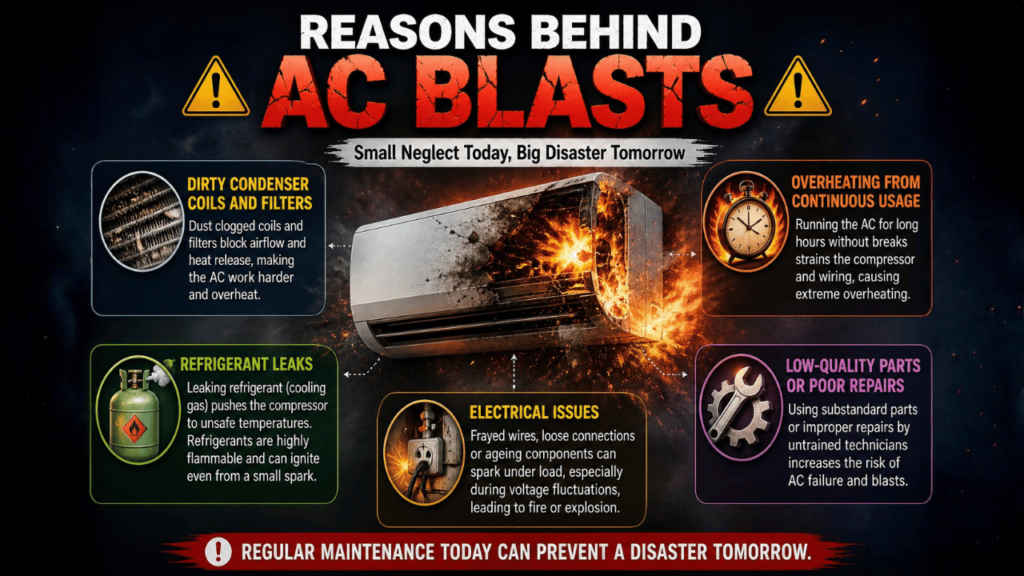
There can be multiple reasons behind the failure of your AC that can lead to fire or explosion. However, most of the time the reasons are technical, and the incidents are not random but rather long-standing. Here are some of the things that, if not addressed on time, can lead your AC to explode:
- Dirty condenser coils and filters: India is a developing country, and the dust in the environment is unavoidable. With time you may find that the coils and filters of the AC are clogged with dust and are restricting heat release and airflow. As a result of that, the load on your AC unit increased, and it had to work harder to cool your place, causing it to overheat.
- Refrigerant leaks: Refrigerants are the reason behind the cool air you get from your AC. They are also known as ‘gas’ in the common terms, and a leaking cooling gas can push the compressor to unsafe temperatures. Moreover, the refrigerants are highly flammable and may ignite even from a small spark.
- Electrical issues: You may find your AC tripping frequently, and this is because of frayed wires, loose connections, or ageing electrical components. Moreover, if ignored, then they can spark under load, especially when you face voltage fluctuations at your place.
- Overheating from continuous usage: While ACs are built to run continuously for multiple hours, running the AC constantly for prolonged periods without breaks puts excessive strain on the compressor and internal wiring. Ultimately leading your AC to a blast-off situation.
- Low-quality parts or poor repairs: Make sure that the repair and maintenance of your AC is only done by a trained technician. Along with that, also keep an eye on the fact that the parts he’s using are genuine.
Also read: Vivo X300 Ultra and X300 FE India launch on May 6: From price to specs, all details
How to stay safe while using an AC
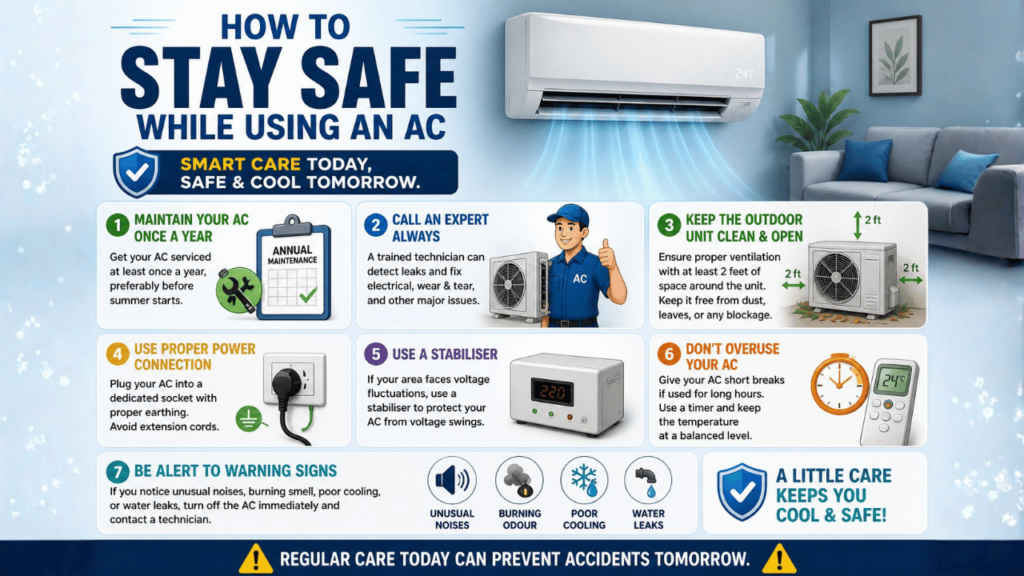
You do not need to be an expert to use your AC safely. Some small actions and routine maintenance will keep the system functioning properly for many years. Here are some important points to consider:
Also read: Staying indoors in AC this summer? Here is why it might be affecting your health
- You need to make sure that your AC system gets maintained once a year at least. It is advisable to get this done before using the air conditioner during summers.
- It is always recommended to call an expert to carry out the maintenance and repair tasks because they can detect any leakage and take care of other major issues like electricity and wear and tear.
- Keep the outdoor unit open and well ventilated and leave at least two feet of space around it. Moreover, clear away the dust, leaves, or anything else that might be blocking the ventilation.
- Use a proper power connection and make sure that the AC is plugged into the dedicated socket and ensure that good earthing is provided for that. Avoid using extension cords, as the wiring may not be able to hold the voltage load.
- If the voltage in your area fluctuated, then use a stabiliser to ensure that the device is getting a proper load.
- Give your AC short breaks if you use it for prolonged periods of hours. Alternatively, you could also use a timer to make sure that it does not operate for too long or keep the temperature low to balance the load.
- If you hear unusual noises, smell a burning odour, have poor cooling ability, or notice water leaks, it is wise to turn off the air conditioner and contact a technician.


