
IPL 2026: BCCI bans players from wearing smart glasses, here is why
 Follow Us
The BCCI's Anti-Corruption and Security Unit has banned smart glasses on IPL match days
Smart glasses raise concerns about covert surveillance well beyond cricket
This is not a stadium-wide ban, the restriction applies specifically to players and support staff
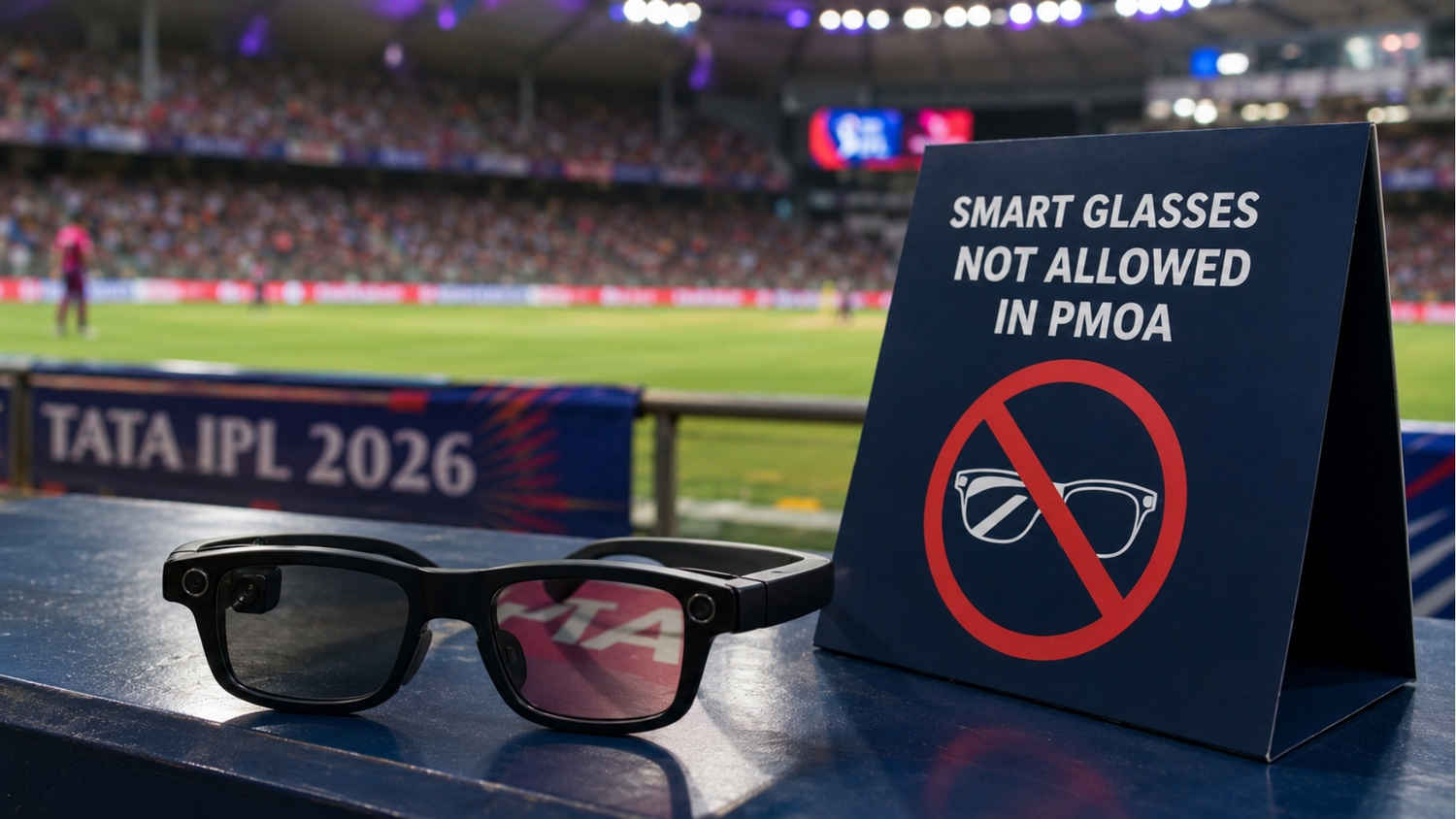

The BCCI’s Anti-Corruption and Security Unit (ACSU) has issued a directive banning smart glasses inside the Player and Match Officials Area (PMOA) on IPL match days. All players and support staff must now deposit any smart eyewear with the Security Liaison Officer upon arriving at the venue, alongside their mobile phones and smartwatches, before entering dressing rooms, dugouts or player viewing areas. Anyone found with smart glasses inside the PMOA will be treated as having violated tournament protocols and could face financial penalties under the IPL 2026 Minimum Standards.
 Survey
One thing worth clarifying upfront: this is not a stadium-wide ban. The restriction applies specifically to players and support staff in restricted team areas. A spectator in the stands can still walk in wearing their Meta Ray-Bans without violating any IPL regulation, which is an interesting gap in itself; more on that below.
The ACSU said it had noticed companies actively marketing and selling smart eyewear to IPL players and team personnel. These devices can live-stream footage, record video, send and receive text messages, and make audio and video calls over mobile data or Wi-Fi, all without looking any different from ordinary sunglasses. In an environment where unauthorised communication between players and outside parties is a match integrity risk, that combination of capabilities is enough to classify them as prohibited communication and recording equipment.
The directive comes after a string of protocol breaches during IPL 2026. Rajasthan Royals team manager Romi Bhinder was fined Rs 1 lakh and issued a warning after being filmed using a mobile phone in the team dugout during a live match. The ACSU has been on high alert since and the smart glasses ban is part of a broader tightening of what is allowed inside restricted areas.
The PMOA ban closes off one obvious risk but a spectator in the stands has a direct line of sight to the pitch, the dugout and the players and a pair of smart glasses gives them the same live-streaming and recording capabilities that got the device banned inside the dressing room. The ACSU’s directive does not appear to address this at all, which raisThe BCCI’s Anti-Corruption and Security Unit has banned smart glasseses a fair question about how much of the integrity risk is actually being mitigated.
The features that make smart glasses a problem in a cricket stadium are the same features they carry into every other space. The current crop of smart glasses can record video and audio without the person being recorded knowing or consenting. The camera is small, forward-facing and indistinguishable from a standard frame detail. Unlike pointing a phone at someone, which is visible and socially legible, smart glasses make covert capture effortless in a cafe, a meeting room or any crowded public space.
India does not yet have a specific law governing wearable recording devices, though the Digital Personal Data Protection Act of 2023 does establish consent and purpose limitations on how personal data, including video and audio of identifiable individuals, can be collected and used.
Should you still wear them?
Smart glasses are genuinely useful. Hands-free navigation, real-time translation, call management and AI-assisted information lookup are all legitimate features. But the issue is context and consent. Wearing them in public spaces where recording is legally permissible is different from wearing them in a friend’s home, a medical setting or a professional environment where the people around you have a reasonable expectation of privacy. If you own or are considering buying smart glasses, treat the camera the way you would treat a phone camera: turn it off when it is not in use, be transparent when you are recording, and think carefully before wearing them into situations where privacy expectations are high.


