
Google DeepMind CEO says AGI may arrive by 2030, calls current AI agents a practice run
 Follow Us
Demis Hassabis says AGI could arrive as early as 2029–2030
He claims today's AI agents are an early preview of that transition
Hassabis describes AI's coming impact as roughly 100 times that of the Industrial Revolution,
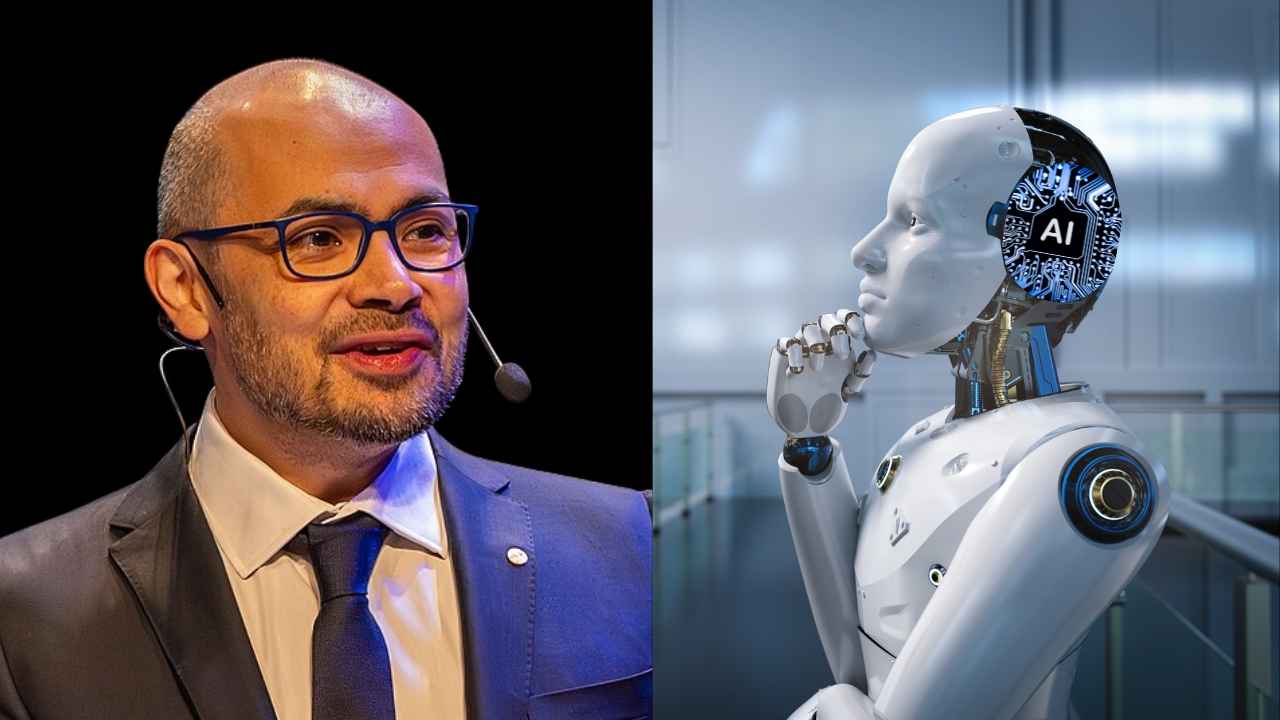

Google DeepMind CEO Demis Hassabis made some of the most striking public statements about artificial intelligence’s near-term future at the sidelines of Google I/O 2026 last week, telling the audience that humanity is currently standing in the “foothills of the singularity”, drawing gasps from the crowd for it. Speaking in a sit-down interview with Axios co-founder Mike Allen, Hassabis expanded on the remark, laying out a specific timeline for AGI and explaining why he deliberately chose provocative language to convey the urgency he feels about the technology’s trajectory.
 Survey
AGI by 2030 or sooner
Hassabis said he expects AGI, the point at which AI systems can match human-level intelligence across a broad range of tasks, to arrive around 2030, with 2029 now on the table as a genuine possibility. “I’ve been saying, recently, around 2030, plus or minus a year, I think is a reasonable estimate, from what I’m seeing now,” he said.
He alluded to what he is already observing in agentic AI systems, tools that can plan, execute and complete multi-step tasks with minimal human input. Hassabis said he has been using AI coding agents late at night to build small game prototypes that would previously have taken him six months. “This year, with the agentic systems that we’re all seeing and using, I think we can start feeling it now,” he said. He described the current agentic era as something of a practice run for what more powerful systems will be able to do. “You can imagine the agentic era in this next year is a little bit like a practice run,” he told Axios.
What does AGI actually mean?
There is still no agreed-upon definition across the industry. Sam Altman of OpenAI has called it “a weakly defined term,” describing it loosely as a system capable of solving increasingly complex problems at a human level. Anthropic’s Dario Amodei does not even use the term AGI, preferring “powerful AI” instead and had predicted such systems could arrive as early as 2026, a timeline that has clearly not materialised.
Hassabis has his own benchmark and he calls it the Einstein test. He said, take a frontier AI model, give it a knowledge cutoff of 1901 and ask whether it could independently arrive at the insights Einstein produced in 1905, including special relativity. “I think today systems clearly can’t,” he said. “But I think I don’t see why, in the future, they won’t be able to.”
Hassabis estimated that AI’s overall impact will be roughly 100 times that of the Industrial Revolution, about 10 times as transformative, arriving 10 times faster, over a decade rather than a century.
He said he chose the language of the singularity deliberately, to push the conversation beyond the tech industry. “You’ve got to take this seriously,” he told Axios. “My economist friends, I feel, are still not taking this seriously enough.” He described his own position as that of a cautious optimist. “I call myself a cautious optimist,” he said. “I’m optimistic that the benefits are going to far outweigh the negatives with something like AI, as long as we take our time.”


