
Fake WhatsApp wedding invite steals Rs 5 lakh from Bengaluru businessman: How to stay safe
 Follow Us
The malicious APK file reportedly gave scammers access to the victim’s banking apps and UPI services.
Around Rs 5,00,440 was allegedly transferred through multiple unauthorised transactions within minutes.
Cybersecurity experts advise users to avoid downloading APK files from WhatsApp or unknown sources.
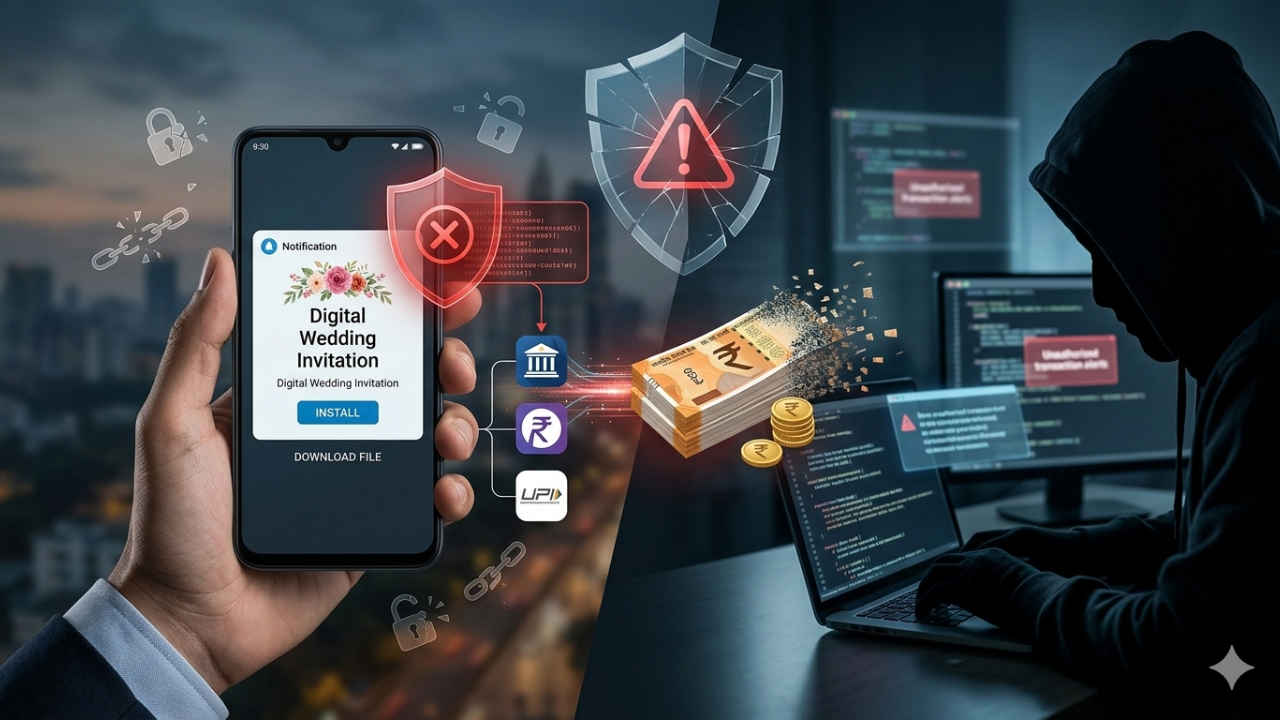

A Bengaluru based businessman lost over Rs 5 lakh after downloading a fake wedding invitation which was sent through WhatsApp. The scam took place in April when the victim unknowingly installed a malicious file disguised as a digital wedding card on his Android smartphone.
 Survey
As per the reports, the 42-year-old businessman got a WhatsApp message inviting him to a wedding ceremony along with an attachment claiming to contain complete event details. He did not suspect anything suspicious and as a result he downloaded the file, which was an APK file commonly used to install Android apps outside the Google Play Store.
Scammers allegedly gained access to the phone shortly after installation and conducted a number of unauthorised UPI transactions. The report claims that Rs 5,00,440 was transferred from the victim’s bank account in minutes. The victim later filed a police complaint, and authorities opened a case for cheating and identity theft under the Bharatiya Nyaya Sanhita (BNS), 2023.
Also Read: Too many Safari tabs? Apple may solve it with this new iOS 27 feature
Investigators stated that the malicious file may have given cybercriminals access to banking apps, payment services, messages and other sensitive device permissions. The police reportedly said that similar fake wedding invitation messages are circulating online and it can be a part of a bigger cyber fraud network which targets smartphone users.
How to stay safe
If you do not want to become a victim, cybersecurity experts advise users to avoid downloading APK files sent via WhatsApp, SMS, email, or unknown links. Apps should only be installed from credible sources, such as the Google Play Store or Apple App Store. And even if you download, you are advised to carefully review app permissions, avoid opening suspicious attachments and enable two-factor authentication on banking and payment apps.


