
How to choose the right water purifier for your home in India
 Follow Us
Check your TDS level before choosing a specific water purifier tech.
RO purifiers excel at high TDS but waste significant water volumes.
Factor in yearly maintenance costs of three to eight thousand rupees.
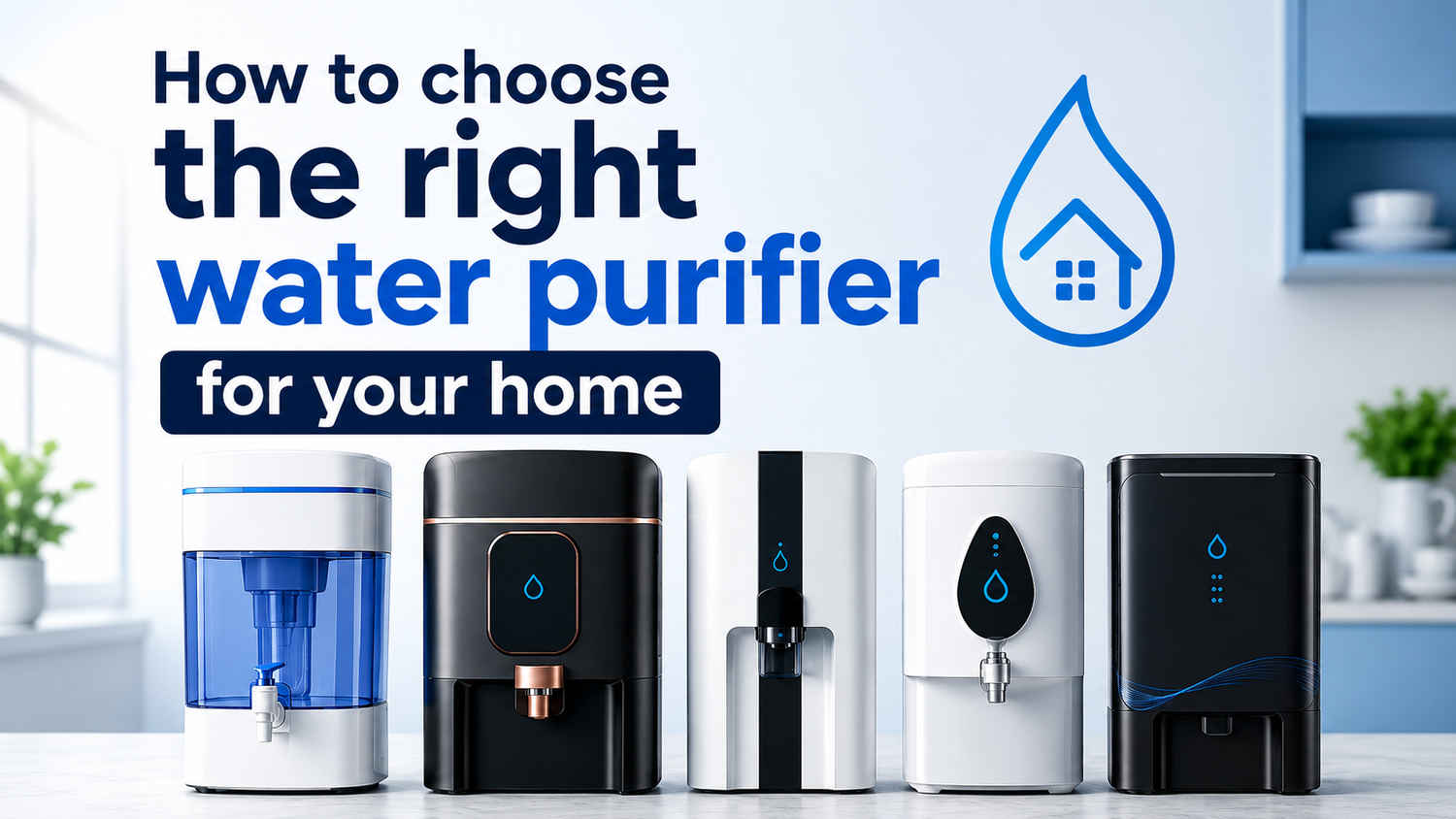

Whether it’s summer or winter, India is perpetually hot. That means the consumption of drinking water across the country is always high. Unless you only drink packaged drinking water, buying a water purifier has become a necessity, as not everyone wants to wait for the constant refilling of water cans.
 Survey
But you might be surprised to know that buying a water purifier is not as straightforward as most think. Instead, the right choice depends on where you live, what kind of water comes out of your tap, and how much you’re willing to spend, beyond the price of the purifier.
Here is a water purifier buying guide for homeowners that actually covers everything from TDS levels to after-sales. Without wasting much time, let’s get right into it.
Also Read: How to test if your home needs an RO water purifier
Start with your water source
Before anything else, it’s essential to first figure out where your water comes from. If you live in an area where the water comes from the municipal corporation, then that’s pretty good, as it is typically pre-treated and has lower TDS. On the other hand, water from borewells or tanker water tends to carry higher dissolved solids, hardness, and microbial load.
This single factor here is important, as it largely determines which type of purification technology you would require for your home. Spending money on the wrong one would certainly be a waste of money.
Understanding TDS
After determining the water source, ideally the second step should be to calculate the total dissolved solids, aka TDS. It measures the concentration of dissolved minerals and salts in water (in ppm). A TDS below 300 is generally considered good, while anything above 500 starts raising flags. You can get a TDS meter from anywhere for cheap, and it’s the best way to test your supply before buying.
Attached below is a quick cheat sheet to help you figure out the type of purification to get based off the TDS level in your area:
- TDS below 300: UV or UF purification is sufficient
- TDS between 300 and 500: RO is advisable
- TDS above 500: RO is essential
Picking the right water purifier tech
Here’s a breakdown of the best water purifier tech that shoppers can rely on:
RO: An RO forces water through a semi-permeable membrane, which strips out dissolved solids, heavy metals, and most microorganisms. It is the go-to for high-TDS and borewell water, but in the process, it also wastes up to 2 to 3 litres of water for every litre purified. If you live in an area with high TDS, it is advisable to get an RO installed.
UV: After RO, a UV purifier is also a great option, as it uses UV light to neutralise bacteria and viruses; however, it does not reduce TDS. It is ideal for areas where the water is in low TDS and where the primary concern is microbacterial contamination.
UF: Last but not least, UF is also a great option as it removes bacteria and cysts. However, it cannot eliminate dissolved salts or viruses. It works best as a pre-filter or in areas with very clean, low-TDS supply. The other big advantage of having a UF is that it works without electricity, which could be a big advantage for people in areas where power cuts are frequent.
Storage tank capacity
Storage tank capacity is also essential to look out for. While a purification rate of around 10 to 15 litres per hour is standard, the storage tank is what matters for daily practicality. A family of four would typically require at least an 8 to 12-litre tank for a full day of consumption. However, if power cuts in your area are frequent, it’s best to go for a larger capacity tank since RO purifiers need electricity to operate.
Water purifier filter life and service costs
When buying a water purifier, most people miss out on the fact that it’s one of those items which would require regular servicing. The upfront price is rarely the full cost, as sediment and carbon pre-filters typically need replacement every 3 to 6 months. While the RO membrane can easily last for 1 to 2 years.
Annual maintenance from brands like Kent, Aquaguard, Pureit, and Havells ranges from Rs 1,500 to Rs 6,000. So before you buy a water purifier, it’s worth factoring in at least Rs 3,000 to Rs 8,000 per year in service costs before committing to a particular model.
Certifications to look out for
Last but not least, there are a few certifications that guarantee you that the purifier actually does what it claims. Due to this, it’s important to look out for:
- WQA (Water Quality Association) or NSF/ANSI certification for validated performance
- BIS IS 10500 compliance, which is the Indian standard for drinking water quality
- ISI mark on the product itself
With that said, I hope this quick guide helped you in understanding the type of water purifier you should get for your home. For more such guides like these, keep on reading Digit.in
Also Read: Air purifier not working as it should? Where to keep, how to use it properly


