
How to choose air purifier for Indian homes: Top things to consider
 Follow Us
Match your purifier's CADR rating to your actual room size.
True HEPA filters are the baseline, not a premium upgrade.
Filter replacement costs can add up to Rs 6,000 annually.
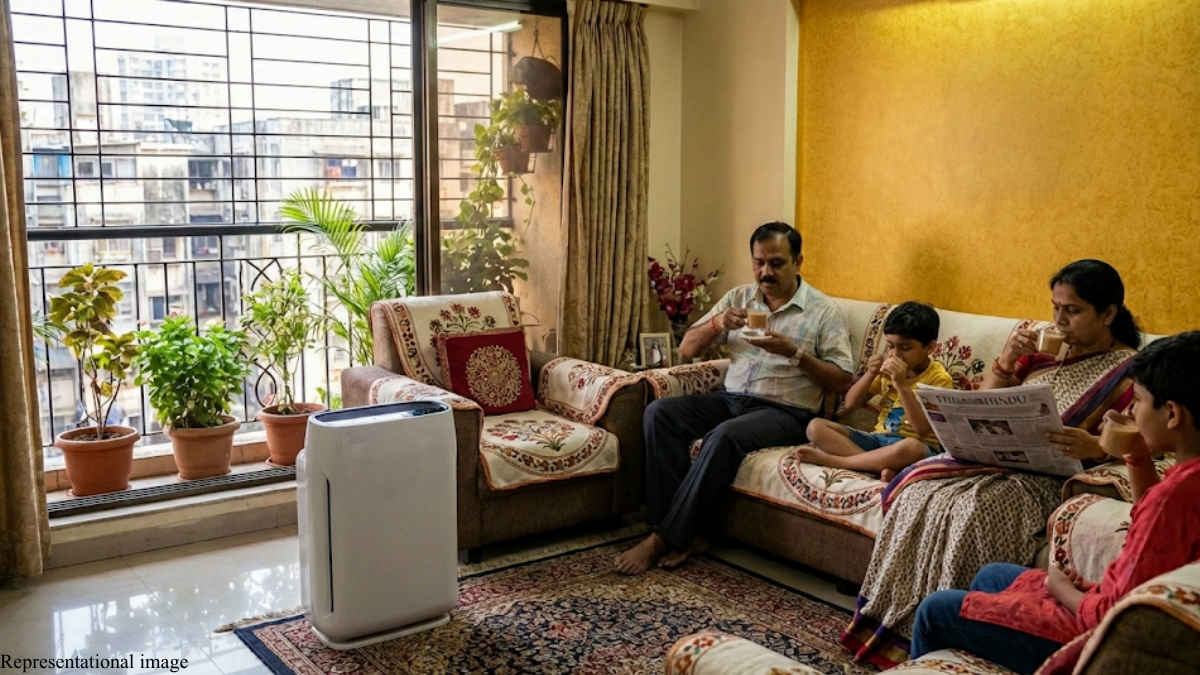

It is safe to say that India’s air quality is no longer normal; it’s a crisis everywhere. Whether you’re in Delhi, Mumbai, Chennai or Kolkata, AQI levels have risen to unprecedented heights, and buying an air purifier for home use has become a practical necessity across the country.
 Survey
And if you’re in the market to buy a new air purifier today and you walk into any store or scroll through a digital shopfront, you’ll find a dozen options that all claim to have great features to purify the air around you. But what are the things that actually matter? That is what this guide is for.
Let’s take a look at the things that actually matter if you’re looking to buy an air purifier in 2026.
Also Read: LG’s Sanjay Chitkara on AI making appliances smarter and building products for India
Air purifier performance depends on your room size
The single biggest mistake buyers make is picking a purifier by brand or price without checking the coverage area. Every air purifier is manufactured based on a specific room size, and that is typically measured in square feet. So if you’ve bought a purifier meant for 200 sq ft, it will obviously struggle to keep up in a 400 sq ft living room. So, before buying an air purifier, the most important step would be to first of all measure the room size.
CADR is more important than you think
The CADR value is often ignored by buyers, as most aren’t even aware of what it does. Well, let me simplify it for you. It stands for ‘Clean Air Delivery Rate’, and it tells you how fast a purifier can clean a room. Basically, the higher the number is, the faster it cycles through the air in your space. For a 300 sq ft bedroom, you should look for a CADR of at least 200 m³/h.
HEPA decides how clean your room is
Before you buy an air purifier, one of the other things to look out for is the addition of a True HEPA filter. Most cheap air purifiers miss out on it, and if you’re buying one without it, it’s almost good for nothing. A HEPA filter captures 99.97% of particles as small as 0.3 microns – that includes PM2.5 particles, dust mites, pollen, and most airborne bacteria. It’s important to stay away from the “HEPA-like” or “HEPA-type” filters, as they don’t meet this standard. The True HEPA filters are the baseline and not a premium feature.
Look out for a built-in PM2.5 sensor
One of the features most cheaper air purifiers skip out on is a PM2.5 sensor. While they’re available on most of the air purifiers, what makes the addition important is that it lets the purifier auto-adjust its fan speed based on real-time air quality instead of running at a fixed setting all day. This matters a lot if you’re after more efficient power consumption and longer filter life.
Noise levels matter for your sleep
After that, noise levels are also an important thing to look out for. Naturally, an air purifier that sounds loud even on auto mode will mostly be found switched off. So the decibel rating at both high and sleep settings is the one to look out for. Anything under 50 dB on the high mode is fine, but the sleep mode should ideally stay below 35 dB since anything over that will ruin your sleep.
Filters: The real cost of ownership
An important thing most people forget is that air purifiers are basically useless without their filters. And given the pollution, filters need to be replaced every 6 to 12 months. Good filters from the original brand can cost anywhere from Rs 1,500 to Rs 6,000, depending on the model. So, before buying the air purifier, it is important to check if there are any third-party compatible filters for the model. Not only that, but checking out the filter life for each filter is important, too.
Consumption is based off where you live
Last but not least, one last thing ot understand before buying an air purifier is that the air quality keeps on changing across India. Suppose you’re living in Delhi-NCR; then you’d be dealing with AQI spikes above 400, so naturally you’d need something with a higher CADR and thicker filters. That would also mean more frequent replacements of filters.
But for cities like Hyderabad or Pune, where AQI regularly stays in the moderate range, a mid-range unit will hold up better over time. So it’s best to check your city’s average AQI before deciding how much to spend.
Also Read: Best 1.5-ton 5-star split AC under Rs 55,000 in India to buy in 2026


