

Dishwasher running costs explained: Water, electricity, detergent are big contributors
 Follow Us
A dishwasher uses 9 to 13 litres per cycle vs 40 to 80 litres in hand washing.
Electricity costs Rs 10 to Rs 22 per cycle depending on the machine and electricity cost.
Total running cost in India: Rs 1,300 to Rs 2,400 per month for daily use.


Buying a dishwasher in India is not as simple as you might think. If you’re buying one for your home, I’m sure you’re already tired of explaining to your parents how much better it would be in terms of convenience. But one common argument from their side concerns the running costs, and, well, it’s a fair one.
 Survey
Most people forget that dishwashers require regular running costs as well. While a salesperson would try to convince you it would save water and time and pay for itself. If you’re wondering what it’s actually costing you every time you use it, here’s a breakdown of every recurring expense.
This guide will help you figure that out, so you know exactly what a dishwasher really costs to run in India. Without wasting much time, let’s get right into it.
Dishwasher: Electricity consumption
Electricity costs in India are a big deal for most households, and it’s a variable that most buyers overlook. But here’s all you need to know about electricity consumption. A typical dishwasher in India draws anywhere between 1,200W and 2,000W and runs a standard cycle for 90 to 120 minutes. In our calculations, that works out to roughly 1.5 to 2.5 units (kWh) per cycle.
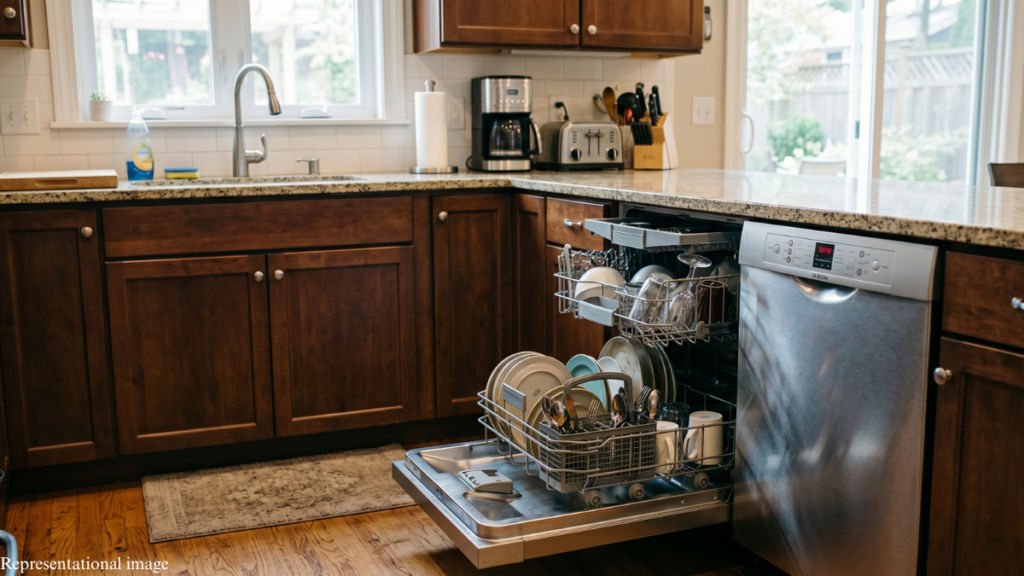
At an average Indian electricity tariff of Rs 7 to Rs 9 per unit, a wash will likely cost you anywhere between Rs 10 and Rs 22. If you run it once a day for a month, you’re looking at around Rs 300 to Rs 660 in electricity, which is actually not that bad. Some models even feature eco modes that bring this down meaningfully; they work by using cooler water temperatures over longer cycles to reduce power draw.
Also Read: 5 ways to improve air cooler efficiency and reduce electricity bills during summer season
Dishwasher: Water consumption
One of the most misunderstood things about a dishwasher involves the water consumption. While most might think that dishwashers consume a lot of water, this is actually one of the places where dishwashers actually win the argument. With a dishwasher, a standard cycle would likely use around 9 to 13 litres of water.
On the other hand, hand washing the same amount of utensils under a running tap, you’re likely looking at somewhere around 40 to 80 litres of water. It largely depends upon how you wash and your water-running habits, but it would be much higher than that of dishwashers. In major cities where water charges are higher, the savings in water alone add up over time.
Detergent tablets
One of the other areas that most people forget about is the consumables that dishwashers consume during or after a cycle. Starting off with dishwasher detergent, the cost of these catches most first-time owners off guard; that’s because you cannot use regular dish soap. You need to look for dishwasher-specific detergent, which comes in the form of powder, gel, or all-in-one tablets.
If you’re going for the most convenient, all-in-one tablets route, they will cost around Rs 20 to Rs 40 per tablet, depending on where you buy and which brand you choose. At one tablet per cycle, you’re spending somewhere around Rs 600 to Rs 1,200 per month on detergent alone.
Rinse Aid
If you’re using basic tablets or powder, you’ll also need rinse aid, which is a liquid that prevents water spots and helps dishes dry faster. A normal 500 ml bottle will likely cost somewhere around Rs 300 to Rs 600, and it would last 1 to 2 months, depending on the dosage. While a lot of all-in-one tablets include rinse aid, that works for soft-water areas. However, if you’re in an area where harder water is more common, a separate rinse aid is recommended.
Also Read: Best dishwasher under Rs 30000 for Indian homes in 2026
Dishwasher Salt
Dishwasher salt is yet another consumable that is used to regenerate the machine’s built-in water softener. It protects internal components and improves wash quality in hard water areas. If your local water is hard, skipping salt will cause calcium buildup and shorten machine life. A 1 kg pack costs anywhere between Rs 150 and Rs 300, and it will last around 4 to 8 weeks based on how you use it. All-in-one tablets often include a salt component, but in hard water conditions, dedicated salt is still recommended.
How much does all of it add up to?
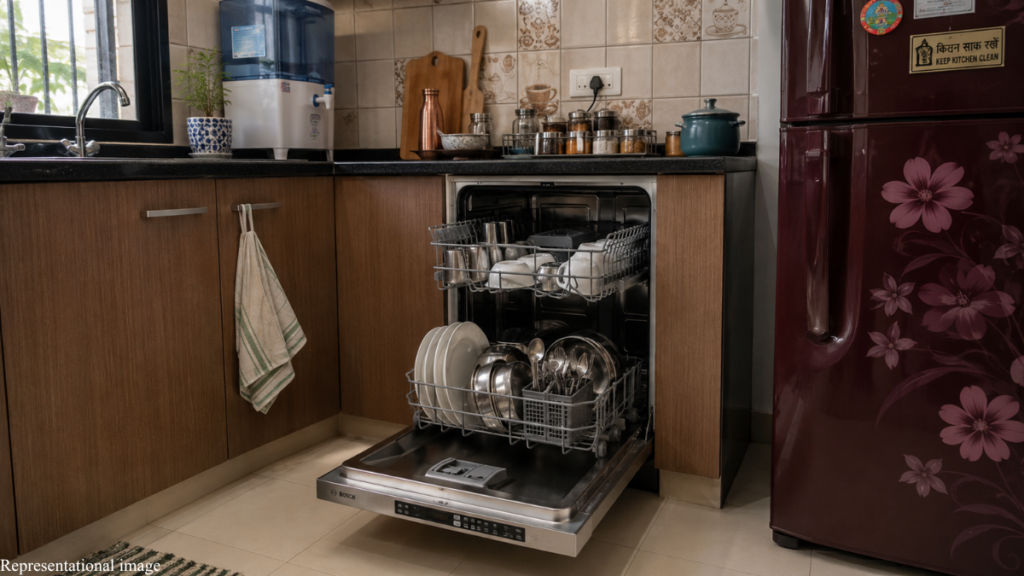
For an average Indian household that runs the dishwasher once a day, here’s the running cost you’re going to see:
- Electricity: Rs 400 to Rs 650 per month
- Detergent tablets: Rs 600 to Rs 1,200 per month
- Rinse aid: Rs 150 to Rs 300 per month
- Dishwasher Salt: Rs 75 to Rs 150 per month
- General maintenance: Around Rs 100 per month
That would bring the total cost to somewhere around Rs 1,300 to Rs 2,400 per month. Safe to say that detergent is the most dominant cost out of all the other things. Let’s now look at how it compares to regular handwashing.
How is it better than handwashing?
While at first, handwashing might look cheaper if you’re just looking at the upfront cost of bringing home a dishwasher. It’s only until you account for water, dish soap, and, more importantly, the time and effort that come with it. While it is true that dishwasher running costs in India can be slightly higher, at the same time you’re also getting much better hygiene, less water use, and hours back every month.
With that said, I hope this guide helped you understand the basic running costs of dishwashers and whether or not they would make sense in your household. For more such detailed guides like this, keep on reading Digit.in
Also Read: What is a dishwasher? How it works and an installation guide for Indian homes
FAQs
Is a dishwasher expensive to run in India?
Running a dishwasher once a day typically costs between Rs 1,300 and Rs 2,400 per month. While detergent is the largest expense, the overall monthly cost is quite manageable when compared to the value of the time and effort you save.
Does a dishwasher increase the electricity bill significantly?
A standard wash cycle with a Dishwasher would roughly use 1.5 to 2.5 kWh (units) of electricity, which translates to about Rs 10 to Rs 22 per load depending on your local electricity cost. If you run the appliance once daily, it adds roughly Rs 300 to Rs 660 to your monthly electricity bill. Many modern dishwashers also include eco modes that reduce power consumption further.
Do dishwashers consume more water than handwashing?
Dishwashers are highly water-efficient and they only use about 9 to 13 litres of water per cycle. In comparision, handwashing under a running tap can easily consume between 40 and 80 litres for the same number of utensils.


