
What is a dishwasher? How it works and an installation guide for Indian homes
 Follow Us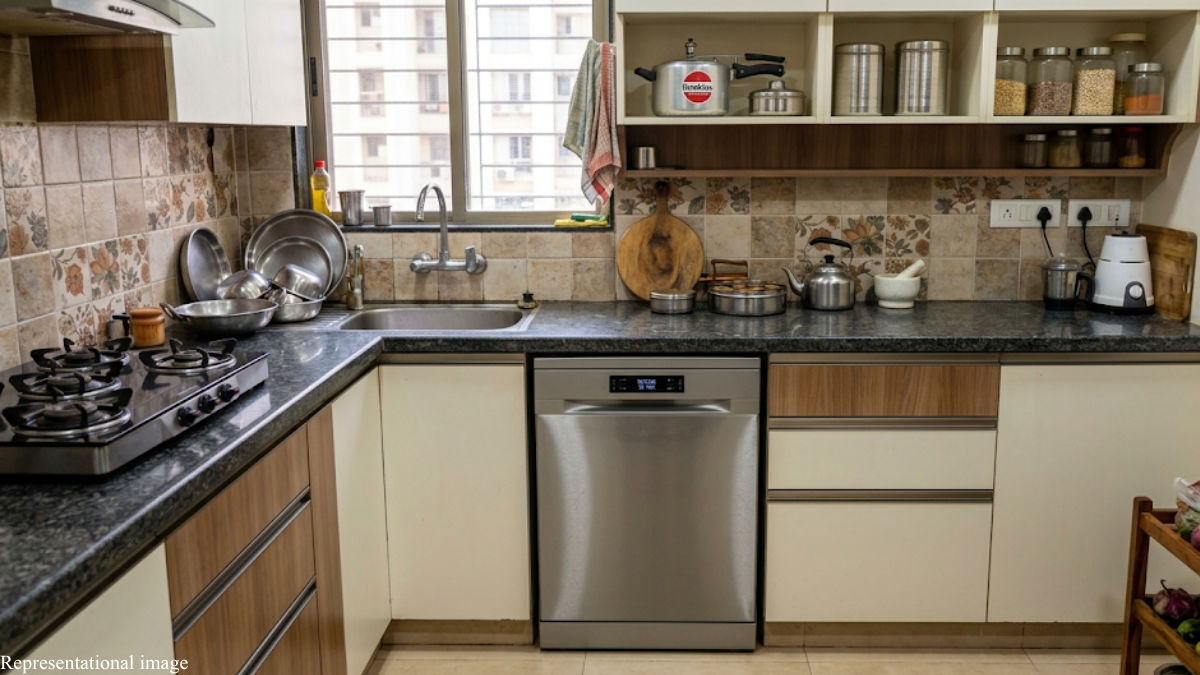

If cleaning the dishes is a chore you detest, a dishwasher could be what you are looking for. If you are spending 30 to 45 minutes every day scrubbing stubborn stains by hand, or depending on a domestic help, you may want to consider buying a dishwasher. For most households, it may seem a luxury appliance, but for those who can and want to buy one, or if you have already bought one, this article can help you understand how a dishwasher works and how to install it. We will also try to address some of the most common concerns, or should I say myths, around dishwashers in India.
 Survey
What is a dishwasher, and how does it actually work?
A dishwasher does not scrub dishes. It doesn’t have a mechanical arm or a brush inside. Instead, it uses hot water, pressurised spray, and detergent chemistry together.
Open the cuboid-shaped dishwasher and place the dishes neatly inside the racks. You put in salt, rinse aid, and detergent. The dishwasher salt helps in softening hard water. Use it if your area has hard water. The user can opt for 3-in-1 tablets or separate salt and rinse aid.
Based on the dishes inside, select a program.
Now, here’s what happens inside:
- Filling up. An electronic valve opens and lets a small, measured volume of water (around 11 litres) flow into the bottom of the machine.
- Heating the water. A heating element raises the water temperature to between 54 and 90 degrees Celsius, depending on the cycle you have selected. This heat is what makes the process work. It dissolves grease, activates the cleaning chemicals in the detergent, and kills bacteria.
- Spraying. A powerful pump forces the hot, soapy water up through the pipes and out of rotating spray arms positioned at the top and bottom of the machine. The pressurised jets spin and reach every surface of every item in the rack.
- Filtering. As the dirty water flows back down, it passes through a fine mesh filter that traps food particles so they do not get redeposited on the dishes or clog the spray arms.
- Draining and rinsing. The dirty water is pumped out and a final clean rinse cycle runs to remove all traces of detergent. A rinse aid (a separate liquid you add to the machine) helps water sheet off the dishes so they dry without spots.
- Drying. Most modern machines use condensation drying. The dishes absorb heat during the hot final rinse. When the machine door stays closed, moisture from the hot dishes migrates to the cooler stainless steel walls of the tub and drips down to the drain, leaving the dishes dry without extra energy use.
Only use detergent made specifically for dishwashers. Regular dish soap creates excessive foam inside the machine, which causes the pump to stop working and can damage the motor.
Choosing the right size
Dishwashers come in three main types. The right one for your home depends on how many people live there and how much space your kitchen has.
- For a family of four or more, choose a full-size dishwasher with 12 to 16 place settings (a place setting is everything one person needs for a full meal: a dinner plate, smaller plate, bowl, cup, saucer, and cutlery).
- For families with 2 to 4 people, the slimline dishwasher with 8 to 10 place settings should be suitable.
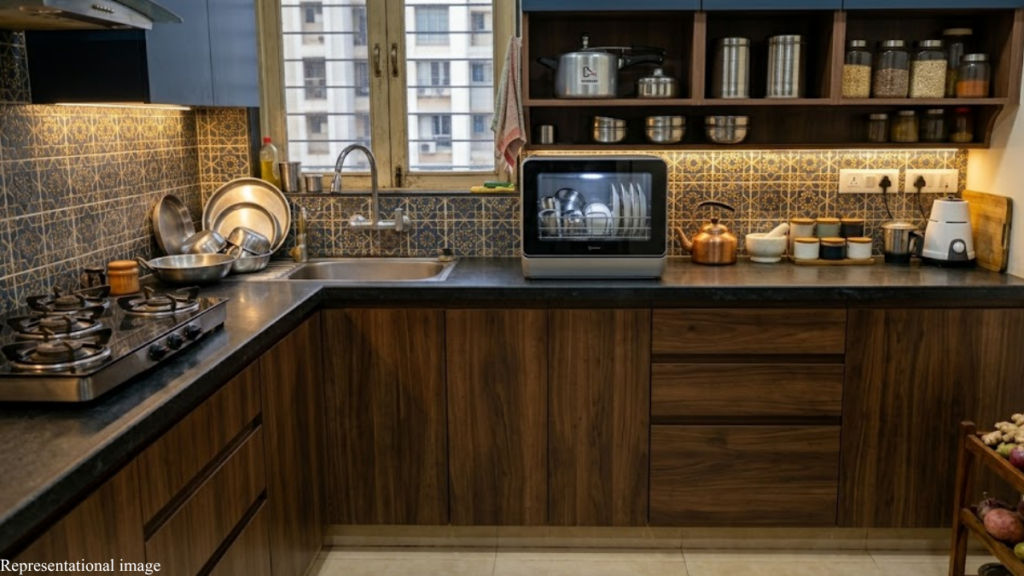
- For individuals or couples or if you stay in a rented property where plumbing and fittings are not allowed, the countertop or compact dishwasher with 6 to 8 place settings should be fine.
Now, let’s clear the air. Time to bust some myths.
Common myths about dishwashers in India
- Dishwashers waste a lot of water: No, they don’t. In one cycle, a dishwasher would consume around 12-18 literes of water. Meanwhile manual hand washing is said to consume several times more than that.
- A dishwasher cannot handle Indian cooking: A full-size dishwasher can hold common utensils in an Indian kitchen and the machine washes with highly hot water to clean ghee and stubborn masalas.
- Hand-washing is cleaner: If hand washing is done carelessly, the washed dishes could retain a lot of bacteria as per some research papers. And again since dishwasher uses highly hot water capable of killing the bacterias, it can be more effective.
- Dishwashers are too big for Indian kitchens: Well, there may be installation challenges, dishwashers do come in different size options, including countertop models. You can atleast look up what options you have in the market.
Also Read: Best RO water purifiers under Rs 20000 worth buying right now
Things to know before dishwasher installation
Before you buy the dishwasher, see and plan the space constraints in your kitchen. The installation would involve carpentry, masonry, plumbing and electrical work. The plumbing and electrical connections should never be placed directly behind the dishwasher, as it could impact repair later.
If height is the problem, see if you can raise the counter, or place the dishwasher any other place.
Check TDS (Total Dissolved Solids, including minerals, salts, metals, and more that is measured in PPM) and Hard Water (calcium and magnesium in water). The latter can damage the heating element in the machine and also slow the lathering of dishwashing detergent. Most dishwashers have built-in softeners that convert the magnesium and calcium to harmless sodium. Moreover, you can drop in dishwashing salt to ensure the softening feature continues.
You will also need to program the machine to match your local water hardness. A hardness test strip (available at hardware stores) or your municipal water authority can give you the reading. You then enter the corresponding setting on the machine’s control panel. On a Bosch machine, for example, settings range from H00 (soft water, no salt needed) to H07 (extremely hard water).
The internal softener is designed for water with up to about 800 to 900 PPM. But if you rely on untreated borewell water, then you’ll have to install an external softener or an inline conditioner for softening. You can buy from brands like 3M, Kent, WaterScience and Alkara.
Also, ensure the place has 15 to 20 Amp sockets and a dedicated circuit for the dishwasher. If your area has voltage fluctuations, use a surge protector at the socket. The dishwasher should get a proper water supply. A plumber would tell you what kind of tap, thread, splitter, valve and seal need to be used. The plumber may also guide you on the hose shape and size for the wastewater.
Now, after installation, before loading dishes, fill the salt reservoir (located at the bottom of the tub, under a screw cap) with dishwasher salt and check that the rinse aid compartment is filled. Run one empty cycle first. This flushes out manufacturing dust, tests the heating element, and confirms there are no leaks at any connection point.
So, a dishwasher installation is not going to be a plug-and-play appliance. It requires some planning. Hopefully, this article has helped you in that.
Keep reading Digit.in for similar stories.
Also Read: Best dishwashers under Rs 50,000 in India: Top picks to buy for your kitchen in 2026


