
5 biggest water purifier marketing gimmicks you should know about
 Follow Us
Frequent filter replacements can make a seemingly affordable water purifier expensive to maintain.
A long warranty or AMC may not cover filters, replacement parts and other major repair costs.
TDS is only one measure of dissolved solids and does not tell you whether drinking water is safe.
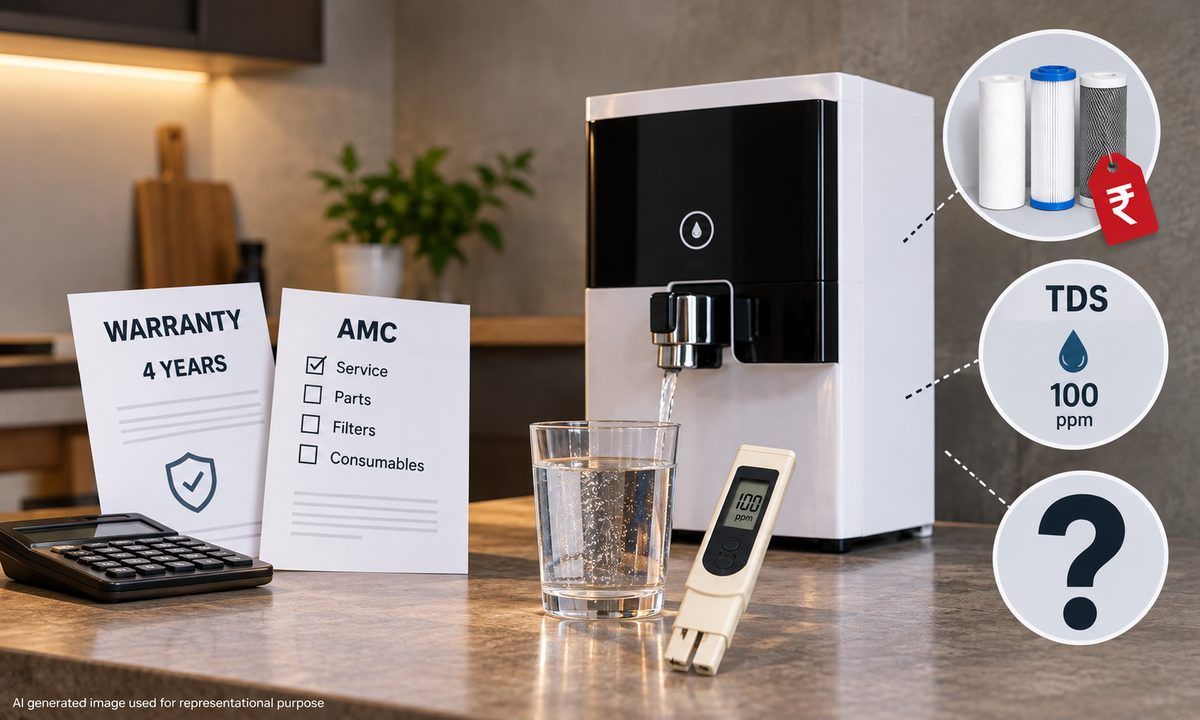

A water purifier is supposed to make one thing simple: make water safe to drink. Yet buying one can quickly turn into a maze of purification technologies, TDS numbers, filter-life claims, extended warranties and annual maintenance plans. Some of these features have a genuine purpose, while others can make it harder to understand what you are actually paying for.
 Survey
The bigger issue often starts after the purifier has been installed. A low upfront price can be followed by recurring filter replacement costs, while a long warranty may not cover the components you expect it to. TDS, meanwhile, has become such a prominent part of purifier marketing that it is easy to mistake one number for a complete measure of water quality.
These are some of the biggest areas where water purifier marketing can get confusing, and what consumers should look at before making a purchase.
1. The purifier may be cheap, but the filters can keep costing you money
Filter replacement is a normal part of owning a water purifier. Filters collect the contaminants they are designed to remove, and over time they can become clogged or lose their effectiveness.
Read more: Best wet and dry cordless vacuum cleaners in India: Top 5 options you must check
The issue is how often the replacement happens and what it costs. A purifier that needs a filter change every few months can become expensive to maintain. The replacement cost also varies a lot between products. In some cases, several filters may need to be changed together, while others have different replacement cycles for different stages.
There is also an economic reason for manufacturers to care about filter replacements. Replacement filters are recurring sales, unlike the purifier itself, which is usually purchased once. This has raised questions around how much effort the industry has put into improving filter life.
Longer filter life isn’t impossible. It requires better filtration media and engineering, along with testing against different kinds of source water. For buyers, though, the practical question is simpler: how long are these filters actually expected to last in your water and how much will replacing them cost?
2. “Four-year warranty” can mean something very different in the fine print
Water purifier warranties can look impressive when reduced to a single number. Three years, four years, and sometimes even longer.
A four-year warranty doesn’t necessarily mean every repair during those four years is covered. Filters and other consumables are often excluded, while some parts may have separate coverage or conditions attached to them. So when something goes wrong, you may still have to pay for the component that needs replacing.
This is the reason the warranty document matters more than the number on the product page. It should tell you exactly which parts are covered, for how long and under what conditions.
3. AMC plans that cover service but not replacement parts
An AMC may cover the technician’s visit or service charge while keeping replacement parts outside the plan. So if a filter or another component needs to be replaced, you could still have to pay for the part even though the service itself is free.
For example, a technician could replace Rs 2,000 worth of filters while the Rs 200 service charge is covered by the AMC. Technically, the service was free. The repair wasn’t.
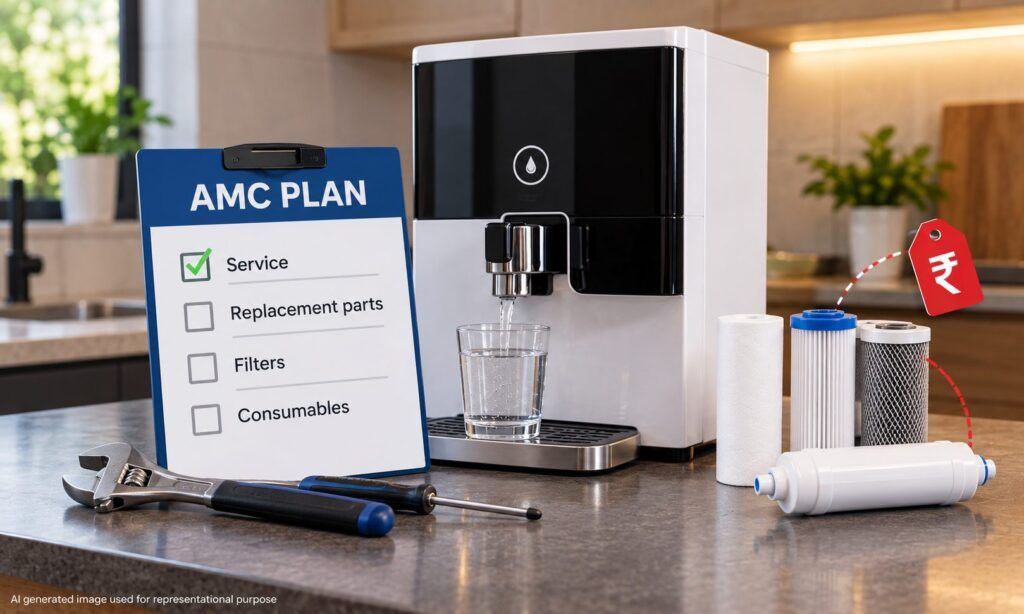
This distinction becomes important because the expensive part of maintaining a purifier isn’t always the technician’s visit. It can be the parts being replaced.
Read more: Air fryer vs microwave: What’s better to reheat different foods?
AMCs can still make sense for people who want scheduled servicing or don’t want to deal with individual service calls. But the coverage needs to be understood before paying for one. “Free service” and “parts covered” are two different things.
4. TDS adjustment can be misleading if you treat the number as a measure of safety
TDS, or Total Dissolved Solids, is one of the most heavily marketed numbers in the water purifier category. Some products allow consumers or technicians to adjust the TDS of the purified water, often with the idea that extremely low TDS isn’t desirable.
There is an important catch: TDS tells you about the quantity of dissolved material, not what that material actually is. A TDS meter cannot tell you whether the dissolved solids are minerals, salts or potentially harmful contaminants. Two water samples with the same TDS reading can therefore have very different compositions.
If the input water has a TDS of 200 and the RO brings it down to 20, the TDS controller can bring the number back up by mixing some of the input water with the treated water. You could then end up with a reading of 100 or 150, depending on how the purifier is adjusted.
The higher number doesn’t mean the water has become better. You are also bringing back some of whatever was present in the original water. If that water contained unwanted contaminants, those can make their way back into the output as well.
So, if a purifier’s marketing focuses heavily on achieving a particular TDS number, don’t assume that number alone tells you whether the water is suitable for drinking.
5. Low TDS doesn’t automatically mean safe drinking water
The biggest misconception around TDS is treating it as a complete water-quality test. TDS is useful as one indicator. For an RO purifier, comparing the TDS of the water entering the machine with the TDS of the treated water can help indicate how much dissolved material the system is removing. A significant reduction can show that the RO membrane is doing its job in reducing dissolved solids.
But drinking-water safety involves much more than dissolved solids. Water can contain specific chemical contaminants, heavy metals, microorganisms and other substances that a basic TDS meter cannot identify. A low TDS reading therefore isn’t a guarantee that water is safe to drink.
This is also why drinking-water standards look at multiple parameters rather than using a single TDS number as the definition of safe water.
What to check before buying a water purifier
Marketing claims can make one purifier appear dramatically different from another, but the more useful comparison is often much simpler.
For warranties and AMCs, look at what is actually covered rather than just the number of years or the promise of free service. Check the cost of replacement filters as well, since that can add considerably to the price of owning a purifier over time. And when it comes to TDS, don’t treat a single number as a complete picture of your water quality.
A purifier’s real value isn’t determined by how many features are listed on its box. The more important question is what it costs to maintain and whether its purification system matches the water you actually receive at home.


